
What are the benefits of choosing a reconditioned stairlift over a new one?
A reconditioned stairlift can provide safe, reliable access to your stairs at a lower cost than a new model, while reducing the need for extensive new equipment. When professionally inspected, refurbished and fitted to your staircase, it can offer dependable performance with suitable warranty and aftercare support.
A reconditioned stairlift can provide safe, reliable access to your stairs at a lower purchase price than a new model, provided it has been professionally inspected, refurbished where necessary, safety-tested and fitted correctly. The main benefits are reduced cost, quicker availability, access to proven equipment and less demand for new materials, while warranty and aftercare can provide reassurance about ongoing support.
Lower overall purchase cost
The most immediate benefit is usually the price. A reconditioned stairlift uses equipment that has already been owned, recovered or previously installed, so its purchase cost can be lower than that of an equivalent new stairlift. This may make safer access to the upper floors more achievable when a new installation does not fit your budget.
The final price still depends on the staircase and the equipment required. A straight stairlift is generally simpler to supply and install than a curved model, while additional features, unusual stair layouts, outdoor exposure or alterations to the existing rail can affect the quotation. A proper assessment is therefore more useful than comparing advertised prices alone.
Reliable equipment with a known operating history
Reconditioned stairlifts are not simply second-hand units passed directly from one customer to another. A suitable unit should be examined by a trained installer, cleaned, tested and refurbished as required before it is offered for reuse. Components such as the batteries, drive system, charging points, seat, controls, sensors and safety systems need to be checked for condition and correct operation.
Because the model has already been used, an installer may also have practical knowledge of its operation, common service requirements and the availability of replacement parts. This does not remove the need for regular maintenance, but it can make it easier to identify and address issues promptly.
Safety when professionally inspected and fitted
A reconditioned stairlift can be a safe option when its condition is properly assessed and it is installed for the individual staircase. Safety features may include a seat belt, obstruction sensors, swivel or folding seat mechanisms, braking systems and controls designed to stop the lift if an unsafe condition is detected. These features must be checked rather than assumed to be working because the stairlift is from a recognised range.
Correct fitting is equally important. The rail must be secure, the lift must travel smoothly, charging points must be positioned correctly and the controls must be accessible to the intended user. Installation should also include an explanation of safe operation, charging and what to do if the stairlift stops unexpectedly.
A more suitable solution than paying for unnecessary new features
New stairlifts may offer the latest design options, finishes or features, but not every household needs the newest specification. A reconditioned stairlift can provide the essential functions needed for everyday access, such as comfortable seating, straightforward controls, safe movement and dependable charging. The important consideration is whether the available model meets the user’s mobility needs and suits the staircase, rather than whether it is the latest product.
For example, someone who needs occasional access between floors may prioritise a reliable lift with simple controls and a comfortable seat. Another user may need powered swivel, a particular seat configuration or controls positioned to suit limited hand movement. These requirements should be discussed during the assessment before a model is selected.
More choice for different staircases
Reconditioned stairlifts may be available for a range of domestic situations, including straight, curved and outdoor staircases. Curved staircases can require a rail made to follow the individual shape of the stairs, so the condition and compatibility of the existing equipment must be considered carefully. A reconditioned curved stairlift may be suitable where the rail and lift can be safely adapted or reused, but this cannot be confirmed from photographs or a general product description alone.
Outdoor stairlifts require additional consideration because they are exposed to moisture, temperature changes and dirt. A suitable unit must be designed and maintained for outdoor conditions, with appropriate protection and a safe charging arrangement. A standard indoor stairlift should not be used outside simply because it is available at a lower price.
Potentially quicker access to the home
Some reconditioned stairlifts can be supplied more quickly than a new bespoke unit, particularly where the equipment and suitable components are already available. This can be useful when mobility has changed and using the stairs has become difficult, although availability depends on the staircase, the required specification and the condition of the available lift.
Speed should not take priority over assessment and safety checks. A stairlift that is available immediately but unsuitable for the user or staircase is not a practical solution. The installation should still include a site assessment, appropriate fitting, testing and user instruction.
A lower-impact use of existing equipment
Reconditioning allows usable stairlift equipment and components to remain in service for longer. Reusing suitable parts can reduce the need to manufacture and transport a completely new installation, as well as reducing avoidable waste when a stairlift is removed from a property. This is a practical environmental benefit, although safety and reliability must always determine whether equipment is suitable for reuse.
Warranty and aftercare can reduce uncertainty
Buying through a professional stairlift installer may provide more support than purchasing privately. Depending on the equipment and service offered, this can include a written warranty, installation support, servicing and access to replacement parts. The exact terms should be confirmed before you agree to the installation.
Ask what the warranty covers, how long it lasts, whether it includes labour and batteries, and what happens if a fault occurs. Also check whether routine servicing is recommended and who to contact for technical assistance. A clear aftercare arrangement is especially important for users who rely on the stairlift every day.
Important points to check before choosing
- Whether the stairlift has been inspected, cleaned, refurbished and safety-tested by a qualified professional.
- Whether the model is suitable for the user’s weight, posture, balance, transfer ability and control requirements.
- Whether the rail, charging system and stairlift are compatible with the staircase and available space.
- The condition and expected service life of the batteries and other wear components.
- Whether the seat, armrests, footrest and controls can be used comfortably and safely.
- What warranty, servicing and breakdown support are included.
- Whether the quotation includes delivery, installation, removal of an existing lift and user instruction where applicable.
Reconditioned or new: which is right for you?
A new stairlift may be preferable if you require a particular specification, want the widest choice of current features or have a staircase that needs a completely bespoke solution. A reconditioned stairlift may be the better option when value, availability and essential reliable access are the priorities, provided a suitable unit can be matched to your needs.
The safest way to decide is to compare like for like. Consider the total cost, the condition of the equipment, the warranty, the expected maintenance requirements and the quality of the installation service—not just the initial price. An assessment by Independent Stairlifts can establish whether a reconditioned model is appropriate for your staircase and explain any limitations before work begins.
A reconditioned stairlift can provide safe, dependable access at a lower cost than a new model when it has been professionally inspected, refurbished and fitted to the staircase. Reconditioning should involve more than cleaning: the drive system, batteries, charging points, controls, seat, sensors and safety mechanisms should all be checked and tested before installation.
Correct fitting is equally important. The rail must be securely installed, the lift should travel smoothly, and the controls and seat position should suit the user’s mobility and transfer needs. Ask what work has been completed, whether the batteries and other wear components have been assessed, and what warranty and aftercare are included. This helps you compare the reconditioned option with a new stairlift on overall suitability and support, rather than price alone.
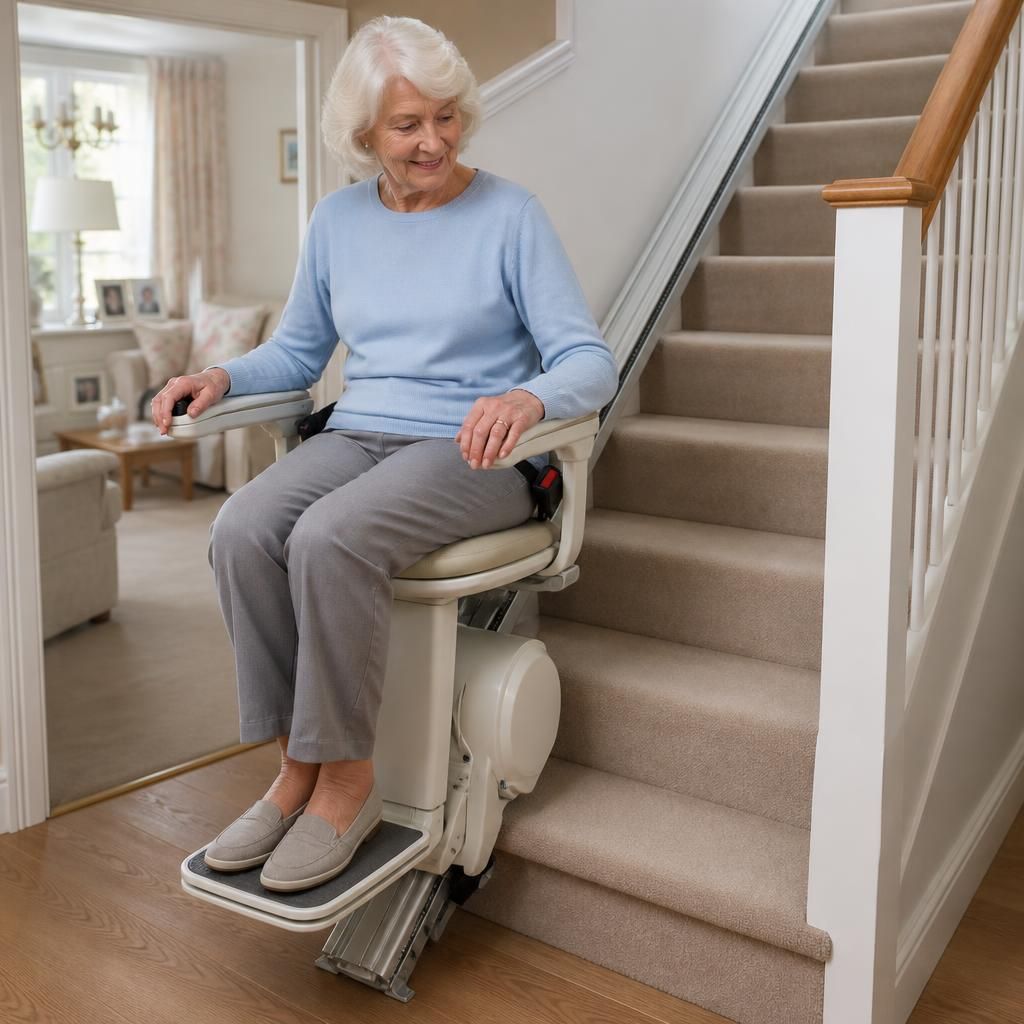
Find out if a reconditioned stairlift is right for your home
Contact Independent Stairlifts to arrange an assessment and find out whether a reconditioned stairlift is suitable for your staircase, mobility needs and budget.