
What should I expect during the valuation visit for my stairlift sale?
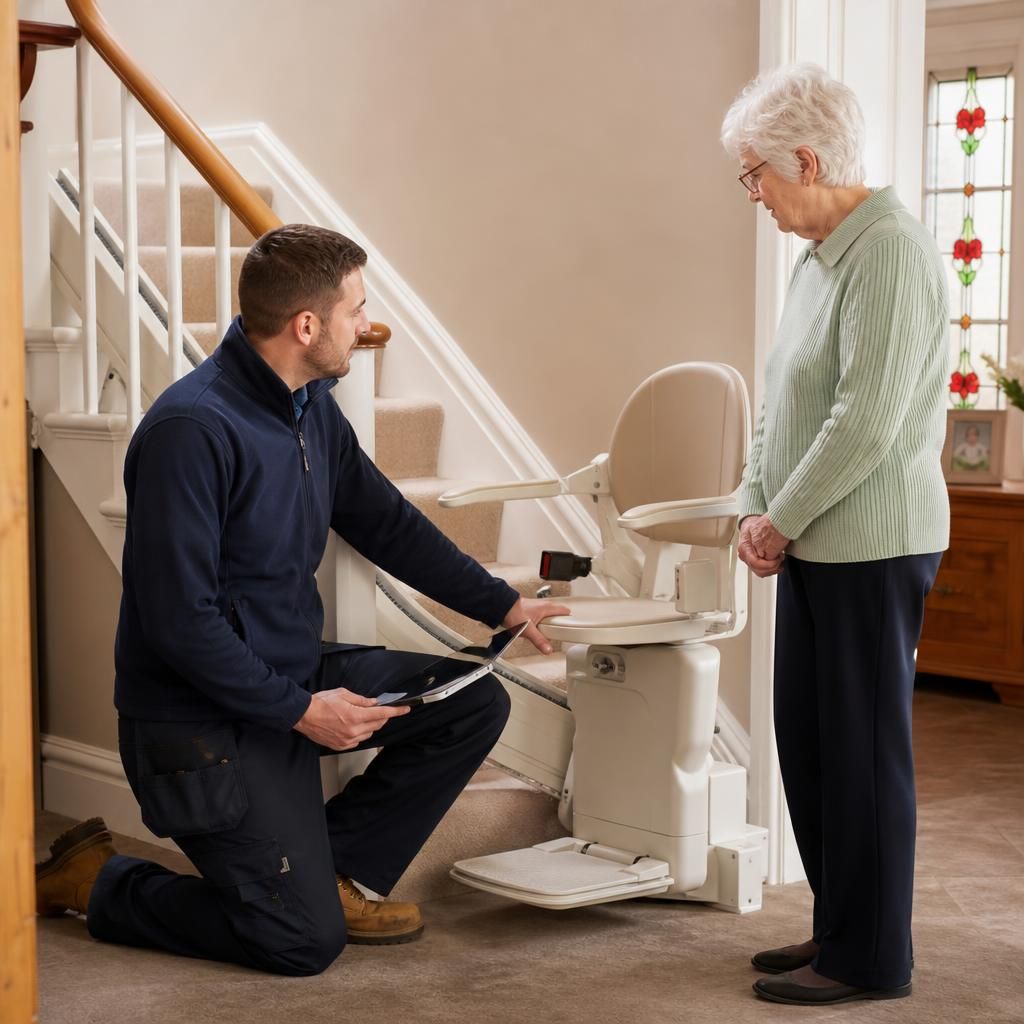
During your stairlift valuation visit, an adviser will inspect the stairlift, assess its condition and suitability for resale, and discuss its installation and service history with you. They will then explain the valuation and provide a personalised offer, subject to the findings of the assessment.
The valuation visit is a practical inspection of your stairlift and its installation. An adviser will check whether the lift is suitable for resale, consider its condition and configuration, discuss its history with you, and explain how the findings affect the offer. The offer is based on the stairlift itself and the work involved in removing it, rather than simply its original purchase price.
Before the adviser arrives
Try to make the stairlift accessible for inspection. The adviser will need to see the full rail, seat, controls, charging points and any sections of stairs affected by the installation. You should also have any available paperwork to hand, such as the user manual, installation documents, service records or proof of purchase. These documents are not always essential, but they can help confirm the model, age and maintenance history.
If the stairlift is currently in use, you can continue to use it unless you have been advised otherwise. Tell the adviser about any faults, unusual noises, intermittent problems or changes in performance before the assessment begins. Being open about the stairlift’s condition helps ensure that the valuation reflects the likely inspection, removal, preparation and refurbishment work.
What the inspection covers
- Make, model and age: The adviser will identify the stairlift and establish, where possible, when it was installed. The availability of compatible parts, its demand in the used market and its potential for refurbishment can all affect its resale value.
- Overall condition: The seat, armrests, footrest, swivel mechanism, safety sensors, controls, battery compartment, rail and covers may be checked for wear, damage and signs of poor operation.
- Operation: Where it is safe to do so, the stairlift may be tested. This can include its movement along the rail, starting and stopping, charging, controls, safety features and operation at the top and bottom of the stairs.
- Staircase and rail configuration: A straight rail is assessed differently from a curved or multi-flight installation. The adviser will consider the rail layout, landings, bends, access points and whether removal is straightforward without affecting the property.
- Installation details: The position of the rail, brackets, power supply and charging points will be considered. These details help establish how the lift can be removed and whether any particular precautions are needed.
- Removal requirements: Access to the property, the location of the stairlift, parking or carrying considerations and any obstacles around the staircase may affect the practical work involved. The adviser may also note whether there is likely to be any making-good required after removal.
Questions you may be asked
The adviser may ask when the stairlift was installed, who installed it, whether it has been serviced, how regularly it has been used and whether it has had repairs or replacement parts. You may also be asked whether it is still connected and operational, whether you have all its controls and keys, and whether there are any known issues with the batteries or charging system.
It is useful to explain why you are selling the stairlift and whether there is a preferred timescale for removal. This information helps the team understand your requirements, although it does not replace the technical assessment of the stairlift.
How the offer is determined
After considering the inspection findings, the adviser will explain the valuation and provide a personalised offer where the stairlift meets the relevant resale requirements. Factors may include the model’s suitability for another installation, condition, age, completeness, likely refurbishment needs, removal complexity and current demand for that type of stairlift.
The offer may be subject to the findings of the assessment and any information that cannot be confirmed until removal or further testing. For example, hidden damage, inaccessible components or a fault that is not apparent during the visit may need to be considered separately. The adviser should explain any such conditions clearly, along with the next steps if you decide to proceed.
What happens after the visit
You will have the opportunity to ask questions about the offer, removal arrangements and any associated conditions before making a decision. If you accept, the agreed details can be recorded and the removal process arranged. If you do not accept, there is no need to make a decision without understanding how the valuation was reached.
Keep the stairlift, charger, remote controls, keys and manuals together until the sale and removal arrangements have been confirmed. Do not disconnect or dismantle the lift yourself. Stairlift rails can be heavy, and the electrical and battery components require safe handling. Any concerns about the lift’s operation or safety should be mentioned during the visit so they can be taken into account.
The valuation visit is a practical inspection used to determine whether your stairlift can be resold and what work may be needed before it is installed elsewhere. The adviser will assess the lift, rail, controls, batteries and installation, and may test its operation where this can be done safely.
To help the assessment run smoothly, make the stairlift accessible and have any relevant documents available, such as the user manual, installation details or service records. Tell the adviser about faults, unusual noises, battery problems, repairs or parts that have been replaced. This information helps ensure the offer reflects the stairlift’s actual condition, removal requirements and likely refurbishment needs.
After the inspection, the adviser will explain how these findings affect the valuation and discuss the proposed offer and removal arrangements. You should not disconnect or dismantle the stairlift yourself, as its electrical components and rail require safe handling.
Arrange Your Stairlift Valuation
Arrange your stairlift valuation with Independent Stairlifts to have its condition, installation and resale suitability assessed. We will then explain the valuation and discuss your personalised offer and removal arrangements.