
What happens if my stairlift is damaged or very old?
If your stairlift is damaged or very old, we can assess its condition and advise whether repair, servicing, replacement or removal is the most suitable option. Where appropriate, we may also be able to buy the stairlift, subject to its age, condition, model and whether it can be safely removed and reused.
If your stairlift is damaged or very old, the right option will depend on its condition, model, availability of parts and whether it can be operated and removed safely. Independent Stairlifts can assess the stairlift and explain whether repair, servicing, replacement, removal or a potential purchase is the most suitable route.
A stairlift’s age alone does not necessarily mean it must be replaced. Some older models remain serviceable if their main components are in good condition and replacement parts are available. Conversely, a relatively newer stairlift may not be suitable for continued use if it has suffered significant damage, water ingress, electrical faults or mechanical wear.
What is checked during an assessment?
The assessment considers the stairlift’s overall condition, including:
- The make, model and approximate age of the stairlift.
- The condition of the rail, fixings, carriage, seat, armrests, footplate and safety sensors.
- Whether the lift starts, travels smoothly, stops correctly and responds to its controls.
- The condition and charging performance of the batteries.
- Signs of impact, corrosion, water damage, unusual noise or repeated faulting.
- Whether important replacement parts are still available.
- Whether the stairlift can be removed without creating a safety risk or causing avoidable damage to the property.
For a curved stairlift, the condition and configuration of the bespoke rail are particularly important. A rail made for one staircase may have limited reuse value elsewhere, even when the lift itself is in reasonable working order. With a straight stairlift, the rail may be more adaptable, but its length, fittings and compatibility with the carriage still need to be checked.
If the stairlift is damaged
Minor faults may be resolved through servicing or the replacement of individual components. Examples can include worn batteries, a damaged handset, a faulty charging point or a problem with a safety sensor. The cause of the fault should be identified before the stairlift is used again, as continuing to operate a damaged lift can make the problem worse or create a safety hazard.
More substantial damage may make repair uneconomical or impractical. A damaged rail, carriage, gearbox, wiring system or safety mechanism may require specialist parts and extensive work. If the model is discontinued or compatible parts are no longer available, replacement may provide a safer and more reliable solution than attempting to keep the existing stairlift in service.
Do not attempt to bypass safety features, dismantle the carriage or carry out electrical repairs yourself. If the stairlift is making an unusual noise, stopping unexpectedly, moving erratically, showing an error or failing to charge, stop using it if it is safe to do so and arrange a professional assessment.
If the stairlift is very old
An older stairlift may have accumulated wear in its batteries, drive system, seat mechanism and control components. Older designs can also have limited support from the original manufacturer. A service may identify a straightforward repair, but it is important to consider the likely availability of parts and the possibility of further maintenance before deciding to retain the lift.
Where replacement is recommended, the most suitable stairlift will depend on the staircase, the user’s mobility and the features required. Options may include a new stairlift or a professionally assessed and reconditioned model, subject to suitability. A replacement assessment should take account of access at the top and bottom of the stairs, landing space, parking position, seat type, user transfer needs and any changes to the home since the original installation.
Can a damaged or old stairlift be sold?
Possibly, but a purchase is not guaranteed. The value of a used stairlift depends on its model, age, condition, demand, remaining usable life, parts availability and the cost and safety of removing it. A stairlift that is not working may still have recoverable components, but faults, missing parts and damage will be reflected in the assessment.
Some stairlifts have little or no resale value where they are obsolete, heavily damaged, contaminated, unsafe to remove or unlikely to be suitable for reuse. A curved stairlift may also be difficult to resell if its rail does not match another property. Independent Stairlifts can review the available information and confirm whether the stairlift is potentially suitable for purchase and removal.
It is helpful to provide the model details, photographs, the location of the stairlift and a description of any known fault. If the stairlift is still installed, do not remove it before it has been assessed unless a qualified professional has advised you to do so. Removing it prematurely can damage components, affect its potential value and create avoidable risks on the stairs.
Repair, replace or remove: how the options compare
- Repair or service: May be appropriate when the stairlift is fundamentally sound and the fault can be resolved with suitable parts.
- Replace: May be preferable when the lift is unreliable, extensively damaged, obsolete or no longer suitable for the user or staircase.
- Sell: May be possible when the stairlift has reusable value and can be safely removed, even if it is not currently functioning.
- Remove without resale: May be necessary where the stairlift is unsafe, beyond economic repair or unsuitable for reuse.
The safest decision is based on the condition of the complete installation rather than the stairlift’s age in isolation. An assessment can separate a repairable fault from signs that the equipment has reached the end of its practical service life.
If you are unsure what to do with a damaged or very old stairlift, contact Independent Stairlifts with the available model information and photographs. We can discuss its condition, explain the possible next steps and advise whether assessment for repair, replacement, removal or purchase is appropriate.
A damaged or very old stairlift should be assessed before you decide whether to repair, replace, sell or remove it. Stop using the lift if it moves erratically, makes unusual noises, fails to charge or stops unexpectedly. Independent Stairlifts can check the complete installation, including the carriage, rail, batteries, controls and safety features, then explain whether the stairlift remains suitable for safe use or has reusable value.
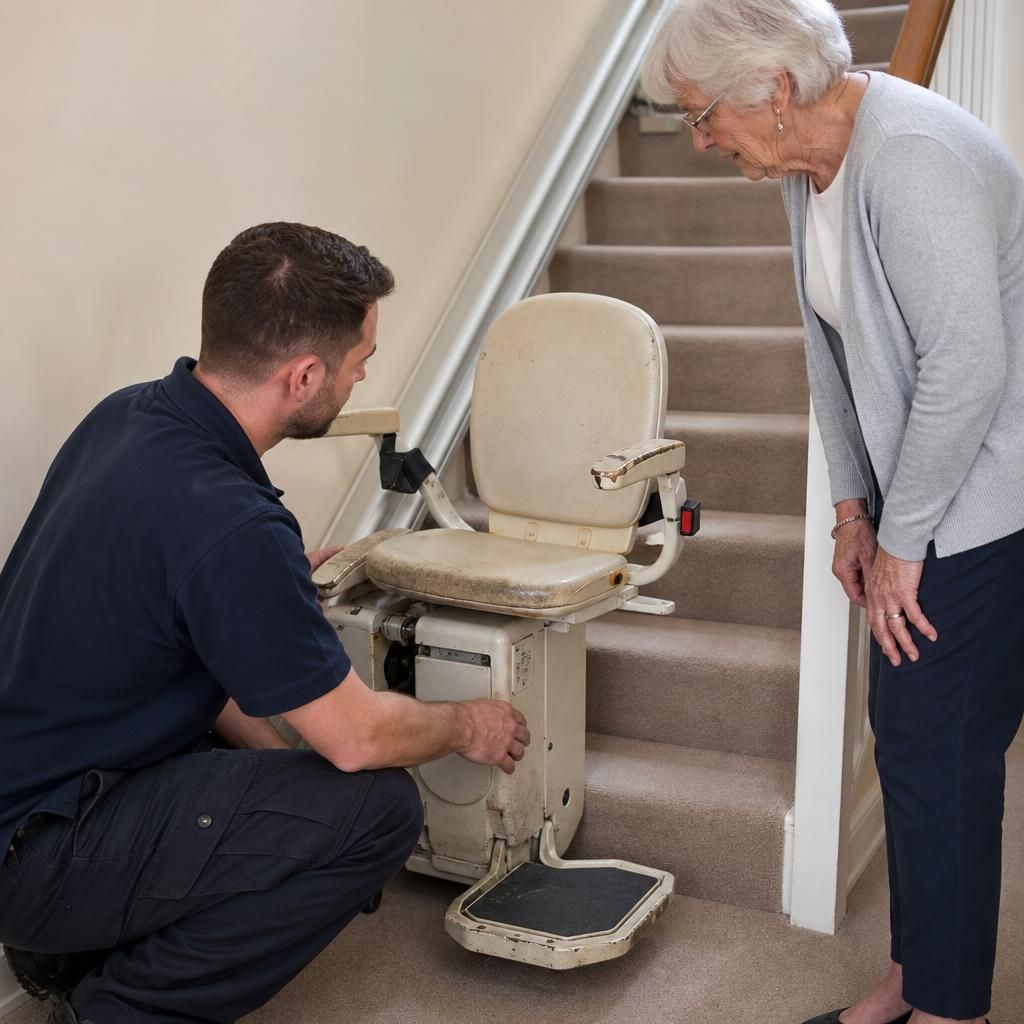
Arrange an assessment for your damaged or old stairlift
Contact Independent Stairlifts to arrange an assessment of your damaged or very old stairlift. We can advise whether repair, replacement, removal or a potential purchase is the most suitable option.