
What factors affect the offer price for my used stairlift?
The offer price for your used stairlift is mainly affected by its age, model, condition, specification and current demand. The staircase layout, whether the lift is working, and the cost of safe removal and reinstallation can also influence the valuation.
The offer price for your used stairlift is mainly determined by its age, model, condition, specification and current demand. The staircase layout, whether the lift is working, and the cost of removing it safely can also affect the valuation. A stairlift that can be efficiently removed, reconditioned and matched with another customer’s requirements will generally have greater resale value than one requiring substantial repairs or specialist handling.
Age and model
The age of the stairlift is considered alongside its make, model and ongoing parts availability. A relatively recent model may be easier to test, service and reinstall, while an older model may have a lower value if replacement components, batteries or controls are difficult to source. Age alone does not determine the offer: a well-maintained older lift can still be useful, particularly if it is a common model in good working order.
Overall condition
The assessment will consider the condition of the main components, including the seat, armrests, footrest, upholstery, controls, rail, motor and batteries. Signs of careful use and regular maintenance can support the valuation. Wear such as damaged upholstery, cracked covers, corrosion, unusual noises or movement problems may reduce it because repairs, replacement parts or additional testing could be needed before resale.
Cosmetic wear is not always a reason that a stairlift cannot be bought, but it is taken into account when estimating the work required to prepare it for another home. Please describe any known faults accurately before the assessment so that the valuation reflects the stairlift’s actual condition.
Whether the stairlift is working
A fully functioning stairlift is usually easier to assess and prepare for reuse. The inspection may include its movement on the rail, starting and stopping, charging, safety sensors, seat swivel, controls, footrest and battery performance. If the lift is not currently working, it may still have some value, depending on the cause of the fault and the availability and cost of the required repair.
A non-functioning stairlift is valued on the basis of its usable components and the likely work involved. A clear description of the fault, any error messages and the circumstances in which it stopped working can help the assessment.
Specification and features
Features that affect usability and installation requirements may influence the offer. These can include a powered swivel seat, powered or folding footrest, hinged or sliding rail, remote controls, weight capacity and other options fitted to the original lift. The value depends on whether those features are working and whether they are suitable for demand elsewhere, rather than simply on how many features the stairlift has.
Rail and staircase layout
The rail is an important part of the valuation. Straight rails are often simpler to remove and may be suitable for another staircase with compatible dimensions. Curved rails are made for a particular staircase, so their resale value depends more heavily on whether the shape and measurements can be matched to another property. Landings, bends, narrow sections, doorways and changes in floor level can all affect removal and potential reuse.
For this reason, a curved stairlift is not valued only by looking at the seat or motor. The rail, fittings and installation requirements must also be considered. A rail that is difficult to remove or unlikely to match another staircase may have limited resale value even if the lift itself is in good condition.
Removal and preparation requirements
The time, access and work needed to remove the stairlift safely can affect the offer. Factors may include:
- the number and type of rail sections and fixings;
- access to the staircase and surrounding areas;
- whether the lift is parked in an accessible position;
- the condition of the fixings, rail and electrical connections;
- whether additional care is needed to protect walls, flooring or other property features; and
- the need to test, clean, repair, store or transport the equipment after removal.
Safe removal is important because stairlift components can be heavy and electrical connections must be handled correctly. The estimated removal work is therefore considered alongside the potential resale value, rather than treating the equipment as if it could be collected without preparation.
Current demand and suitability for reuse
Offer prices also reflect the current demand for a particular model, specification and rail type. A stairlift that is commonly requested and can be adapted or installed in suitable homes may be more valuable than one with limited demand. This can change over time as customer requirements, available parts and installation considerations vary.
Demand does not mean that a less common stairlift has no value. It means the assessment must consider how easily it can be matched with a future installation and the work needed to make it ready for use.
Records and information available
Information such as the model details, installation date, service history, manuals, original paperwork and details of previous repairs can help establish the stairlift’s age and specification. It is useful to have these available for the valuation, although the absence of paperwork does not automatically prevent an assessment.
Photographs can also help with an initial discussion, particularly photographs of the seat, controls, rail, charging point and any visible damage. A valuation may still need an in-person inspection so the condition, access and removal requirements can be checked properly.
Why the offer may differ from the original purchase price
A used stairlift is valued for its potential resale and reuse, not by applying a simple reduction to its original cost. The original price included the new equipment, design or fitting work for a particular staircase, installation, warranty arrangements and other services. Once installed, the lift may need removal, transport, inspection, refurbishment, replacement parts and a new installation before it can be used elsewhere. The offer therefore reflects its present condition and practical resale potential.
The final offer is made after considering all relevant information from the assessment. If you know the stairlift’s model, age, working status or any faults, provide those details as accurately as possible. This helps Independent Stairlifts give a realistic valuation and identify any factors that could affect the amount offered before removal is arranged.
The staircase layout and rail type can have a significant effect on the offer price for your used stairlift. A straight rail is often easier to remove and may be suitable for another staircase, while a curved rail was made for the shape of a particular staircase and may only be reusable if its measurements closely match a future installation.
During the assessment, we consider the rail’s shape, fixings, condition and access for safe removal. Bends, narrow sections, landings and changes in floor level can increase the work needed to remove and prepare the lift. This means a stairlift in good condition may still have a lower resale value if its rail is difficult to match or requires specialist handling.
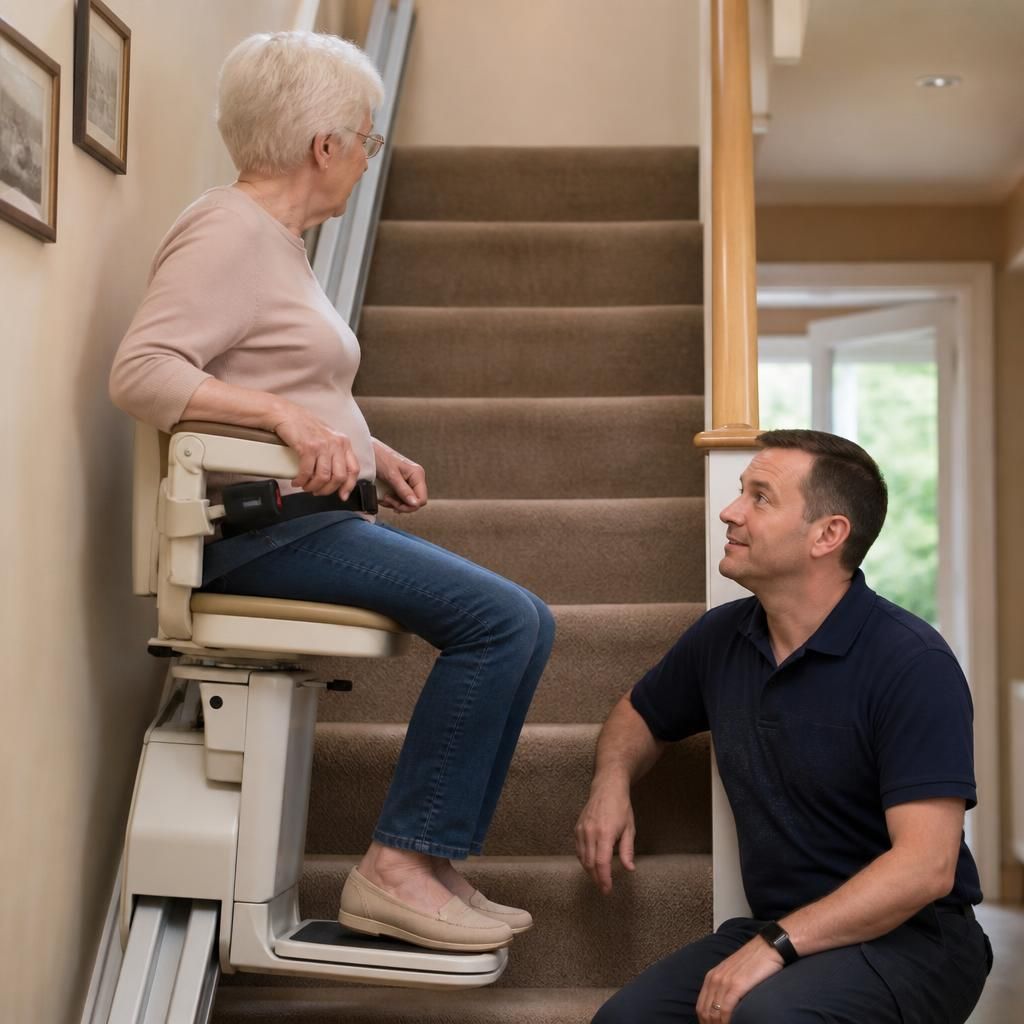
Request a valuation for your used stairlift
Request a valuation for your used stairlift by providing its make, model, age, condition and staircase details. Independent Stairlifts can assess its resale potential and explain the factors affecting the offer.