
How does Independent Stairlifts ensure the removal process is conducted safely and efficiently?
Independent Stairlifts ensures safe, efficient removal by arranging an assessment, isolating the stairlift’s power supply, and using experienced installers to dismantle it carefully. The team protects surrounding surfaces, removes components methodically, and checks that the staircase and home are left clean and safe afterwards.
Independent Stairlifts conducts removals safely and efficiently by planning the work in advance, isolating the stairlift’s power supply, protecting the surrounding area and using experienced installers to dismantle the equipment methodically. Once the stairlift has been removed, the team checks the staircase and nearby surfaces, clears all components and leaves the area clean and safe.
Assessment before removal
The process starts with an assessment of the stairlift and its installation. This helps identify the type of lift, the position of its rail, the charging points, the fixing locations and any access restrictions within the property. The condition of the equipment is also considered, particularly if it is being bought for reconditioning or resale. Planning the removal in this way reduces delays and ensures that the installer arrives with the appropriate tools and understands how the lift is fitted.
The assessment may also highlight practical issues such as narrow hallways, restricted parking, delicate flooring or other people using the staircase. These details can be discussed before the appointment so that suitable arrangements are made and the work can be completed without unnecessary disruption.
Safe isolation of the stairlift
Before any dismantling begins, the stairlift is switched off and its electrical supply is isolated. This prevents the lift from operating while it is being removed. Where the installation includes a rechargeable battery, the installer takes account of the battery and charging system as part of the removal rather than treating the rail and seat as separate items. Electrical connections are handled carefully and any exposed wiring or fixing points are left in a safe condition.
Customers should not attempt to disconnect or dismantle the lift themselves. Stairlifts can be heavy, awkward to handle and connected to electrical components, while the rail may be secured at several points along the staircase. Professional removal avoids the risks associated with lifting equipment, damaging the staircase or leaving an unsafe connection behind.
Protecting the home during dismantling
The installer works carefully around walls, flooring, bannisters, doors and other nearby fixtures. Components are removed in a controlled order so that the rail, seat, carriage, arms and other parts do not swing into or scrape surrounding surfaces. Where necessary, the working area can be managed to protect vulnerable finishes and to keep tools and dismantled parts from creating a trip hazard.
Access to the staircase may need to be limited while the work is in progress. This is particularly important where older people, children or anyone with reduced mobility remains in the property. The installer can explain when the stairs need to remain clear and when they are safe to use again.
Methodical removal of the equipment
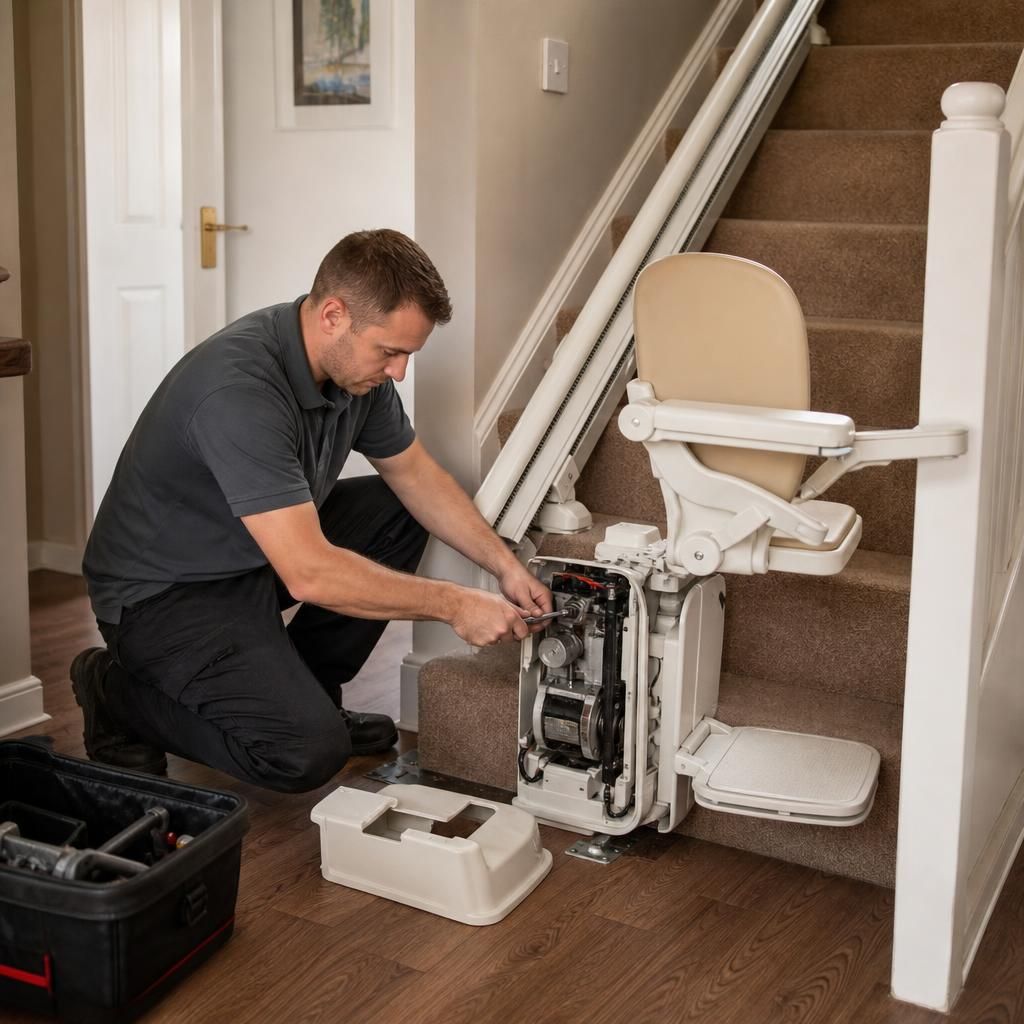
The stairlift is dismantled in manageable sections rather than being forced out as a complete unit. The seat and other removable parts are dealt with first where appropriate, followed by the carriage, rail, brackets, charging equipment and electrical connections. Fixings are removed with suitable tools to minimise the risk of marking the stairs or damaging the installation area.
Components are handled and stored securely as they are removed. This helps prevent damage to parts that may be suitable for reconditioning and makes it easier to identify any items that need separate treatment. If the stairlift is old, damaged or no longer working, the removal method is still based on the condition of the equipment and the layout of the property.
Checks after removal
After the stairlift has been taken out, the installer checks the staircase and the immediate area. This includes confirming that the rail, brackets, cables, charger and other equipment have been removed, that no loose parts remain and that the stairs are clear for normal use. Any remaining fixing points or minor marks can be identified and discussed with you, rather than being overlooked.
The area is cleared of packaging, dismantled components and avoidable debris before the installer leaves. A final review also provides an opportunity to confirm whether anything else is required, such as access to a previously covered section of the staircase or information about the next stage of the sale or collection.
How the process is kept efficient
- The stairlift and property are assessed before the removal appointment.
- Access, parking and any household requirements are considered in advance.
- The power supply is isolated before dismantling starts.
- Parts are removed in a planned sequence and handled securely.
- The installer checks the staircase and clears the work area at the end.
You can help the removal run smoothly by keeping the staircase and access route clear, removing personal items from around the lift and telling the team about any concerns before work begins. If the stairlift is the only safe way for someone in the household to use the stairs, mention this when arranging the removal so the timing and access requirements can be considered properly.
This approach allows Independent Stairlifts to remove the equipment with appropriate care while protecting the home and making the staircase available for normal use as soon as the work is complete.
Independent Stairlifts makes stairlift removal safer by isolating the power supply before dismantling the equipment. An experienced installer then removes the seat, carriage, rail, brackets and charging components in a controlled sequence, rather than attempting to take out the complete stairlift at once.
This method reduces the risk of unexpected movement, damage to the staircase or injury while handling heavy parts. The installer also keeps the access route clear, protects nearby surfaces where necessary and checks that no loose components, exposed connections or trip hazards remain after removal.
Arrange Your Stairlift Removal Assessment
Arrange your stairlift removal assessment with Independent Stairlifts so the equipment, access requirements and safe removal arrangements can be reviewed in advance.