
What should I expect during the installation process of a used stairlift?
During a used stairlift installation, a trained installer will assess your staircase and access needs, prepare the reconditioned equipment, and fit it securely to suit your home. The stairlift will then be tested for safe, smooth operation before you are shown how to use it and advised about ongoing support and maintenance.
During a used stairlift installation, a trained installer will first confirm that the reconditioned stairlift is suitable for your staircase and access needs. The equipment is then prepared, fitted securely—usually to the stair treads rather than the wall—and thoroughly tested before you are shown how to operate it. The visit should also cover charging, safety features, basic care and the support available after installation.
Pre-installation assessment
Before fitting begins, the installer will assess the staircase and the way you intend to use the stairlift. This normally includes checking:
- the staircase layout, width, gradient, landings and available clearance;
- the position of doors, radiators, handrails and other potential obstructions;
- where the stairlift can safely start and finish;
- your height, posture, mobility and ability to transfer on and off the seat;
- the required weight capacity and whether a standard seat, swivel seat or another option is appropriate;
- the most suitable positions for the charging points or charging station; and
- any practical requirements, such as folding the seat or rails to preserve access to the stairs.
For a curved staircase, the assessment is particularly important because the rail must follow the individual shape of the stairs. The installer may take measurements or create a digital or physical survey before the rail is prepared. A used stairlift is not automatically interchangeable between homes, so the rail, carriage and controls must be checked for compatibility with your staircase and the proposed installation.
Checks on the used stairlift
Reconditioned equipment should be inspected and prepared before it is installed. The installer or service team will check the condition of key components, including the drive system, batteries, seat, armrests, safety sensors, controls and charging equipment. Any parts that are worn, unsuitable or incompatible should be addressed before the lift is put into regular use.
The available specification will depend on the model and the condition of the equipment. Your installer should explain what is included, which controls are provided and whether any features differ from those on a new stairlift. If a particular option is essential for safe use—such as a powered swivel seat or a hinged rail—confirm this during the assessment rather than assuming it will be available on every used model.
Preparing the staircase and installation area
Most stairlifts are secured to the stair treads, so extensive structural work is not normally required. The installer will protect the surrounding area as appropriate and ensure that the stairs and access points are clear. You may be asked to move small items from the hallway, landing or nearby rooms so that the installation can be completed safely.
Any required electrical supply or charging arrangement will be considered as part of the installation. The installer will also check that the lift will park in a suitable position and that it will not obstruct a doorway, narrow passage or emergency route. If the proposed position creates an access issue, this should be discussed before the equipment is fixed in place.
Fitting the rail, carriage and seat
For a straight stairlift, the rail is aligned along the staircase and fixed securely to the treads. For a curved model, the made-to-measure rail is assembled and positioned so that the carriage follows the bends, landings or changes in direction correctly. The carriage, seat, footrest, armrests and controls are then fitted and adjusted to suit the user and the available space.
The installer will normally check the seat height, swivel mechanism, footrest position, armrest operation and the location of the control handset. If other people use the stairs, the installer should also consider how they can pass the parked stairlift safely. A hinged or folding component may be used where appropriate to reduce obstruction at the top or bottom of the staircase.
Testing before handover
After fitting, the stairlift should be run through its full travel and checked in the conditions in which it will be used. This includes checking that:
- the carriage moves smoothly and stops correctly at the intended positions;
- the safety sensors respond if the footrest or carriage encounters an obstruction;
- the seat locks securely in its travelling and swivel positions;
- the seat belt or other restraint works correctly;
- the armrest and remote controls operate as intended;
- the lift charges correctly when parked; and
- the stairlift does not interfere with doors, handrails, other household equipment or normal use of the staircase.
Testing is not limited to switching the lift on. The installer should explain what happens if a sensor activates, the battery is low, the lift is not parked correctly or the power supply is interrupted. Do not use the stairlift if it moves unevenly, makes an unusual noise, fails to stop at the correct point or displays a warning that you do not understand. Report the issue so it can be investigated before continued use.
Demonstration and handover
Before leaving, the installer should demonstrate the complete journey and allow you to practise under supervision. This normally includes mounting and leaving the seat, fastening the restraint, operating the controls, using the swivel seat, folding the lift when appropriate and parking it for charging.
You should also be shown how to use the remote controls, what the audible or visual indicators mean and how to deal with a stopped lift. The installer can explain what to do during a power cut or if you need assistance, but you should not attempt to dismantle the carriage, remove batteries or alter the rail yourself.
Installation information should be provided for the particular stairlift, including operating instructions, servicing guidance and details of the support arrangement. Keep these documents somewhere accessible and make sure anyone who may assist you understands the basic operating and emergency procedures.
After installation
A used stairlift requires the same careful day-to-day use as any other stairlift. Keep the rail and charging area clear, park the lift as instructed and avoid placing objects on the seat or footrest. Follow the recommended cleaning and servicing guidance, and report changes in performance promptly. Battery condition, drive components and safety switches can be affected by age and use, so servicing is important even when the stairlift initially operates normally.
If your needs or circumstances change after fitting—for example, if transferring becomes more difficult, another person needs to use the lift or access around the parked stairlift becomes inconvenient—contact Independent Stairlifts before making adjustments. A follow-up visit or alteration may be possible, but changes should be assessed and completed by a qualified installer.
The installation should leave you with a stairlift that is securely fitted, appropriate for the staircase and understood by its user. If any part of the assessment, demonstration or aftercare arrangements is unclear, raise it before the installer leaves so that the equipment can be used safely and maintained correctly.
Used stairlift installation includes more than securing the equipment to the stairs. The installer must confirm that the reconditioned lift is compatible with your staircase, fit it securely, test every safety function and show you how to use it correctly.
Before the installer leaves, practise the full journey under supervision. You should be comfortable using the seat belt, controls, swivel seat and footrest, and know where the lift should be parked so that it charges without obstructing the stairs or a doorway. Ask what the warning sounds and lights mean, what to do during a power cut and who to contact if the lift develops a fault.
Do not use the stairlift if it moves unevenly, makes an unusual noise, fails to stop correctly or displays an unfamiliar warning. Report the problem immediately so it can be checked before continued use. Keep the operating instructions and servicing information in an accessible place for future reference.
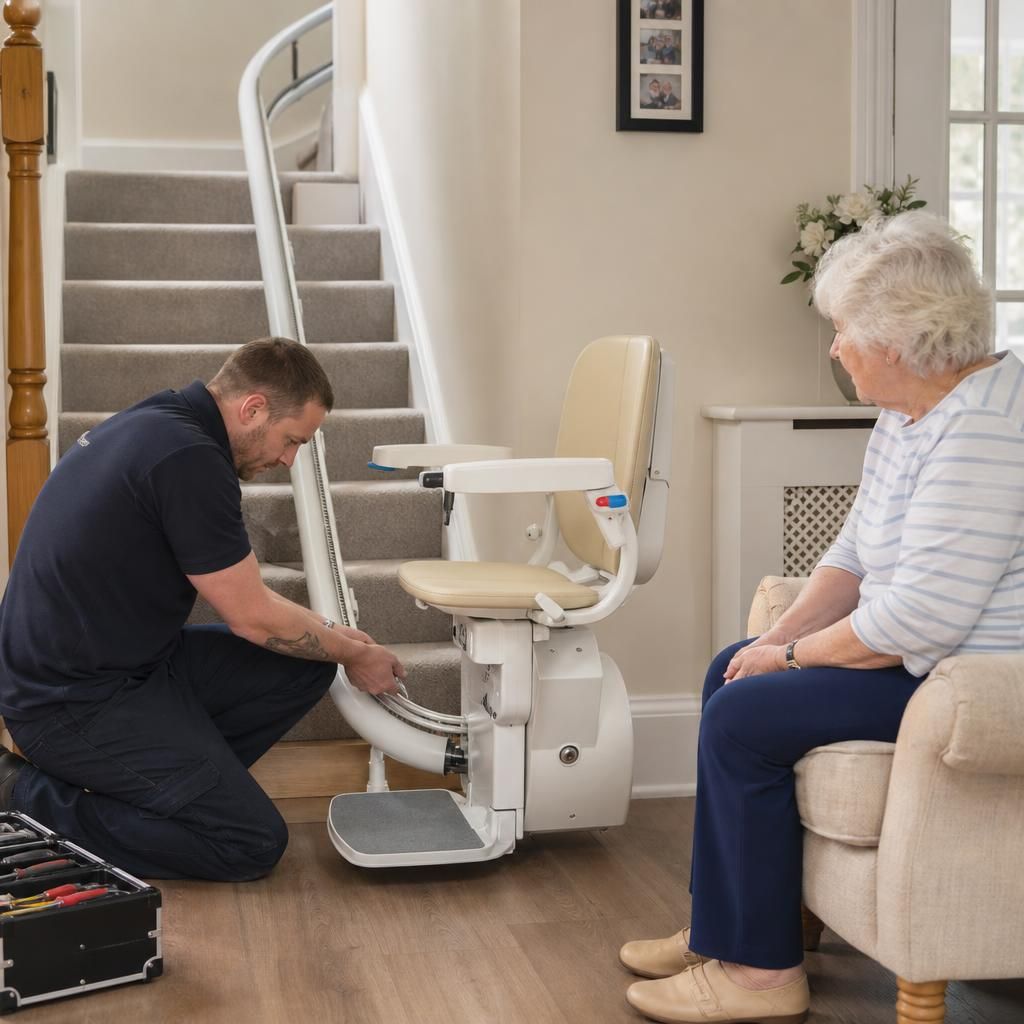
Discuss your used stairlift installation with our team
Discuss your used stairlift installation with our team to confirm that the equipment, staircase and fitting arrangements are suitable for your home. We can explain the assessment, installation and aftercare process and answer any questions before the visit.