
What post-installation services and support can I expect to ensure my used stairlift operates effectively and meets safety standards over time?
After installation, you can expect commissioning and safety checks, guidance on using your used stairlift, and ongoing support for servicing, adjustments and repairs when required. Regular professional inspections, prompt attention to wear or faults, and correct day-to-day use help keep the lift reliable and compliant with applicable safety requirements over time.
After your used stairlift has been installed, post-installation support should include commissioning checks, user instruction, warranty guidance, servicing, fault diagnosis and repairs when required. These measures help confirm that the lift is correctly adjusted for your staircase, operates as intended and continues to meet the applicable safety requirements throughout its working life.
Commissioning and handover checks
Before the stairlift is handed over for regular use, the installer should test its movement, charging and safety systems. This normally includes checking that the carriage travels smoothly, stops accurately at the top and bottom of the rail, and responds correctly to the controls. The seat, armrests, footrest, swivel mechanism, safety belt, sensors and any powered functions should also be checked where fitted.
The installation should be reviewed in its actual home environment rather than assessed only as a standalone machine. The installer can confirm that the rail is secure, clearances are appropriate, the charging points work and the lift does not obstruct doors, landings or routes through the property. Any adjustments needed after fitting should be completed before the stairlift is placed into normal use.
Instruction for safe everyday use
You should receive a practical demonstration covering the controls, charging procedure, seat position, safety belt, swivel seat and emergency stop or lowering features where applicable. Guidance should also explain how to use remote controls, what the warning tones or indicator lights mean, and how to leave the stairlift safely if it stops unexpectedly.
Use the stairlift only as instructed. Keep the steps and landing clear, sit fully back in the seat, use the belt where fitted, and avoid carrying loads that could affect balance or interfere with the footrest or sensors. Children and visitors should not operate the lift without suitable supervision. The user information and any service contact details should be kept where they can be found easily.
Warranty and aftercare support
Used or reconditioned stairlifts should be supplied with clear information about the aftercare and warranty arrangements that apply to the particular lift. Coverage can depend on the equipment, its age, the work carried out during reconditioning and the terms agreed at installation. Ask what is included, how to report a problem, whether call-outs or replacement parts are covered, and which parts may be excluded as consumable or wear items.
Independent Stairlifts can provide support if you notice a fault, unusual noise, loss of power or a change in the way the lift moves. When reporting a problem, describe any warning lights or sounds, where the stairlift stops, whether it charges correctly and whether the issue occurs in one direction or both. This information helps the engineer identify whether the problem may relate to the charger, batteries, controls, sensors, drive system, rail or another component.
Planned servicing and inspections
Regular professional servicing is an important part of used stairlift aftercare. The appropriate interval depends on the model, manufacturer’s instructions, frequency of use, staircase conditions and the condition of the equipment at installation. A service should not be delayed if the lift is used heavily or if its operation has changed. Your service provider can advise on a suitable maintenance plan for the specific stairlift.
A service inspection may include:
- checking the rail, fixings, carriage and drive mechanism;
- testing the seat, swivel lock, armrests, footrest and safety belt;
- checking safety sensors, controls, limit switches and stopping accuracy;
- examining batteries, charging contacts, wiring and the power supply;
- checking for excessive wear, looseness, damage or unusual noise;
- cleaning or lubricating components where the manufacturer permits it; and
- recording any adjustments, replacement parts or further work recommended.
Servicing is not simply a visual check. The engineer should operate the stairlift and assess whether its performance remains consistent with the manufacturer’s instructions and the installation requirements. If a part is worn or a safety feature does not operate correctly, the lift may need to be taken out of use until the issue has been resolved.
Battery and charging care
Most indoor stairlifts use rechargeable batteries, including when the lift is powered from a domestic electrical supply. Keep the stairlift parked on its designated charging point when it is not in use, unless your instructions state otherwise. Repeatedly leaving it away from the charger can reduce battery availability and may eventually prevent the lift from operating.
Warning tones, a battery indicator that does not recover after charging, slow movement or failure to start can indicate a charging or battery problem. Do not attempt to replace batteries, bypass a charger or alter electrical connections yourself. Contact the service team so the fault can be assessed safely and the correct parts can be fitted.
Responding to faults and changes in operation
Stop using the stairlift and request advice if it judders, makes a new grinding or clicking noise, stops short of a landing, moves unexpectedly, repeatedly reports an error or fails to lock the seat securely. You should also report damaged belts, loose armrests, a footrest that does not fold correctly, exposed wiring or any sign of impact to the rail or carriage.
Do not continue using a lift that has a known safety fault, and do not remove covers or try to adjust safety devices. If the stairlift stops between floors, follow the emergency instructions provided at handover and contact the support team. Only use an emergency lowering device or manual release if you have been shown how to do so and it is safe in your circumstances.
Maintaining safety standards over time
Safety depends on the condition of the equipment, the quality of the installation, appropriate servicing and correct use. A used stairlift should continue to be maintained in line with its manufacturer’s instructions and the relevant UK requirements that apply to the equipment and installation. Servicing records, repair notes and details of replacement parts provide a useful history and can help identify recurring issues.
Tell the service team if the user’s mobility, weight, transfer method or level of assistance has changed. A stairlift that was suitable at installation may need reassessment if the user begins to require different support, if the staircase is altered or if household access arrangements change. An assessment can identify whether additional adjustments, accessories or another mobility solution would be safer.
Professional aftercare does not remove the need for simple user checks. Keep the rail and charging area free from obstructions, avoid spills around electrical components, follow the cleaning instructions and check visually for damage. Never apply household oil or cleaning products unless the manufacturer or engineer has confirmed that they are suitable.
By combining the original commissioning checks with clear user guidance, planned servicing and prompt fault reporting, your used stairlift can be kept in dependable working condition. If you are unsure whether a noise, warning light or change in performance is normal, contact Independent Stairlifts before continuing to use the lift; early advice can prevent a minor adjustment from becoming a more serious safety or reliability issue.
Regular servicing helps maintain safe, reliable operation. An engineer can check the rail, fixings, drive system, batteries, controls, safety sensors, seat belt and stopping points, while identifying wear or damage that may not be obvious during everyday use. Keep the stairlift on charge when not in use, follow the operating guidance provided at handover and report unusual noises, warning lights, juddering or changes in movement promptly. Do not continue using the lift if a safety feature appears faulty; contact Independent Stairlifts for advice and arrange an inspection before using it again.
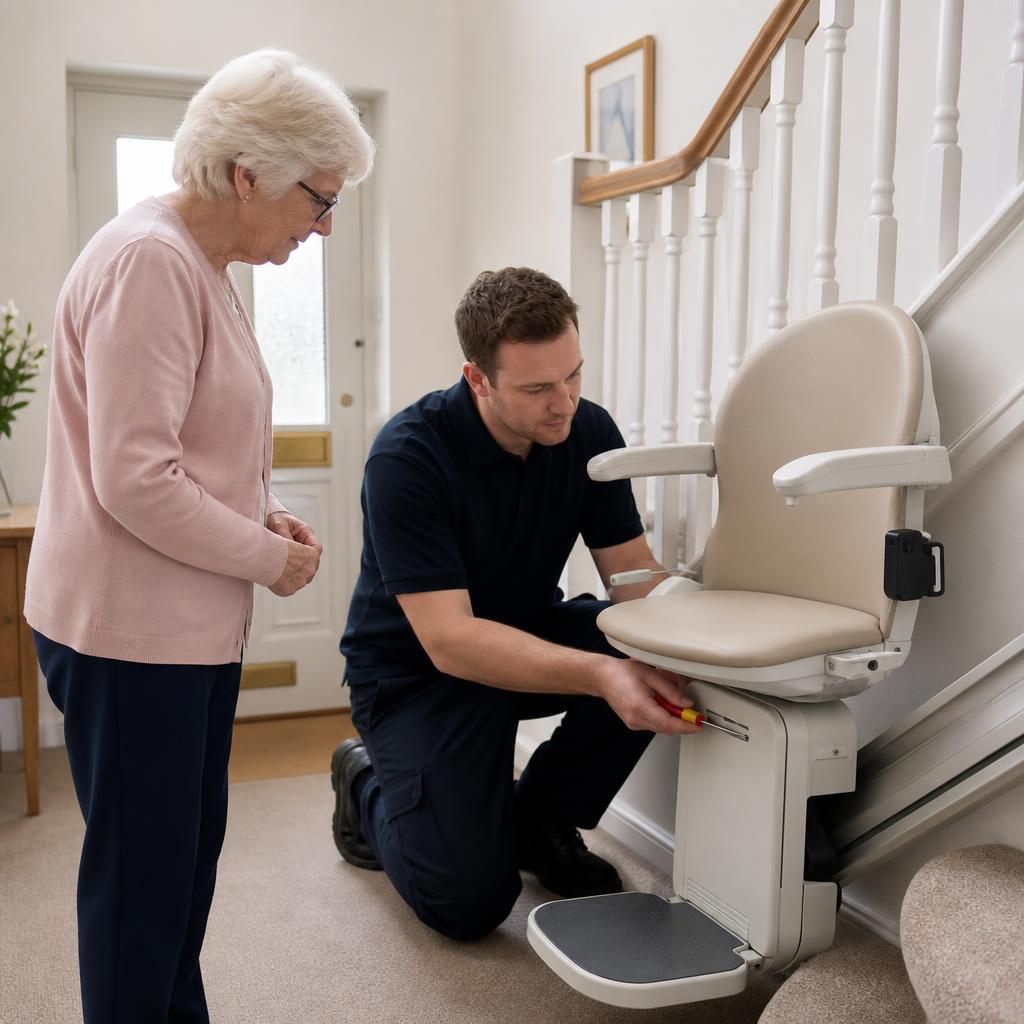
Arrange Your Used Stairlift Servicing and Support
Contact Independent Stairlifts to arrange servicing, safety checks or advice about a fault with your used stairlift. Our team can help assess changes in performance, recommend appropriate aftercare and arrange any required adjustments or repairs.