
What maintenance is required for a used stairlift after installation?
A used stairlift requires regular cleaning, safe-use checks, correct battery charging and professional servicing to keep it reliable after installation. Follow the supplied maintenance guidance and arrange inspections by a qualified stairlift technician, particularly if you notice unusual noises, reduced travel, warning lights or changes in braking.
A used stairlift needs the same routine care as a new installation, together with professional checks that take account of its age, previous use and replacement parts. Keep the lift clean and dry, use it as instructed, check the visible safety features regularly, maintain the charging system and arrange servicing in line with the manufacturer’s guidance or the schedule provided at installation.
Follow the supplied maintenance information
The installation paperwork should identify the stairlift model, battery type, controls, charging points and recommended service requirements. Keep this information accessible and follow the instructions for your particular lift, as controls and charging arrangements vary between models. If the paperwork is missing, contact Independent Stairlifts or a suitably qualified stairlift technician before attempting any maintenance beyond basic cleaning and visual checks.
Carry out simple checks before use
Before using the stairlift, look for anything that could affect safe operation:
- Check that the seat, armrests, footrest and safety belt are secure and undamaged.
- Make sure the seat is correctly positioned and, where applicable, locked for travel.
- Check that the stairway and the lift’s travel path are clear of people, pets and objects.
- Look for visible damage, loose covers, exposed wiring or parts that appear out of position.
- Confirm that the lift starts, stops and travels smoothly without unusual movement.
- Check the display, warning lights or audible alerts for fault indications.
Do not use the stairlift if a safety feature is damaged, the belt does not fasten correctly, or the lift behaves differently from normal. Switch it off if the instructions allow this, keep the staircase clear and arrange professional advice.
Keep the stairlift clean
Wipe the seat, armrests, controls and footrest with a soft, slightly damp cloth. Use only cleaning products approved for the materials and avoid allowing liquid to enter the handset, control panel, motor housing or electrical connections. Do not use abrasive cleaners, solvents or a pressure washer.
The rail should be kept free from dust and objects that could interfere with the carriage. Clean it as described in the manufacturer’s instructions. Do not apply oil or general-purpose lubricant unless the manufacturer or technician specifically recommends it, because the wrong product can attract dirt or affect the drive mechanism.
Maintain the batteries and charging points
Most stairlifts use rechargeable batteries and should be left at their charging point when not in use, following the instructions for the model. Avoid routinely allowing the batteries to become completely flat. If the stairlift has charging points at the top and bottom of the stairs, make sure it is parked where it can charge correctly.
Keep charging contacts clean and unobstructed, and do not cover the charger or battery area. Batteries are consumable components, so a used stairlift may need replacement batteries sooner than a newer lift. Signs of a battery or charging problem can include reduced travel, repeated low-battery warnings, failure to charge, or the lift stopping before reaching the end of the rail. Battery replacement should be carried out by a competent technician using compatible parts.
Arrange professional servicing
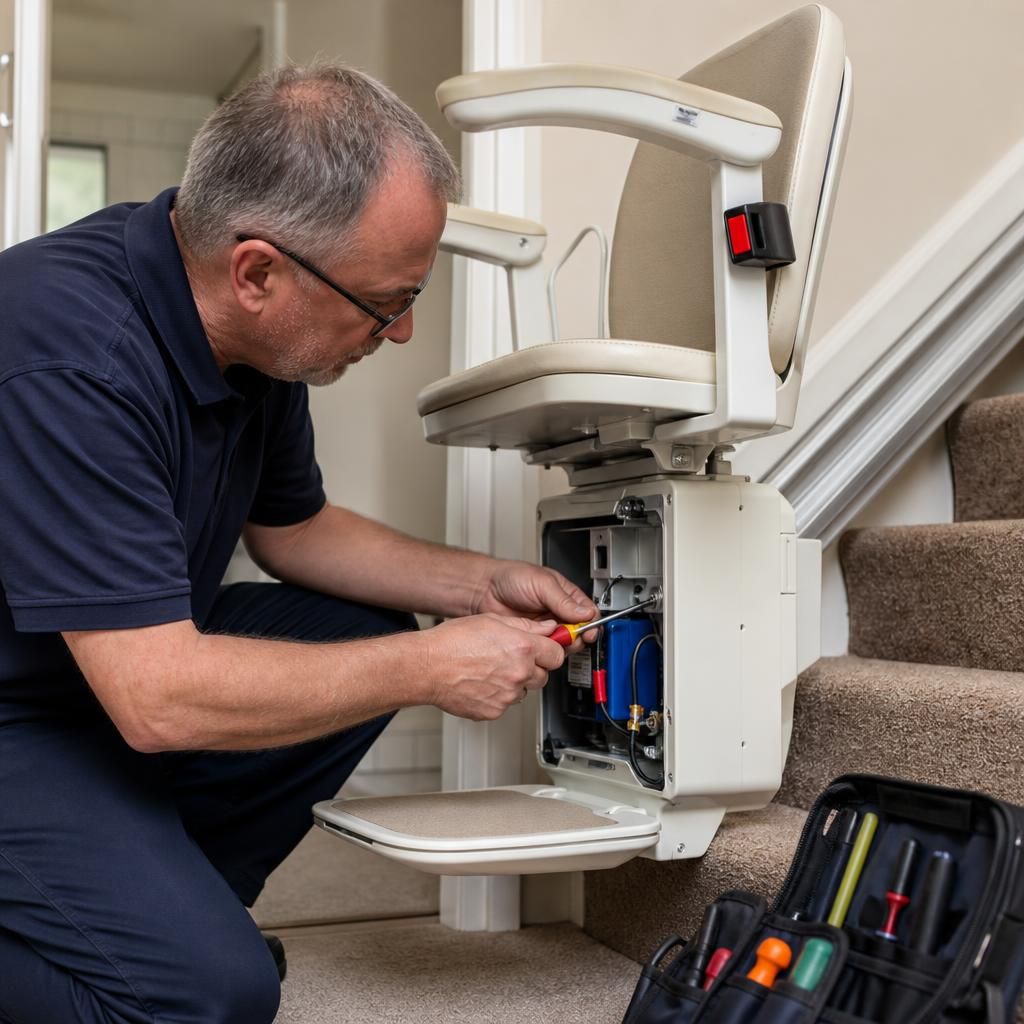
A qualified stairlift technician should inspect and service the lift at the interval recommended for its model and usage. A service may include checking the rail and fixings, drive system, motor, brakes, seat swivel and locking mechanism, footrest, safety belt, controls, sensors, batteries, charging system and emergency stop functions. The technician can also identify wear that is not apparent during everyday use and confirm that the lift remains suitable for the staircase and user.
Servicing is particularly important for a reconditioned or second-hand stairlift because its condition depends on its previous operating environment, storage and usage. It does not mean that every part needs replacing. The technician should assess the components, explain any wear found and recommend repairs or replacement only where necessary for safe and reliable operation.
Report changes promptly
Contact the service team if you notice grinding, clicking or squeaking noises, jerky movement, unusual vibration, a change in stopping distance, reduced speed, intermittent controls, warning lights, repeated error messages or a burning smell. Also report a seat that does not swivel or lock properly, a footrest that catches, a belt that will not latch, or a lift that does not stop at its normal charging points.
Do not continue using the stairlift to see whether a fault clears itself. Do not remove covers, bypass sensors, adjust the brake or attempt electrical repairs. Stairlift mechanisms and batteries can present mechanical and electrical hazards, and an incorrect adjustment may make the lift unsafe while concealing the original fault.
Keep the operating area safe
Good stairlift maintenance includes maintaining the space around it. Keep rugs, furniture, trailing cables and stored items away from the stairs and from the rail. Ensure that other household members know not to obstruct the lift or interfere with its controls. If the stairlift is installed outdoors, inspect it for signs of water ingress, corrosion, debris and weather-related damage, and follow the additional protection and cleaning instructions for that installation.
Keep a record of servicing, battery changes and repairs. This helps the technician understand recurring problems and provides a useful maintenance history if the lift is moved, adapted or assessed again. If the user’s mobility or physical needs change, request a reassessment rather than modifying the stairlift independently. A used lift that is cleaned appropriately, charged correctly, checked regularly and professionally serviced can continue to provide dependable access, but any safety concern should be dealt with before the lift is used again.
Battery and charging checks are an essential part of maintaining a used stairlift after installation. Leave the lift parked on its designated charging point when it is not in use, as recommended for the model, and keep the charging contacts clean and unobstructed. Do not allow the batteries to become completely flat as a routine practice. Reduced travel, low-battery warnings, failure to charge or the lift stopping before reaching the end of the rail can indicate worn batteries or a charging fault. Arrange inspection by a qualified stairlift technician rather than attempting to replace batteries or repair electrical connections yourself. Compatible replacement batteries may be needed sooner on a used stairlift, depending on its age and previous usage.
Arrange your used stairlift service
Arrange your used stairlift service with Independent Stairlifts to check its batteries, charging system, safety features and moving parts. Contact us if you notice unusual noises, warning lights, reduced travel or any change in normal operation.