
What aspects should be considered when choosing between a reconditioned and a new stairlift?
When choosing between a reconditioned and new stairlift, consider the total cost, warranty, condition, safety checks, expected usage and whether the model is suitable for your staircase and mobility needs. A reconditioned stairlift can provide good value when professionally inspected and installed, while a new stairlift may offer more choice, the latest features and longer-term manufacturer support.
The choice between a reconditioned and a new stairlift should be based on more than the purchase price. Compare the total cost, the stairlift’s condition and specification, the warranty and aftercare available, its compatibility with your staircase, and how often it will be used. A professionally reconditioned stairlift can be a practical, lower-cost option, while a new stairlift usually provides greater choice, the latest specification and more extensive manufacturer support.
Start with the suitability of the stairlift. The equipment must match both your staircase and the person who will use it. Straight stairlifts are generally fitted to a standard straight flight, whereas curved stairlifts require a rail designed around the staircase. Landings, intermediate steps, narrow sections, doorways, bends and changes in gradient can all affect the design. An assessment should also consider the user’s height, weight, balance, leg movement, transfer ability and whether they need powered options such as a swivel seat, powered footrest or folding rail.
A reconditioned stairlift may be suitable where the model and rail configuration meet these requirements. On a curved staircase, however, a previously used rail is not necessarily suitable for another property because curved rails are made to follow an individual staircase. In some cases, a reconditioned unit can be installed with a new or adapted rail, but this must be confirmed during the survey rather than assumed from photographs or a model description.
Understand what “reconditioned” includes. A reconditioned stairlift should be more than a second-hand unit that has been removed and resold. Ask whether it has been professionally inspected, cleaned, tested and serviced, and whether worn components have been replaced where necessary. The assessment should include the drive system, batteries, charging equipment, controls, seat mechanism, safety sensors, belts, armrests, footrest and rail. You should also be told about any parts that are not new and any limitations that could affect future servicing.
Condition can vary between individual used stairlifts, even when they are the same model. A unit that has had light use and has been maintained may be a sound option, whereas one with significant wear may require more attention after installation. A clear explanation of the refurbishment work and the stairlift’s remaining support arrangements will help you compare options fairly.
Compare the complete cost, not just the initial price. For a reconditioned stairlift, establish whether the quoted price includes the survey, removal of any existing equipment, delivery, fitting, testing, handover and VAT where applicable. Check whether the price also covers the rail, chargers, controls and any required alterations. A lower starting price may not represent good value if essential accessories, repairs or future call-outs are excluded.
A new stairlift can have a higher initial cost, but it may include a longer warranty, more configuration choices and clearer access to replacement parts. A reconditioned model may reduce the upfront cost, particularly for a straightforward installation, but its age and condition could affect future maintenance requirements. Ask about likely servicing, battery replacement and call-out costs so that you can consider the ownership cost over the period you expect to use the stairlift.
Check the warranty and aftercare carefully. The warranty should state what is covered, how long cover lasts, and whether it applies to parts, labour, batteries and call-outs. It should also explain any exclusions, such as accidental damage, misuse or faults caused by unauthorised work. Do not assume that a reconditioned stairlift has the same warranty as a new one.
For either option, confirm how faults are reported and who provides technical support after installation. Reliable aftercare is particularly important if the stairlift is the main way the user accesses essential rooms. You should know whether servicing is available locally, whether parts can still be obtained for the model, and what assistance is available if the stairlift stops working.
Consider the expected length and intensity of use. If the stairlift is needed every day for the foreseeable future, the longer warranty, newer components and broader specification of a new model may justify the additional cost. If it is intended for occasional use, temporary support or a property that may be adapted later, a suitable reconditioned stairlift may offer a sensible balance of cost and function. The decision should still account for the user’s safety and independence rather than focusing only on how frequently the lift will run.
Battery-powered stairlifts normally continue to operate during a power cut when the batteries are properly charged, but battery condition is important on a used unit. Ask whether the batteries have been tested and how their condition is assessed. Batteries are consumable components and may eventually need replacement on either a new or reconditioned stairlift.
Compare features that affect safe, comfortable use. New models may offer a wider choice of seat sizes, upholstery, controls and powered functions. Some of these features can make transfers easier or reduce the effort needed to operate the stairlift, but not every feature is necessary for every user. A reconditioned model may provide the essential functions at a lower cost, provided its seat, controls and safety features are appropriate.
Consider whether the user can sit upright securely, reach the controls, operate the swivel mechanism and manage the footrest. If more than one person will use the stairlift, the controls and seating position should be practical for everyone. A demonstration or assessment is preferable to choosing solely from a specification sheet.
Give safety and installation standards priority. The stairlift should be installed by a competent professional following the manufacturer’s instructions and applicable UK safety requirements. Before handover, the installer should test the lift, charging points, safety sensors, seat and controls, and explain correct operation. The user should receive instructions for using the stairlift safely, charging it and responding to a fault or obstruction.
Never buy a used stairlift for self-installation or assume that a previous installation makes it suitable for a new home. The rail may need repositioning, and the staircase, fixings and surrounding clearances must be assessed. An existing stairlift should also be checked before it is reused, as moving equipment without a proper inspection can introduce safety and reliability problems.
Ask how future repairs and parts will be managed. A new stairlift is more likely to have ongoing manufacturer support, particularly where it is a current model. With a reconditioned stairlift, confirm that replacement parts, batteries and compatible controls remain available. Older or discontinued models may still be serviceable, but this should be established before purchase. Keep the model details, installation information and warranty documents for future servicing.
In practical terms, a new stairlift is usually preferable when you need a particular design, the latest features, a longer period of manufacturer support or a bespoke curved installation. A reconditioned stairlift may be appropriate when the specification meets the user’s needs, the equipment has been properly inspected and refurbished, the installation is suitable, and the warranty and aftercare are clear.
Before making a decision, arrange an assessment of the staircase and user, request a written quotation, and ask for a direct comparison of the available new and reconditioned options. This makes it easier to weigh the initial price against condition, safety, warranty, suitability and likely long-term support.
The main difference between a reconditioned and new stairlift is the balance between initial cost, condition and future support. A reconditioned model can be suitable when it has been professionally inspected, fitted to the staircase and supplied with clear warranty and aftercare arrangements.
Before choosing, ask what refurbishment has been completed and whether the batteries, drive system, safety sensors, controls and seat mechanisms have been tested. Confirm what the warranty covers, including parts, labour and call-outs, and check that replacement parts remain available. A new stairlift may be the better option where you need specific features, a bespoke curved rail or longer-term manufacturer support.
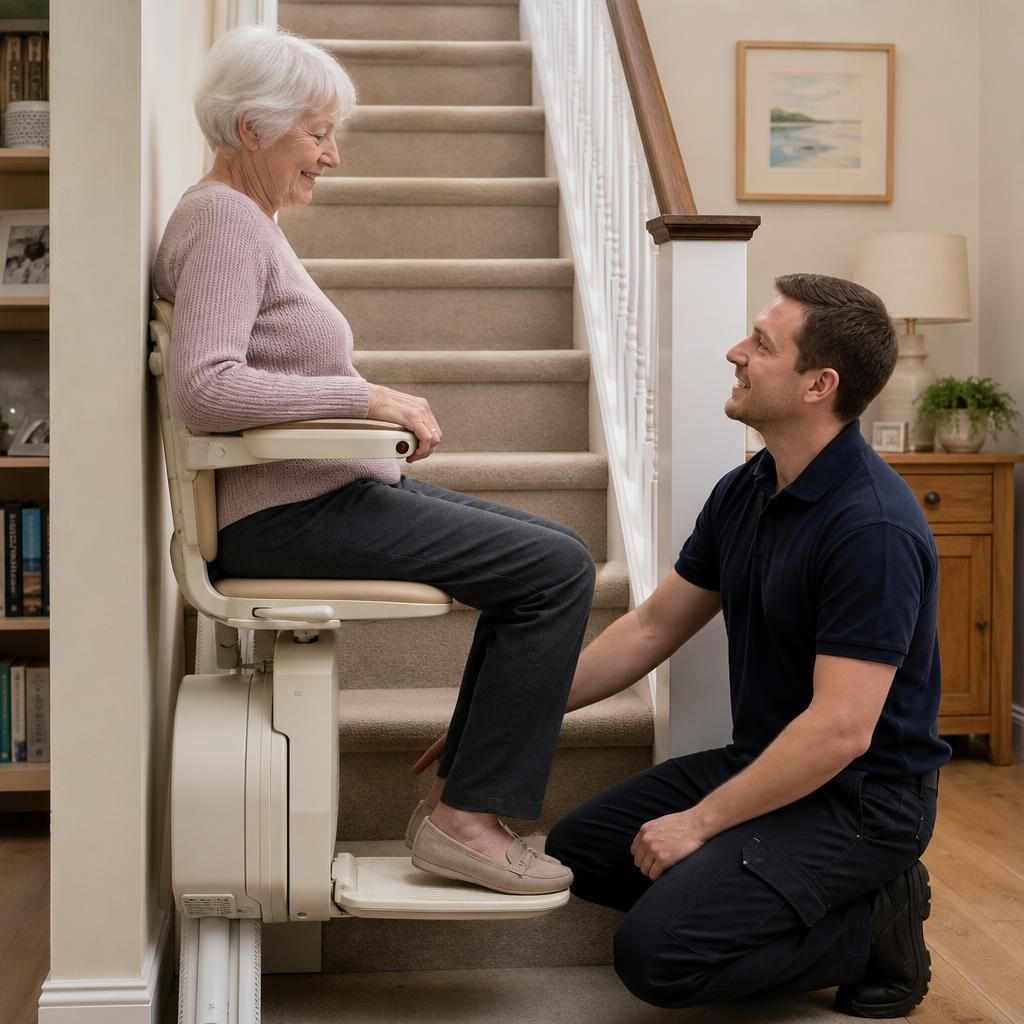
Arrange a stairlift assessment and compare your options
Arrange a stairlift assessment with Independent Stairlifts to discuss your staircase, mobility needs and the suitability of new and reconditioned options. We can provide a clear quotation and explain the available warranty and aftercare.