
How does Independent Stairlifts ensure the reliability and longevity of a used stairlift after installation, especially given the concerns about potential wear and tear with pre-owned equipment?
Independent Stairlifts supports the reliability and longevity of a used stairlift by assessing its condition and suitability, replacing worn or unsafe components where necessary, and completing safety checks before professional installation. We then provide guidance on correct use and ongoing maintenance so potential wear and tear can be identified and addressed promptly.
A used stairlift can provide reliable, long-term support after installation when its condition, compatibility and safety are assessed before it is fitted. Independent Stairlifts checks the equipment and the staircase, replaces components that are worn or unsuitable, installs the lift correctly and carries out operational and safety checks before handover. This process addresses the main risks associated with pre-owned equipment rather than treating a used stairlift as ready to install without further inspection.
Assessment before installation
Each stairlift is assessed for its suitability for the intended user and the staircase. This includes examining the overall condition of the stairlift, its rail, carriage, seat, controls and charging equipment, as well as checking that the design is appropriate for the layout of the home. A lift that is technically functional may still be unsuitable if its seat position, controls or transfer points do not work safely for the user.
The assessment also considers signs of previous use, such as excessive noise, movement, damage, corrosion, worn upholstery, poor battery performance or deterioration of electrical and mechanical parts. The rail and fixing points are checked for compatibility with the staircase, and any unusual features—such as tight turns, narrow steps, intermediate landings or restricted access—are considered before installation is confirmed.
Inspection and replacement of worn components
Pre-owned equipment is not installed solely because it powers on. Components are inspected and tested to identify parts that could affect safe operation or future reliability. Depending on the model and its condition, this may include the batteries, charging system, drive mechanism, seat swivel and locking functions, armrests, footrest, safety sensors, controls, belts and other protective features.
Where a component is worn, damaged, unreliable or unsuitable for the new installation, it can be repaired or replaced as appropriate. The aim is not to disguise the age of the stairlift, but to ensure that the equipment supplied is fit for its intended use. If the condition or configuration of a used stairlift means it cannot be installed safely or economically, an alternative solution may be recommended instead.
Professional fitting and safety testing
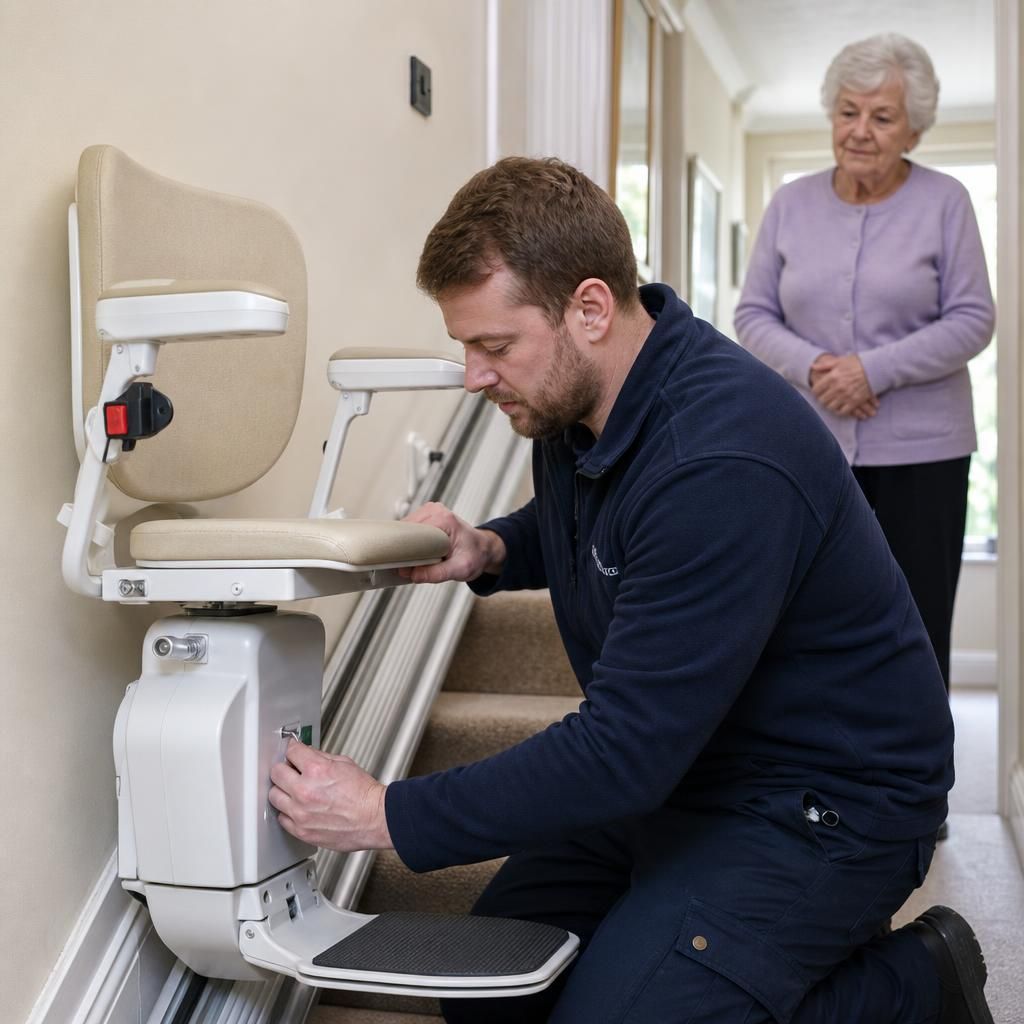
Correct installation is important because poor alignment, unsuitable fixings or incorrect positioning can cause operational problems even when the stairlift itself is in good condition. The installer secures the rail appropriately, positions the seat and controls for the user, checks charging points and confirms that the lift travels correctly along the full staircase without creating avoidable obstructions.
Before the stairlift is handed over, its key functions are tested. These checks include starting and stopping, travel along the rail, charging, seat and safety-lock operation, the footrest and obstruction sensors, the seat belt and user controls. The installer also checks that the stairlift stops as expected and that the user can get on and off safely at the relevant landings. Any issue identified during testing must be dealt with before the installation is considered complete.
Handover and correct use
Reliability also depends on how the stairlift is used. At handover, the user or their family member is shown how to operate the controls, position the seat, use the belt and swivel mechanism where fitted, park the stairlift and keep the charging points accessible. Guidance on safe loading, avoiding obstacles and responding to warning sounds or fault indications helps prevent unnecessary strain and allows problems to be reported promptly.
Users should not continue operating the stairlift if it develops unusual movement, repeated stopping, grinding or clicking noises, a burning smell, visible damage or a persistent fault indication. The lift should be parked safely and Independent Stairlifts contacted for advice or a service assessment. Attempting to repair electrical or mechanical parts without the appropriate expertise can create additional safety risks.
Ongoing maintenance and support
Regular care helps preserve the performance of a used stairlift. Keep the rail and travel path clear, avoid storing items on the steps or footrest, keep charging contacts clean and follow the operating and maintenance guidance provided at installation. Batteries and other moving or wear-prone parts will eventually require attention, and their condition can be affected by how frequently the lift is used and whether it is left correctly on charge.
Post-installation support allows faults, changing user needs or signs of wear to be investigated before they become more serious. Servicing can include checking the drive system, batteries, safety devices, fixings, controls and general operation. The appropriate maintenance interval depends on the stairlift model, its age, condition and level of use, so advice should be based on the specific equipment rather than a generic schedule.
These checks cannot remove all wear associated with a pre-owned stairlift, and no mechanical product should be considered maintenance-free. They do, however, provide a controlled way to identify unsuitable equipment, correct faults, replace degraded parts and confirm safe operation. By combining a condition assessment, appropriate reconditioning, specialist fitting, user instruction and continuing support, Independent Stairlifts helps ensure that a used stairlift remains a dependable solution for the home over time.
A used stairlift remains reliable after installation when its condition is assessed before fitting and worn or unsuitable components are repaired or replaced. Independent Stairlifts checks the rail, carriage, seat, controls, batteries, charging system, safety sensors and protective features rather than treating a pre-owned lift as ready to install without further inspection.
The stairlift is then fitted to suit the staircase and user, with checks on alignment, fixings, travel, charging, stopping, seat and belt operation, footrest and obstruction sensors. Any issue identified during testing is addressed before handover. The user is also shown how to operate and charge the lift correctly, recognise warning signs and report unusual noise, movement or fault indications promptly.
Arrange a used stairlift assessment
Arrange a used stairlift assessment with Independent Stairlifts to check the equipment, staircase and user requirements before fitting is confirmed.