
What specific assessments are conducted to ensure the safety and reliability of reconditioned Stannah stairlifts before installation?
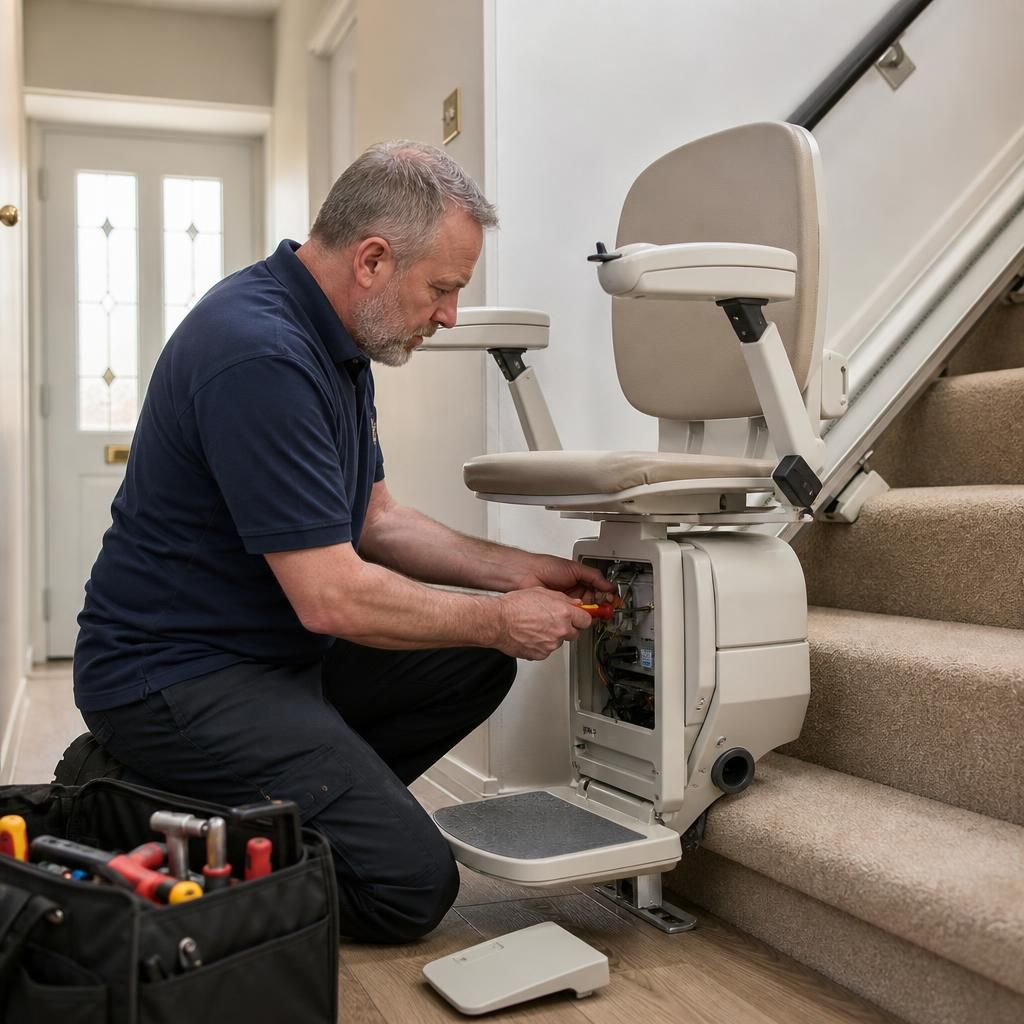
Before installation, a reconditioned Stannah stairlift is assessed for mechanical and electrical condition, including the rail, carriage, seat, controls, batteries, charging system and safety sensors. A trained engineer also carries out functional and safety tests, checks the lift against the staircase and user’s needs, and confirms that it can be installed securely and operate reliably in the home.
Before installation, a reconditioned Stannah stairlift should undergo a structured inspection, servicing and testing process covering its mechanical components, electrical systems, safety features, controls and proposed installation position. A trained engineer also assesses the staircase and the user’s requirements to confirm that the lift is suitable, can be secured correctly and operates reliably in the intended home.
The assessment normally includes the following checks:
- Identification and service history: The stairlift is checked against its model and specifications, and any available service or repair history is reviewed. The engineer establishes which components have been replaced, refurbished or require attention before the lift is approved for installation.
- Rail and mounting system: The rail is examined for damage, distortion, corrosion, worn fixings and other signs that could affect smooth travel or secure attachment to the stairs. Mounting brackets and connection points are checked so the rail can be installed firmly and aligned accurately with the staircase.
- Carriage and drive mechanism: The motor, gearbox, drive system, rollers and related mechanical parts are inspected for excessive wear, unusual noise, movement or visible damage. The carriage is then tested through its full travel to confirm that it starts, stops and moves smoothly without hesitation or instability.
- Seat and body support: The seat, swivel mechanism, arms, footrest, seat belt and upholstery are checked for secure operation and physical condition. The engineer confirms that the seat locks correctly in the required position and that the user can get on and off safely at the top and bottom of the stairs.
- Electrical components: Wiring, plugs, connectors, switches, circuit protection and control boards are inspected for damage, loose connections or signs of overheating. Electrical safety checks are carried out as appropriate, with faults corrected before the stairlift is installed.
- Batteries and charging: The batteries are assessed for condition, age where known, leakage, damage and ability to hold a charge. Charging points and contacts are inspected, and the lift is tested to ensure that it charges correctly when parked. Batteries that do not meet the required standard should be replaced rather than relied upon in service.
- Safety sensors and controls: Obstruction sensors, safety edges, arm controls, remote controls, isolation switches and emergency stop functions are tested. The engineer confirms that the stairlift stops or responds as designed when a safety feature is activated, and checks that the controls are understandable and usable for the intended passenger.
- End stops and travel limits: The upper and lower stopping positions are checked to ensure that the carriage stops at the correct points without overrunning. The lift’s approach to each landing is assessed because safe positioning is essential for transferring on and off the seat.
- Manual lowering or emergency features: Any relevant emergency release, manual lowering or battery backup function is checked in line with the model’s design and manufacturer’s instructions. The purpose is to confirm that the stairlift can be managed appropriately if normal operation is interrupted.
These component checks are followed by operational testing. The stairlift is run repeatedly along the available rail, including starts, stops, changes in direction where applicable and operation from the controls. The engineer listens for abnormal sounds, observes the carriage for uneven movement and confirms that safety systems work consistently rather than only during a single demonstration.
The home itself is assessed as part of the safety process. Measurements and observations include the staircase width, gradient, landings, turns, bends, obstructions, doorways, radiators, handrails and available space at the top and bottom. The proposed rail position is checked to ensure that it does not obstruct doors, walkways or escape routes and that it leaves sufficient room for safe transfers. For a curved or more complex staircase, the rail design and clearances require particular attention because the lift must follow the staircase accurately without creating pinch points or restricted access.
The engineer also considers the passenger’s mobility, height, weight, balance, leg movement and preferred method of getting on and off. This helps determine whether features such as a powered swivel seat, hinged rail, powered footrest or alternative control arrangement may be necessary. A stairlift can be mechanically sound but unsuitable if the seat height, controls or transfer position do not meet the user’s practical needs.
Before fitting, any identified defect or worn safety-critical component should be repaired or replaced, and the stairlift should not be installed if the survey shows that it cannot be secured or used safely in the proposed position. Once installed, the engineer carries out final commissioning checks, including rail fixings, travel, charging, controls, sensors, stopping positions and user access. The customer should then receive an explanation of normal operation, charging, remote controls, safety features and what to do if the lift stops unexpectedly.
A reconditioned Stannah stairlift is therefore assessed as a complete system, not simply judged by its appearance or whether the motor runs. The relevant question is whether the rail, carriage, seat, electrical equipment, batteries, safety devices and installation position work together safely for the particular staircase and passenger. If you are unsure about any part of the assessment, ask the installation engineer which checks were completed and whether any component was replaced or adjusted before handover.
The safety assessment of a reconditioned Stannah stairlift covers the complete system, not just whether the motor operates. An engineer checks the rail, carriage, seat, controls, batteries, charging equipment and safety sensors, then tests how these components work together on the intended staircase.
Particular attention is given to safety-critical features, including:
- Obstruction sensors and safety edges stopping the lift when an object is detected
- The seat swivel, armrests, footrest and seat belt securing the passenger during travel and transfers
- Upper and lower stopping positions preventing overrun at the landings
- Batteries holding charge and the charging points working correctly when the lift is parked
- Controls, emergency functions and remote operation responding consistently
Any worn or defective safety-critical component should be repaired or replaced before installation. The engineer also repeats the operational checks after fitting, confirming that the stairlift travels smoothly, stops correctly and can be used safely from the available transfer positions.
Book your reconditioned Stannah stairlift assessment
Book your assessment for a reconditioned Stannah stairlift with Independent Stairlifts. A trained engineer will check the lift, staircase and your requirements before confirming whether it can be installed and operated safely.