
How do reconditioned Stannah stairlifts maintain their performance over time compared to brand new models?
Reconditioned Stannah stairlifts can provide reliable, smooth performance over time when they have been professionally inspected, serviced and fitted with any necessary replacement parts. A brand-new model offers a completely unused system and the latest specification, but ongoing performance for either option depends on correct installation, regular servicing and suitable day-to-day use.
A professionally reconditioned Stannah stairlift can maintain smooth, reliable performance over time when it has been thoroughly inspected, serviced, fitted correctly and maintained afterwards. The main difference from a brand-new model is that the lift and some of its components have already been used. Its future performance therefore depends more closely on the quality of the refurbishment, the condition of the individual components, the installation and the way the lift is used.
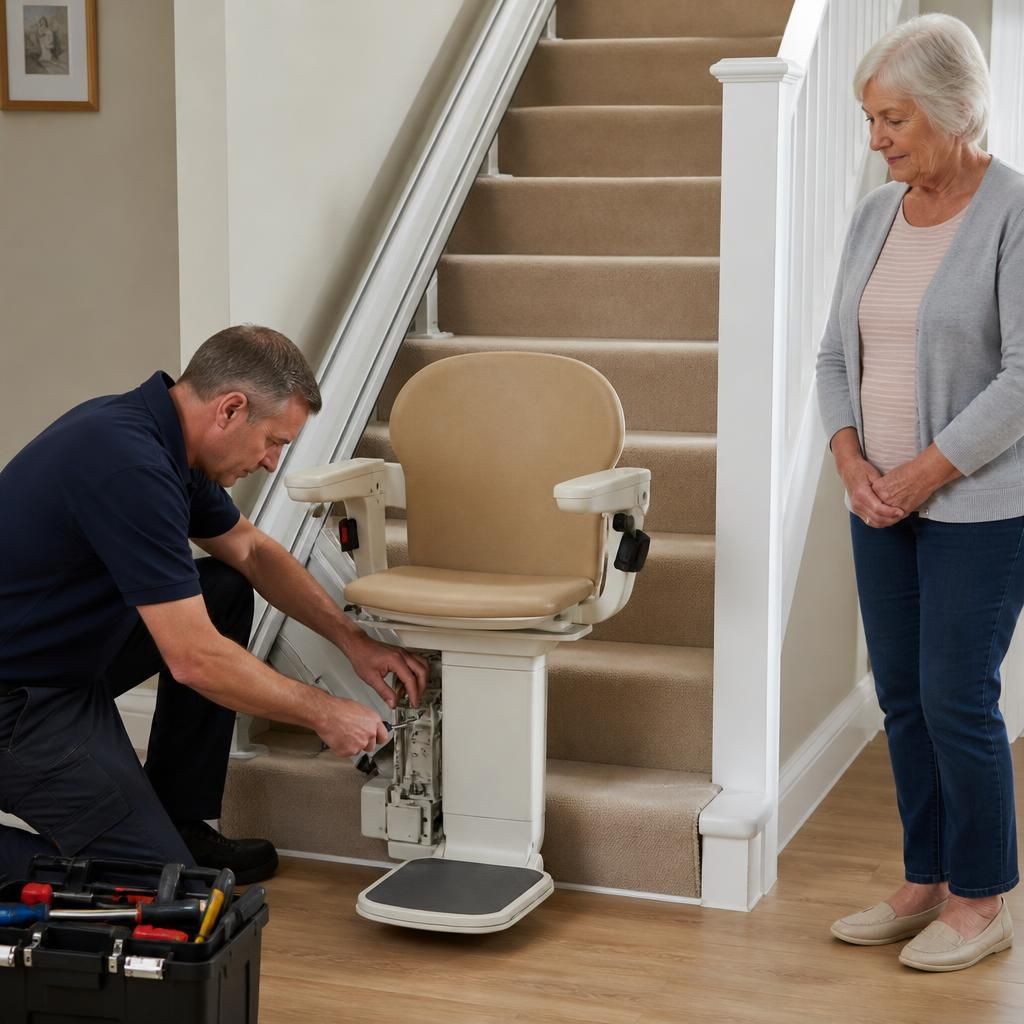
Reconditioning is more than cleaning a previously installed stairlift. Before installation, the lift should be assessed for mechanical wear, electrical condition, battery performance, charging, operation of the controls and the condition of safety features. Parts that do not meet the required standard should be repaired or replaced. The stairlift should then be tested to confirm that it travels correctly, stops as intended and operates safely on the customer’s staircase.
Once installed, a reconditioned lift should provide the same essential functions as the appropriate new model, including controlled movement, safe stopping, charging and operation of the seat and controls. A stairlift that has been refurbished properly should not feel loose, unusually noisy or erratic in normal use. Any such symptoms should be reported rather than ignored, as they may indicate a developing fault or a need for adjustment.
How performance compares with a new model
A new stairlift has not previously been operated and will normally offer the latest specification available for that model range. It also starts with new wear items and batteries, subject to the manufacturer’s specification. A reconditioned stairlift may use components that have already seen service, although those components should be checked and replaced where necessary. This means a new model may offer greater certainty about its initial condition, while a professionally reconditioned model can still offer dependable operation when its condition has been properly verified.
Neither option is maintenance-free. Batteries gradually lose capacity, drive components are subject to normal wear and moving parts may require adjustment over time. A new stairlift will eventually need the same types of servicing and consumable replacement as a reconditioned one. The age and previous use of a reconditioned lift can affect when this work is needed, so the condition of the specific lift is more important than the label alone.
Components that influence long-term reliability
- Batteries and charging: The batteries must hold sufficient charge and the lift must return correctly to its charging point. Batteries are consumable items, so their condition is particularly important on a reconditioned lift.
- Drive system and track: The motor, drive mechanism and track should be checked for smooth travel, unusual noise, excessive movement and correct alignment.
- Safety equipment: Sensors, safety edges, the seat belt, swivel mechanism and stopping controls should operate reliably before the lift is handed over.
- Controls: The arm controls, remote controls and any charging indicators should respond consistently and be suitable for the user’s dexterity and eyesight.
- Seat and moving parts: The seat, arms, footrest and swivel mechanism should be secure, stable and comfortable to operate.
The staircase and the installation also have a direct effect on performance. A correctly measured and fitted lift should follow the intended route without obstruction and should be securely attached to the appropriate surfaces. On a curved staircase, the track is made for the individual route, so accurate assessment and fitting are especially important. Changes in the home, such as flooring, furniture or building work near the staircase, should not interfere with the lift’s movement or charging points.
Use and maintenance make a significant difference
Regular use in accordance with the operating instructions helps identify changes in performance at an early stage. The lift should be kept clear of obstacles, the track and charging area should not be obstructed, and the controls should be used as instructed. It should not be overloaded or used by more people than it is designed to carry. Keeping the stairlift charged as recommended is also important, particularly where it may be used frequently or by someone who depends on it throughout the day.
Servicing can identify worn parts, battery deterioration, changes in travel or charging faults before they become more disruptive. The appropriate service interval depends on the model, condition, usage and the manufacturer’s guidance. If the lift begins to judder, stop unexpectedly, make a new noise, fail to charge or show a warning indication, stop using it if it is unsafe to do so and arrange an inspection.
What to establish before choosing a reconditioned model
- Which model is being offered and whether its specification suits the user and staircase.
- What inspection, servicing and safety testing have been completed.
- Whether the batteries or other wear-related parts have been tested or replaced.
- Whether replacement parts and technical support remain available for the model.
- What warranty and aftercare arrangements apply to the particular stairlift.
- Whether the proposed installation has been assessed for safe access, charging and everyday use.
A new model may be the better choice where the latest features, a completely unused system or the widest possible specification are priorities. A reconditioned model may be suitable where the available model meets the user’s needs and its condition, installation and aftercare have been properly confirmed. The most useful comparison is therefore not simply new against reconditioned; it is the condition and suitability of the specific stairlift against the requirements of the home and user.
In practical terms, a reconditioned Stannah stairlift should continue to perform reliably when its refurbishment has addressed wear, its installation is appropriate and it receives sensible ongoing care. A professional home assessment and clear information about the lift’s inspection, warranty and maintenance arrangements provide the best basis for judging how its expected performance compares with a brand-new model.
Reconditioned Stannah stairlifts maintain reliable performance when their batteries, drive system and safety components are properly checked before installation and monitored afterwards. Battery condition is particularly important because reduced capacity can affect daily operation, charging and the lift’s ability to complete its journey.
During refurbishment, the stairlift should be tested for smooth travel, secure stopping, responsive controls and correct charging. Any worn or unreliable parts should be repaired or replaced before fitting. After installation, keeping the lift charged as instructed and arranging servicing when performance changes are noticed can help prevent avoidable faults and extend its useful service life.
Discuss Your Reconditioned Stannah Stairlift Options
Contact Independent Stairlifts to discuss your reconditioned Stannah stairlift options and arrange a home assessment to check suitability, condition and installation requirements.