
What factors should I consider when deciding between refurbished and reconditioned stairlifts?
When choosing between a refurbished and reconditioned stairlift, compare the level of inspection and repair, warranty, expected reliability, suitability for your staircase and total cost. A reconditioned stairlift has typically undergone more comprehensive testing and replacement of worn parts, while a refurbished model may offer a lower-cost option when its condition, safety checks and support are clearly confirmed.
The main factors when choosing between a refurbished and reconditioned stairlift are the quality of the inspection and work carried out, the lift’s suitability for your staircase and user, the warranty and aftercare provided, and the total cost over its expected service life. “Refurbished” and “reconditioned” are not consistently defined terms, so the description alone should not determine your decision. Ask for a clear explanation of what has been checked, which parts have been replaced and what support is included after installation.
In general, a refurbished stairlift has been cleaned, checked, repaired where necessary and prepared for reuse. A reconditioned stairlift will often have undergone a more comprehensive process, which may include dismantling, detailed testing, replacement of worn components and adjustment of the drive, controls and safety systems. However, practices vary between suppliers. A carefully refurbished stairlift may be a better choice than a poorly documented reconditioned one, so compare the work completed rather than relying on the label.
Consider the condition and quality assurance process. Ask whether the stairlift has been inspected by a trained technician and whether the assessment covered the motor, gearbox, batteries, charging system, sensors, safety edges, seat, armrests, footrest, controls and remote controls. You should also ask whether moving parts and upholstery were cleaned, lubricated or replaced where appropriate, and whether the lift was tested under normal operating conditions after the work was completed.
Find out which parts are original and which are replacements. Batteries, rollers, drive components, switches and upholstery may show wear even when the stairlift appears clean. A written service or inspection record is useful because it provides more evidence of the lift’s condition than a general statement that it has been “fully refurbished” or “reconditioned”.
Check that the stairlift is suitable for the staircase. The model and rail must match the layout of your stairs. Straight staircases are usually more straightforward, while curved staircases require a rail made to follow the bends, landings and changes in direction. Outdoor installations need equipment designed to cope with exposure to moisture, temperature changes and dirt. A stairlift that has been removed from another property may need a different rail, additional sections or modifications before it can be installed safely in your home.
A proper assessment should consider the width and shape of the staircase, available space at the top and bottom, the position of doors and hallways, the location of electrical sockets and whether other people need to use the stairs at the same time. For a curved stairlift, ask whether the existing rail can be adapted or whether a new rail is needed. Do not assume that a lower-cost used lift will fit simply because it came from a staircase with a similar appearance.
Match the stairlift to the user’s abilities. The seat height, seat width, weight capacity, swivel mechanism, armrest controls and footrest should all be suitable for the person using it. Consider whether the user can transfer on and off the seat safely, operate the controls, use the seat belt and keep their feet correctly positioned. If dexterity, balance, vision or memory is limited, the control layout and ease of operation may be more important than a small difference in purchase price.
For more complex needs, discuss options such as powered swivelling seats, powered footrests, hinged rails or different control positions. These features may affect both the price and the installation requirements. An assessment at the property is the most reliable way to confirm suitability.
Compare safety checks rather than appearance. A stairlift can look almost new while still requiring attention to batteries, sensors or drive components. Ask how the safety systems have been tested and whether the installer will complete commissioning checks after fitting. The stairlift should stop correctly when an obstruction is detected, respond consistently to the controls and charge correctly when parked. The installer should also explain safe operation, charging, cleaning and what to do if the lift stops working.
Read the warranty terms carefully. Compare the length of cover, the parts included, labour cover, call-out arrangements and any exclusions. Check whether batteries, upholstery, remote controls and replacement components are covered, as these may be treated differently from the main stairlift mechanism. Establish whether the warranty applies to the particular lift being supplied and whether servicing or other conditions must be met to keep it valid.
A warranty is more useful when there is a clear aftercare process. Ask who to contact if a fault develops, whether telephone support is available, how emergency breakdowns are handled and whether replacement parts remain available for the model. For an older stairlift, parts availability can be an important consideration, particularly if the manufacturer no longer supports the equipment.
Calculate the total cost, not just the purchase price. Request an itemised quotation covering the stairlift, survey, rail, installation, removal of an existing lift, electrical work, delivery and any optional features. Ask whether the price includes demonstration, user training and follow-up support. A refurbished lift may have a lower initial cost, while a more extensively reconditioned lift may cost more but require fewer immediate repairs. The better value depends on the condition of the equipment, the warranty and the likely maintenance needs.
Also consider costs that may arise later. Batteries and other wear parts eventually need replacement, and a curved or outdoor stairlift may have different servicing requirements from a basic straight model. If you expect to move home or no longer need the stairlift, ask whether the company offers removal and whether any part-exchange or resale assessment is available. The future value will depend on the model, age, condition, availability of parts and whether it can be installed on another staircase.
Consider the installation environment. Older homes may have uneven floors, narrow landings, unusual stair dimensions or limited electrical provision. These issues do not automatically prevent installation, but they may affect the rail design, parking position and amount of installation work required. Confirm how the lift will be secured, where it will park and whether it will obstruct doors, radiators or access routes. Any required alterations should be explained before work begins.
For most households, a reconditioned stairlift is worth considering when documented testing, replacement of worn parts and a comprehensive warranty are included. A refurbished stairlift may be appropriate where the inspection is thorough, the lift is a good fit for the staircase and the lower price reflects its condition without reducing safety or support. The most dependable decision is based on the inspection record, installation assessment, warranty and aftercare package together.
Before agreeing to either option, ask for the model and age of the stairlift, the work completed, parts replaced, warranty exclusions, expected maintenance, parts availability and the full installed cost in writing. A personalised assessment can then confirm whether the proposed lift is safe, practical and appropriate for the user and the home.
The most important difference between a refurbished and reconditioned stairlift is usually the work completed and documented, not the label used. Ask for a clear record of the inspection, repairs, replaced wear parts and final safety testing. This should include the motor, batteries, charging system, sensors, safety edges, controls, seat and footrest.
A stairlift that has been thoroughly tested and correctly fitted may be a more suitable choice than one described with a stronger-sounding term but little supporting information. Compare the inspection record, warranty, parts availability and aftercare alongside the price, then confirm that the rail and user features are suitable for your staircase and needs.
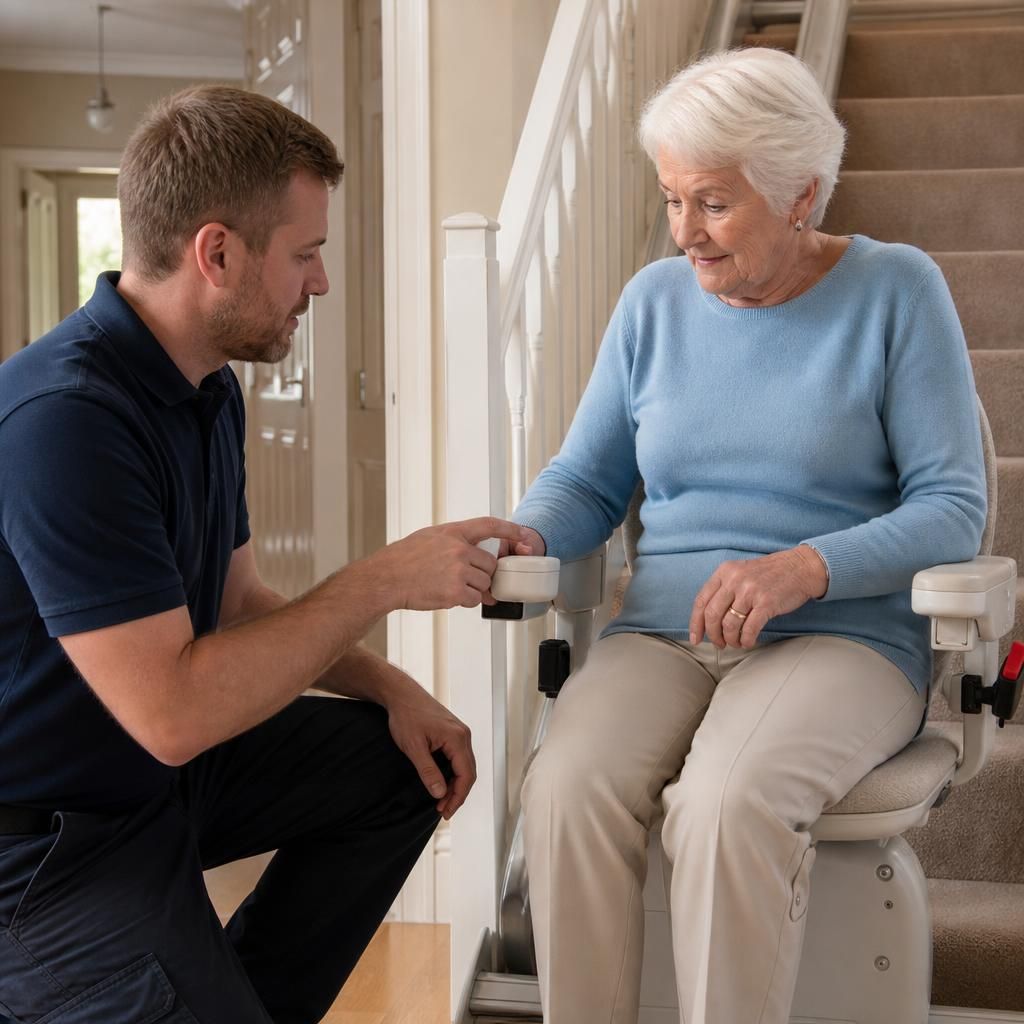
Arrange your refurbished or reconditioned stairlift assessment
Arrange a personalised assessment with Independent Stairlifts to compare refurbished and reconditioned options for your staircase, user needs and budget. We can explain the inspection record, warranty and full installation cost before you decide.