
What are the cost implications and potential long-term savings of choosing a reconditioned stairlift over a refurbished one?
A reconditioned stairlift may cost more upfront than a refurbished model because it has usually undergone more extensive inspection, replacement of worn parts and testing. However, its greater reliability and reduced likelihood of early repairs or replacement can provide better long-term value, so compare the total cost, warranty and included aftercare rather than the purchase price alone.
A reconditioned stairlift will often cost more upfront than a refurbished model because it is typically subject to a more extensive inspection, servicing process and replacement of worn or life-limited components. The potential long-term saving comes from reducing the risk of early faults, unexpected repair bills and premature replacement. The better value option is therefore determined by the complete cost of ownership, not by the initial purchase price alone.
The terms refurbished and reconditioned are not used consistently across the stairlift industry. One supplier may use “refurbished” to describe a lift that has been cleaned, checked and tested, while another may use the same term for a more comprehensive overhaul. For this reason, ask what work has actually been carried out rather than relying on the label.
A refurbished stairlift may have received some or all of the following:
- Cleaning and cosmetic preparation;
- Electrical and safety checks;
- Testing of the motor, controls, sensors and charging system;
- Replacement of components that have visibly failed; and
- Installation and a demonstration of normal operation.
A reconditioned stairlift generally involves a more detailed assessment of the complete unit. Depending on its age, condition and model, this may include dismantling, cleaning internal parts, replacing worn rollers, batteries, switches or other service items, checking the drive mechanism and carrying out repeated operational and safety tests. The exact specification should be confirmed in writing, as reconditioning does not necessarily mean that every component is new.
Where the initial price difference arises
The higher purchase price of a reconditioned stairlift can reflect the additional labour, replacement parts, testing and quality-control checks involved before installation. It may also include a more comprehensive warranty or aftercare arrangement. A refurbished lift can be less expensive where fewer components have needed attention, particularly if the underlying unit is in good condition and suitable for the new staircase.
Compare quotations on a like-for-like basis. Check whether the price includes the survey, delivery, fitting, removal of an existing lift, stair modifications, VAT where applicable, warranty cover and follow-up servicing. A lower advertised price may not represent a lower final cost if essential installation work or aftercare is charged separately.
How reconditioning may reduce long-term costs
The main potential saving is a lower likelihood of avoidable early expenditure. A stairlift that has had worn parts identified and replaced before installation may be less likely to require an early engineer visit. It can also reduce the risk of paying for a replacement sooner than expected if a major component fails or the lift becomes unreliable.
- Fewer unplanned repairs: servicing and replacing worn components in advance can reduce the chance of faults shortly after installation.
- Lower disruption: reliable operation may avoid the inconvenience and additional cost of arranging urgent support or temporary access arrangements.
- Better use of the warranty: a clearly defined warranty can protect you from the cost of covered parts and labour during the stated period.
- Longer useful service: an appropriately selected and well-maintained lift may remain suitable for longer, delaying the cost of another stairlift.
- More predictable budgeting: a documented inspection and service history can make future maintenance needs easier to anticipate.
These are potential savings rather than guarantees. A reconditioned lift can still need maintenance, particularly if it is an older model, is used frequently, operates in a demanding environment or has limited parts availability. Conversely, a well-selected refurbished lift may perform reliably for many years. The condition, model, installation quality and maintenance arrangements matter more than the description used in the quotation.
Costs that should be considered beyond the purchase price
When comparing options, consider the total cost over the period you expect to use the stairlift. This can include:
- The stairlift and installation;
- Any alterations required to the staircase, steps, flooring or electrical supply;
- Routine servicing and battery replacement;
- Call-out charges, labour and parts after the warranty ends;
- Repairs arising from accidental damage or misuse, which may be excluded from warranty cover;
- Removal, relocation or disposal if your circumstances change; and
- Replacement of the lift if the model becomes uneconomical to repair or compatible parts are no longer readily available.
Batteries are a particularly important running cost because they are consumable components. They may need replacing during the ownership period, even when the stairlift itself remains in good working order. Ask whether batteries and other service items are covered by the warranty, how faults are reported and whether labour is included as well as parts.
Warranty and aftercare can change the calculation
A reconditioned stairlift may offer better value if its higher price includes longer or more comprehensive protection. However, do not assume that “reconditioned” automatically means a longer warranty. Read the terms carefully and check the duration, covered components, labour cover, exclusions, response arrangements and whether the warranty applies to the whole installation or only selected parts.
It is also worth asking whether servicing is included, whether support is available after the warranty expires and whether replacement parts remain available for the specific model. A lower-priced lift with limited support can become more expensive than a reconditioned alternative if a fault requires repeated visits or a major component is difficult to source.
Installation and suitability affect value
The stairlift must be suitable for the staircase, the user and the intended pattern of use. A cheaper unit is not economical if it requires extensive adaptation, is uncomfortable to use or does not meet the user’s mobility needs. On a curved staircase, for example, the rail and installation are usually made to match the staircase, so the condition and suitability of the complete system should be assessed rather than the chair alone. Outdoor installations may also face greater exposure to moisture and temperature changes, making specification and ongoing maintenance especially important.
A professional assessment should consider the staircase layout, available parking points, user weight and posture, transfer ability, controls, charging position and any need for powered options. Choosing the correct specification at the outset can prevent the cost of modifying or replacing a lift that is technically functional but unsuitable in daily use.
How to compare the two options
- Obtain a written description of the inspection, refurbishment or reconditioning work completed.
- Ask which parts have been replaced, which have been tested and which remain original.
- Compare the full installed price, including any electrical or staircase work.
- Check warranty length, exclusions, labour cover and aftercare arrangements.
- Ask about the expected availability and cost of replacement batteries and other key parts.
- Consider the lift’s age, usage history, condition and suitability for the user.
- Estimate likely maintenance and repair costs rather than comparing purchase prices alone.
In practical terms, a refurbished stairlift may be the better choice when the unit has a clear history, has passed appropriate safety checks, is correctly specified and is supported by a credible warranty. A reconditioned stairlift is often preferable where greater pre-installation scrutiny, replacement of wear items and more comprehensive aftercare justify the additional upfront cost. The strongest comparison is based on documented work and total ownership costs, not on the terminology or the headline saving.
The long-term cost of a reconditioned stairlift can be lower than a refurbished model when its higher initial price includes replacement of worn components, thorough testing and stronger aftercare. This preparation may reduce the likelihood of early repair bills, although it does not guarantee fault-free operation.
Compare the complete cost of ownership rather than the purchase price alone. Check what is included for installation, batteries, servicing, call-outs, parts and warranty labour. A refurbished stairlift with a clear service history and suitable warranty may still offer excellent value, while a reconditioned lift is more likely to justify its additional cost when the inspection and replacement work are fully documented.
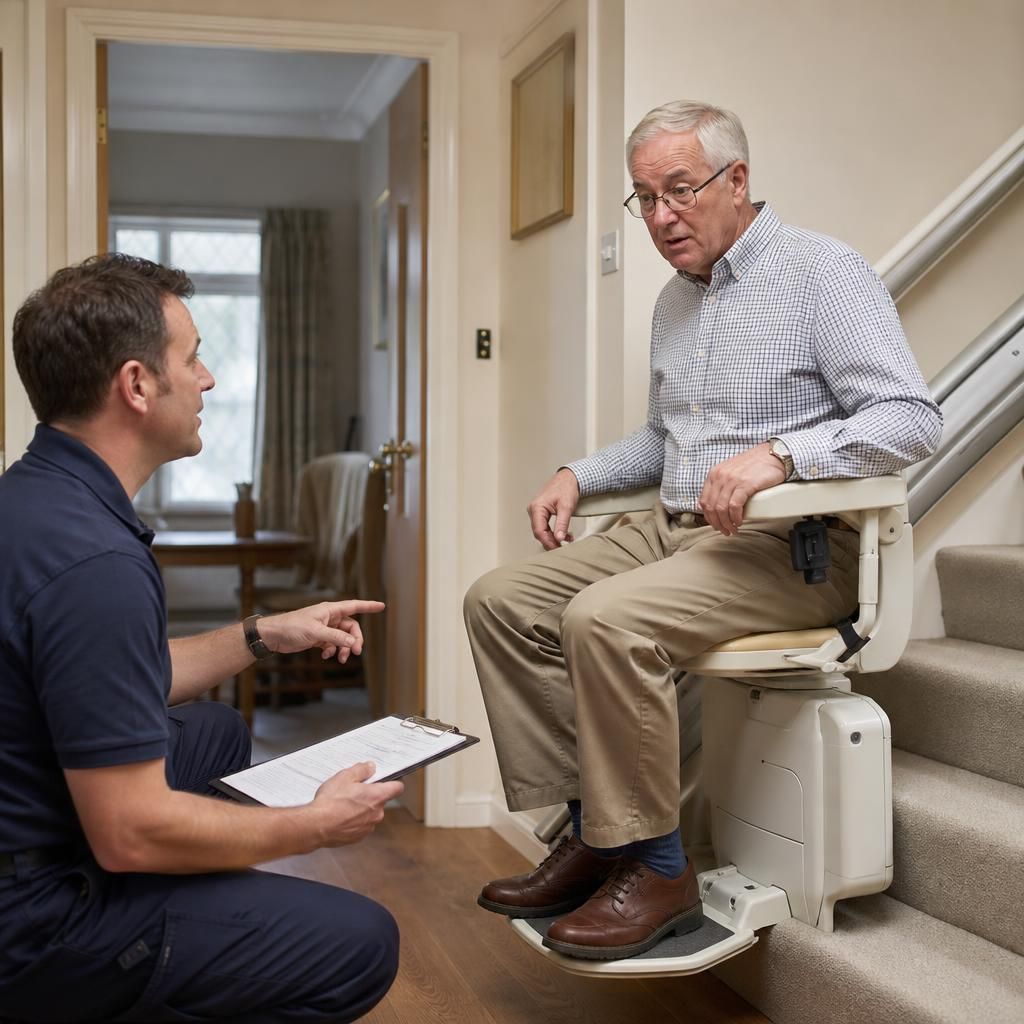
Compare Your Stairlift Options and Long-Term Costs
Contact Independent Stairlifts for a personalised assessment and written comparison of reconditioned and refurbished stairlift options, including installation, warranty and likely ongoing costs.