
What are the benefits of choosing a reconditioned stairlift over a refurbished one?
A reconditioned stairlift has typically undergone a more thorough inspection, safety testing and renewal of worn components than a refurbished model, which may receive mainly cosmetic or limited functional work. This can provide greater confidence in reliability and safety, while still costing less than a new stairlift, provided it is supplied, fitted and covered by a reputable specialist.
A reconditioned stairlift can offer greater confidence than a refurbished model because it has usually been fully assessed, safety tested and mechanically renewed before it is installed. However, the terms are not legally standardised, so the actual benefit depends on the supplier’s inspection process, the components replaced, the quality of the installation and the support provided afterwards.
More thorough preparation
Refurbishment may involve cleaning, cosmetic improvements and checks that the stairlift operates correctly. Reconditioning generally indicates a more comprehensive process. This may include dismantling the lift, inspecting the drive system and controls, replacing worn or unreliable parts, testing the batteries and checking safety features before the equipment is offered for reuse.
This distinction matters because a stairlift can look clean and presentable while still containing components that are nearing the end of their serviceable life. A thorough reconditioning process is intended to identify those issues rather than dealing only with appearance.
Greater reliability in everyday use
Replacing worn components and testing the lift under operating conditions can reduce the likelihood of faults after installation. It does not make a reconditioned stairlift equivalent to a new one, and no used equipment is completely free from future maintenance needs. It does, however, provide a more reliable basis for continued use than a model that has received only limited preparation.
A specialist should also assess whether the stairlift is suitable for the user’s weight, mobility needs and staircase. The condition of the rail, carriage, seat, controls, batteries and charging equipment all affect how dependable the finished installation will be.
Safety checks before fitting
Reconditioned equipment should be checked against the relevant safety requirements and tested before it is installed. Important checks may cover the seat belt, swivel and folding mechanisms, arm controls, obstruction sensors, braking system, limit switches, charging points and battery performance. The installer should also make sure that the rail and fixings are suitable for the staircase and securely fitted.
These checks are particularly important where the stairlift is being installed in an older property, on a narrow staircase or in a home where other people may use the stairs. Safe operation depends on the complete installation, not just the condition of the stairlift itself.
Better value without the price of new equipment
One of the main advantages of reconditioning is that it can provide a dependable mobility solution at a lower cost than buying new. The saving may be especially relevant where the staircase is straightforward and a suitable pre-owned model is available. With a curved stairlift, the rail is normally made for a particular staircase, so the available saving and suitability need to be considered on an individual basis.
The lowest initial price is not necessarily the best value. Ask what work is included, whether replacement batteries and other wear parts are fitted, whether the price includes removal of an old lift, delivery, installation and future servicing, and what would happen if a fault occurred.
Professional fitting and suitability assessment
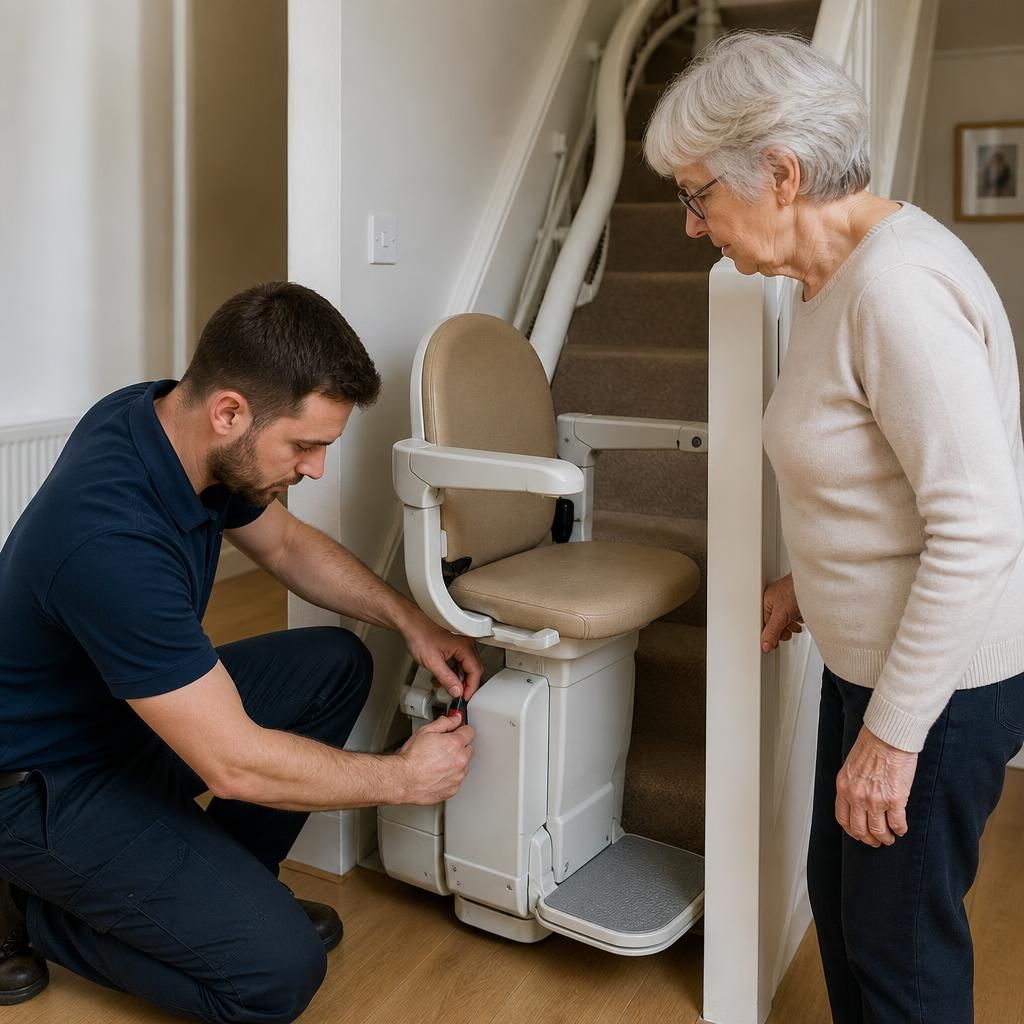
A reconditioned stairlift supplied by a specialist should be matched to the staircase and the person using it. An assessment can identify whether a straight, curved or outdoor model is appropriate, where the charging points should be positioned and whether features such as a powered swivel seat or hinge rail would improve safe access.
Correct fitting is as important as the reconditioning work. A stairlift that has been well maintained can still be unsafe or uncomfortable if the rail is poorly positioned, the controls are unsuitable or the seat does not allow the user to get on and off securely.
Potentially stronger aftercare
Reconditioned stairlifts are often supplied with a warranty or service support, but coverage varies between suppliers and products. A warranty may cover parts, labour or both, and may exclude batteries, misuse or faults caused by alterations. Confirm the exact terms in writing rather than assuming that the word “reconditioned” guarantees a particular level of cover.
Before choosing, ask for a clear explanation of the inspection and reconditioning process, the parts replaced, the test records available, the warranty exclusions and the maintenance arrangements. When these details are transparent, a reconditioned stairlift can offer a practical balance of safety, performance and cost. If the supplier cannot explain how the lift was prepared or what support is included, the difference between it and a lightly refurbished model may be less meaningful.
A reconditioned stairlift has usually been inspected, safety tested and renewed mechanically before reuse, whereas a refurbished model may have received more limited checks or mainly cosmetic preparation. This can make reconditioning the better choice when dependable day-to-day operation is the priority.
Ask what the supplier has checked and replaced. Important areas include the batteries, drive system, controls, braking system, obstruction sensors, seat belt and charging points. The rail, fixings and complete installation should also be assessed, as reliable operation depends on the stairlift being correctly fitted to the staircase as well as on the condition of the equipment.
Reconditioning does not make a used stairlift equivalent to a new one, but it can provide better value when the work is documented and suitable aftercare is included. Confirm the warranty, parts and labour cover, exclusions and servicing arrangements before making your decision.
Arrange a reconditioned stairlift assessment
Contact Independent Stairlifts to arrange a reconditioned stairlift assessment, including checks of your staircase, user requirements and the equipment’s condition. We can explain the available warranty, installation and aftercare before you decide.