
How do refurbished stairlifts compare in terms of cost and performance?
Refurbished stairlifts usually cost less than new models, while offering reliable performance when they have been properly inspected, serviced and safety-tested. The overall value depends on the lift’s condition, suitability for your staircase, included warranty and ongoing maintenance requirements.
Refurbished stairlifts generally cost less than new models and can provide dependable day-to-day performance when they have been professionally inspected, serviced and safety-tested. Their value depends on more than the purchase price: the lift must be suitable for the staircase, its age and condition should be clear, and the quotation should explain what is included in the warranty, installation and future maintenance.
The term refurbished is not used in exactly the same way by every supplier. It commonly describes a previously installed stairlift that has been removed, checked, cleaned and returned to working order. A reconditioned lift may have gone through a more extensive process, such as replacing worn components, carrying out additional testing and meeting a defined preparation standard. Ask the installer to explain the work completed on the particular lift rather than relying on the description alone.
How the cost compares
A refurbished stairlift can be a cost-effective option because the main equipment has already been manufactured and used. The final price is influenced by the type of staircase and the work needed to install the lift, so a refurbished model is not necessarily a simple percentage reduction from the price of a new one.
- Staircase design: Straight stairlifts are usually more straightforward to install. Curved staircases require a rail designed to follow the individual bends, which can affect the cost even when the stairlift carriage itself is refurbished.
- Condition of the lift: A lift requiring replacement batteries, rollers, upholstery or other components may need more preparation before it is suitable for installation.
- Installation requirements: Narrow stairs, unusual landings, changes in floor level and limited electrical access can affect the work involved.
- Included services: Check whether the quotation covers a home assessment, delivery, removal of an existing lift, installation, user instruction and aftercare.
- Warranty: A longer or more comprehensive warranty may increase the initial price but can reduce the financial risk of an unexpected repair.
For this reason, compare complete installed quotations rather than comparing the advertised price of the equipment alone. A seemingly cheaper lift may offer less value if essential servicing, installation work or replacement parts are excluded.
How performance compares
Age alone does not determine how well a refurbished stairlift will perform. A well-maintained older lift can be reliable, while a recently removed lift that has not been properly checked may need attention. Performance is more closely related to the model’s design, previous use, maintenance history, current condition and suitability for the person and staircase.
A properly prepared refurbished stairlift should operate smoothly, stop accurately at the top and bottom of the stairs, and provide the safety features expected for its design. These may include a seat belt, safety sensors, controlled starting and stopping, emergency controls and battery operation during a power cut. The installer should test these functions before handover and explain how to use them safely.
Battery condition is particularly important. Stairlifts normally charge at designated points on the rail, allowing them to operate without relying continuously on the mains supply. Batteries are consumable components and may eventually need replacing, especially if the lift has been stored for a period or has not been regularly used. Ask whether the batteries have been tested or replaced and what symptoms may indicate that they are reaching the end of their service life.
What to check before choosing one
- Confirm the lift is appropriate for the user’s weight, mobility needs and preferred seating position.
- Check that the rail and carriage are suitable for the full shape and length of the staircase.
- Ask for the model, age where available, previous service history and any significant repairs.
- Find out which parts have been inspected, serviced or replaced during refurbishment.
- Ask whether safety checks are documented and whether the lift will be tested again after installation.
- Read the warranty conditions, including cover for parts, labour, batteries and call-outs.
- Check whether routine servicing is recommended and how repairs are arranged after the warranty ends.
- Make sure the quotation states clearly whether removal and disposal of an existing stairlift are included.
A home assessment is important, particularly for a curved or unusual staircase. It allows the installer to check clearances, access, fixing points, electrical arrangements and the position of the lift when it is not in use. It also helps identify whether a standard refurbished configuration will work or whether a different rail, seat or control arrangement is needed.
Refurbished versus new
A new stairlift offers the latest available equipment, a complete manufacturing history and usually a new-product warranty. It may be preferable where a particular specification is required, where the lift will be heavily used, or where the available refurbished stock does not suit the staircase. A refurbished stairlift can offer a lower initial cost and may meet the need equally well when the model is appropriate and the preparation standard is clear.
The practical difference may be less noticeable than the price difference if both options are correctly installed and maintained. However, a refurbished lift can have older components, cosmetic wear or a shorter remaining service life. Ask about appearance as well as function if this matters to you, and consider the likely cost of batteries, servicing and repairs over the period you expect to use the lift.
Making the decision
Choose a refurbished stairlift when the equipment has been professionally assessed, the installation is suitable, the safety functions have been verified and the warranty provides reasonable protection. Consider a reconditioned or new option if you need more extensive component replacement, a specific configuration, stronger warranty cover or greater certainty about the equipment’s history.
The most useful comparison is therefore the total cost of ownership: the installed price, warranty, expected maintenance, likely replacement parts and suitability for the user. A clear assessment and written quotation should set out these points so you can choose an affordable stairlift without compromising safe, dependable access around the home.
A refurbished stairlift can provide reliable performance at a lower cost than a new model, provided its condition and preparation standard are clear. The important comparison is the complete installed price, not the advertised equipment cost alone.
Before choosing, ask what has been inspected, serviced or replaced. Particular attention should be given to the batteries, drive system, safety sensors, seat belt and controls, as these affect everyday reliability. Confirm that the lift will be safety-tested after installation and that the warranty explains whether parts, labour, batteries and call-outs are included.
A professional home assessment also helps establish whether the refurbished lift is suitable for the full staircase and the user’s needs. A model that is inexpensive but needs immediate repairs, has limited warranty cover or is unsuitable for the rail layout may offer less value than a more comprehensively prepared alternative.
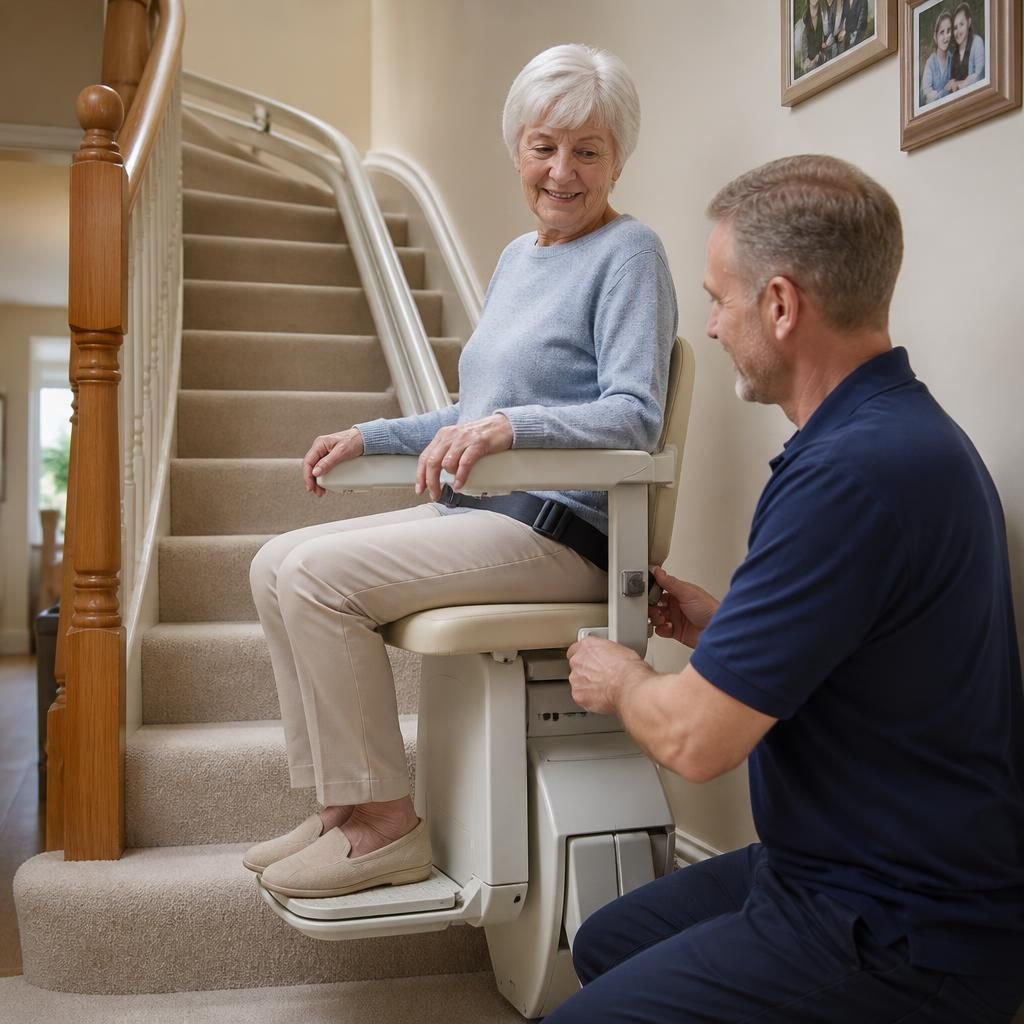
Arrange a refurbished stairlift assessment
Arrange a refurbished stairlift assessment to confirm that the lift, rail and safety features are suitable for your staircase and mobility needs. We can explain the refurbishment work, installation costs, warranty cover and ongoing maintenance before you decide.