
Are there any specific considerations when installing a refurbished stairlift versus a reconditioned one in an older home?
When installing a refurbished or reconditioned stairlift in an older home, the main considerations are the staircase’s condition, available electrical supply, fixing points and compliance with current safety requirements. A reconditioned stairlift has typically undergone more comprehensive testing and replacement of worn components, but both options should be professionally assessed to ensure the lift is suitable for the property and user.
The main considerations are the condition and construction of the staircase, the electrical supply, suitable fixing points, and whether the lift can be installed in line with current safety requirements. The terms refurbished and reconditioned are not used consistently across the industry: a refurbished stairlift may have been cleaned, inspected and fitted with replacement parts where necessary, while a reconditioned stairlift usually suggests a more comprehensive inspection, testing and renewal of worn components. The installation assessment is therefore more important than the label alone.
Assessing the staircase
Older homes can have staircases with features that affect installation, including uneven treads, unusual widths, narrow landings, steep gradients, shallow steps, changes in direction or limited clearance at the top and bottom. Timber stairs may also have moved or developed loose components over time. A survey should establish whether the staircase is structurally sound and whether the proposed rail can be secured without damaging the fabric of the building.
A stairlift rail is normally fixed to the stair treads or other suitable structural points rather than relying solely on the wall. The installer will check that the treads, risers and supporting structure can accept the fixings. Any loose, damaged or weakened area may need attention before installation. This is particularly relevant in older properties where alterations, repairs or previous floor coverings may conceal the condition of the stairs.
Checking the layout and clearances
The available space must be considered with the stairlift both moving and parked. Doorways, radiators, dado rails, handrails, newel posts, cupboards and furniture can restrict access or affect where the chair can stop. At the top landing, the user needs enough room to turn and leave the seat safely. At the bottom, the chair and footrest must not obstruct a hallway or create a trip hazard.
On a curved staircase, the rail is made to follow the individual shape of the stairs. Older homes often have irregular curves or tight turns, so the design may need careful positioning of the seat, controls and parking points. A straight stairlift can also require specific measurements where the staircase is narrow or ends close to a doorway. If a standard configuration does not provide adequate clearance, options such as a hinged rail, powered swivel seat or alternative parking position may be considered where suitable.
Reviewing the electrical supply
Most modern stairlifts use a rechargeable battery system and require a reliable mains connection for the charger. In an older property, the installer should identify a suitable socket or charging location and check that the electrical arrangement is appropriate. The condition of wiring, earthing and protective devices may need to be considered by a qualified electrician if there are concerns about the existing installation.
A refurbished or reconditioned lift should be supplied with a charger and batteries that are tested and suitable for continued use. Batteries are consumable components, so their age and condition should be confirmed rather than assumed from the appearance of the stairlift. The lift should charge correctly when parked, operate smoothly on battery power and provide an appropriate indication if the battery is low.
Understanding the difference between refurbished and reconditioned equipment
Refurbishment commonly involves cleaning, visual inspection, functional checks and the replacement of parts identified as worn or defective. Reconditioning generally involves a wider process, which may include dismantling, testing key electrical and mechanical components, replacing consumable or worn parts, and carrying out safety checks before the lift is offered for installation. These descriptions can vary between suppliers, so ask what work has actually been completed.
For either option, useful questions include:
- Which components have been inspected, replaced or tested?
- Have the batteries, charger, drive system, sensors, controls and safety edges been checked?
- Has the stairlift been tested under load and through its full travel?
- Is the equipment suitable for the proposed staircase and the intended user?
- What warranty applies to the lift, batteries and installation?
- What servicing and parts support will be available after installation?
A reconditioned stairlift may provide greater assurance where more components have been renewed, but it is not automatically the better choice for every older home. A properly assessed and professionally installed refurbished lift can also be suitable when its condition, specification and support arrangements are clear.
Meeting current safety requirements
The lift should be inspected, installed and tested by competent professionals. Safety features to verify include the seat belt, swivel or safety lock, footrest sensors, obstruction sensors, controls, braking system, charging function and manual lowering or emergency procedures where applicable. The installer should also check that the user can operate the controls safely and reach them without overreaching.
Older homes may have changes in floor level, loose carpets or thresholds near the staircase. These should be addressed as part of the installation plan because a stairlift does not remove other trip hazards. The final position should leave reasonable access for other people in the household and should not unnecessarily block an escape route. Building alterations or electrical work outside the stairlift installation may require separate professional advice.
Considering the user as well as the property
The most suitable lift depends on the user’s mobility, balance, weight, height, grip strength and ability to transfer on and off the seat. An older home may technically accommodate several layouts, but the safest option is the one that gives the user a stable transfer position and straightforward controls. A powered swivel seat, adjustable armrests, a retractable or hinged rail, or a different seat configuration may be appropriate depending on the assessment.
If more than one person uses the staircase, the design must also consider their access needs. The parked lift should leave enough usable stair width where possible, and the controls should not be positioned where they are difficult to reach. Any concern about evacuation, falls risk or cognitive impairment should be discussed during the assessment rather than left until after installation.
Protecting older finishes and fittings
Older properties may contain valuable timber, original plasterwork, decorative mouldings or fragile floor coverings. Discuss the proposed fixing positions and cable routes before work begins. A professional installer should take reasonable care to minimise disruption, explain any necessary alterations and identify work that falls outside the stairlift installation itself.
Where the staircase has recently been renovated or has delicate finishes, confirm whether the rail can be installed without affecting them and whether any coverings need to be lifted temporarily. The finished installation should be checked for secure fixings, clean cable management and unobstructed movement.
After installation
Keep the user instructions, warranty details and service information with the property records. The stairlift should be used only as instructed, kept clear of obstacles and left at its designated charging point when not in use. Arrange servicing in line with the manufacturer’s or installer’s guidance, and report unusual noise, hesitation, poor charging, unexpected stops or repeated fault indications promptly.
In summary, the age of the home does not by itself rule out either a refurbished or reconditioned stairlift. The decisive checks are the staircase’s structural condition, the available space, the electrical supply, the lift’s tested condition and the quality of the installation. A detailed home assessment will confirm which option can be fitted safely and whether any preparatory work is needed before installation.
Installing a refurbished or reconditioned stairlift in an older home begins with checking the staircase, rather than choosing the lift by age or description alone. The treads, risers and supporting structure must be strong enough for secure fixings, particularly where timber has shifted, been repaired or is hidden beneath flooring.
An installer should also assess narrow sections, uneven steps, tight turns, limited landing space and nearby doorways or radiators. These features may affect the rail design, parking position and the user’s ability to transfer safely. A reconditioned stairlift may have undergone more extensive component testing, but both types still require a professional survey and full safety test after fitting.
- Confirm that the rail can be fixed securely without damaging important original features.
- Check the electrical supply, charger position and battery condition.
- Allow clear space at the top and bottom of the stairs.
- Verify the seat, controls, sensors, belt and braking system before use.
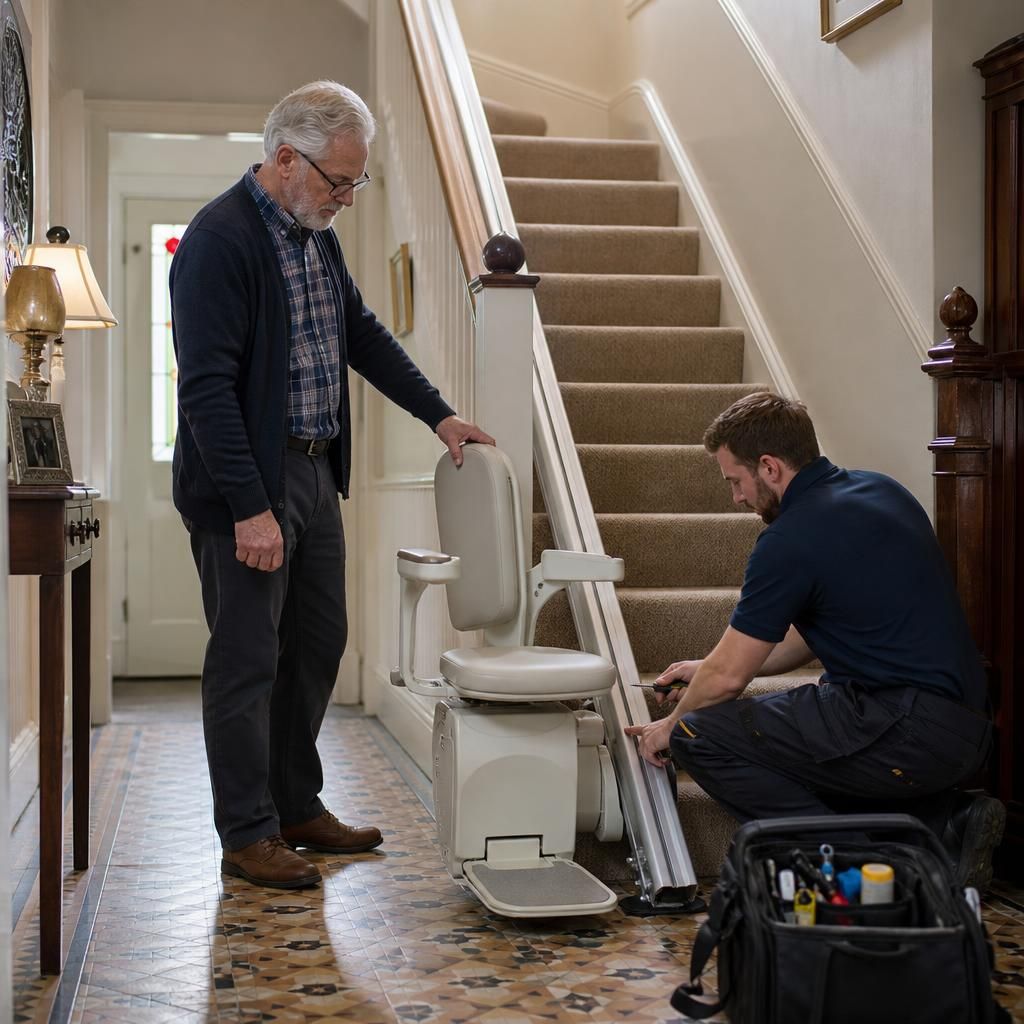
Arrange a stairlift assessment for your older home
Arrange a stairlift assessment for your older home so we can check the staircase, clearances, electrical supply and the suitability of a refurbished or reconditioned stairlift. We can also identify any preparation needed before installation.