
What factors should I consider when choosing a reconditioned stairlift?
When choosing a reconditioned stairlift, consider its safety inspection, suitability for your staircase, condition, warranty, servicing support and total cost. A professional assessment should confirm that the lift fits your home, meets your mobility needs and can be installed and maintained reliably.
A reconditioned stairlift should be chosen on more than its purchase price. The most important factors are its safety and condition, whether it is suitable for your staircase and mobility needs, the quality of the installation, the warranty and aftercare available, and the total cost over the time you expect to use it. A professional assessment should confirm that the proposed lift is appropriate for your home before you commit.
Suitability for your staircase
Every staircase has its own layout, dimensions and practical constraints. Check that the stairlift is suitable for the shape of your stairs, including any bends, landings, narrow sections or changes in gradient. A straight stairlift may be suitable for a simple flight, while a curved stairlift requires a rail made to follow the staircase. Outdoor installations also need equipment designed to withstand exposure to weather and changes in temperature.
An assessment should consider where the lift will park at the top and bottom, whether it will obstruct a doorway or passage, and whether there is enough room for you to get on and off safely. On a narrow staircase, the folded seat and footrest may be particularly important. A trained installer should also check the condition and construction of the stairs, the position of the available power supply and any features that could affect installation.
Your mobility and daily routine
The right stairlift must match the way you use your stairs, not simply fit the rail. Consider whether you need a standard, perching or powered swivel seat, and whether you can bend your knees comfortably while seated. The controls should be easy for you to operate, with a handset or call control positioned where it can be reached safely.
Discuss your mobility with the assessor, including whether you have difficulty standing, transferring, bending or keeping your balance. If more than one person will use the lift, the design must be suitable for each user. Check the manufacturer’s specified weight limit and make sure the seat, armrests, belt and footrest provide a secure and comfortable position. If your needs may change, ask whether the proposed model can accommodate likely changes or whether another design would be more appropriate.
Safety checks and the condition of the lift
A reconditioned stairlift should have been systematically inspected, cleaned, tested and serviced before being offered for installation. Ask what work has been completed and whether safety-critical components have been checked or replaced. This should include the braking system, drive mechanism, batteries, charger, seat belt, swivel or power functions, controls and sensors that detect obstructions.
Do not rely only on the appearance of the equipment. A lift can look clean while still requiring attention to batteries, electrical connections or mechanical components. Ask to see the inspection or service record where available, and establish whether the equipment has been tested after reconditioning and again following installation. The installer should explain the safety features and demonstrate normal operation before you use the lift independently.
Safety also depends on correct installation. The rail must be securely fixed, the lift must run smoothly along the full staircase and the charging points must work in their intended parking positions. You should receive clear instructions on using the controls, seat belt, swivel mechanism, emergency stop and manual lowering or emergency procedures where applicable.
What “reconditioned” includes
The term reconditioned can cover different levels of preparation, so ask for a precise explanation. A thorough process may involve removing the lift from a previous installation, cleaning it, inspecting individual components, replacing worn or unsuitable parts, testing its electrical and mechanical functions, and preparing it for the new staircase. The rail may be reused for a straight installation, whereas a curved rail is generally specific to the staircase for which it was made and may need to be adapted or newly produced.
Find out which parts are original, which have been replaced and whether any visible marks or cosmetic wear remain. Cosmetic condition does not necessarily affect performance, but it is helpful to know what to expect. Ask whether the batteries are included, whether the upholstery or covers have been renewed, and whether accessories such as additional handsets or powered options are part of the specification.
Warranty and aftercare
Read the warranty terms before accepting the quotation. Confirm its duration, what parts and labour it covers, whether call-outs are included, and what exclusions apply. It is also worth checking whether the warranty starts at installation, whether it applies to replacement parts and batteries, and whether any maintenance conditions must be followed.
Ask what happens if the stairlift develops a fault, particularly if you rely on it as your main way of accessing another floor. You should know how to report a problem, when support is available and whether an engineer can attend your area. Keep the warranty, installation paperwork, user instructions and service records together. These documents can be useful if the lift needs attention later or if you move home.
Installation quality and responsibility
Reconditioned equipment still requires a professional installation. Confirm who will survey the staircase, install the lift, test it and provide the handover. The person carrying out the assessment should take accurate measurements and consider the complete route rather than recommending a model from limited information.
Ask whether the installation includes removal of an existing lift, disposal of packaging and a demonstration for the user or family member. If alterations to flooring, bannisters, doors or electrics might be needed, these should be discussed before work begins. You should also be told how the lift can be removed or transferred if your circumstances change, although a curved installation may be less straightforward to move to another property.
Total cost and value
Compare the complete cost rather than the advertised price of the equipment alone. The quotation should make clear whether it includes the survey, delivery, installation, batteries, warranty, servicing, removal of an old stairlift and any required electrical work. Ask about possible additional charges for unusual staircase layouts, extra controls or work needed to make the installation safe.
A lower initial price may not represent better value if the warranty is limited, replacement parts are difficult to obtain or servicing is not readily available. Conversely, a well-maintained reconditioned lift with a suitable specification and dependable support may provide the functions you need without paying for features that are unnecessary in your home. Compare like-for-like specifications and consider how long you expect to use the stairlift.
Availability of parts and servicing
Before choosing a model, ask whether replacement parts, batteries and chargers can be sourced and whether engineers are familiar with the equipment. Regular servicing can identify wear before it causes a breakdown, especially where the stairlift is used frequently. Find out whether servicing is offered after the warranty period and what maintenance the user can safely carry out, such as keeping the rail clear and following the charging instructions.
Do not attempt to repair electrical or mechanical components yourself. If the lift makes an unusual noise, stops unexpectedly, fails to charge or shows a warning indication, stop using it if it is unsafe to continue and contact the service provider for advice.
Questions to ask before ordering
- Has the stairlift been inspected, serviced and safety-tested before installation?
- Which components have been replaced, and are the batteries included?
- Is the model suitable for my staircase, weight requirements and method of transfer?
- Where will the lift park, and will it leave enough space at the top and bottom?
- What exactly does the warranty cover, including batteries, parts, labour and call-outs?
- What is included in the quoted price, and could any additional installation costs arise?
- How are faults reported, and what servicing and parts support will be available?
- Will the controls and safety features be demonstrated before I use the lift?
The best reconditioned stairlift is one that has been properly assessed, prepared and installed for your particular home and needs. If the provider can explain the lift’s condition, safety checks, suitability, warranty and ongoing support clearly, you will be in a much stronger position to make a safe and informed choice.
A reconditioned stairlift should be chosen on the evidence of its condition, not its appearance or purchase price. Before installation, the provider should inspect, clean, service and safety-test the lift, including its batteries, braking system, drive mechanism, controls, sensors, seat belt and charging points.
Ask which components have been replaced and whether the stairlift has been tested on your staircase after installation. The installer should demonstrate the controls, swivel seat, safety features and emergency procedures before you use the lift independently. Clear records of the inspection, installation and warranty also provide useful evidence of what support is available if a fault develops.
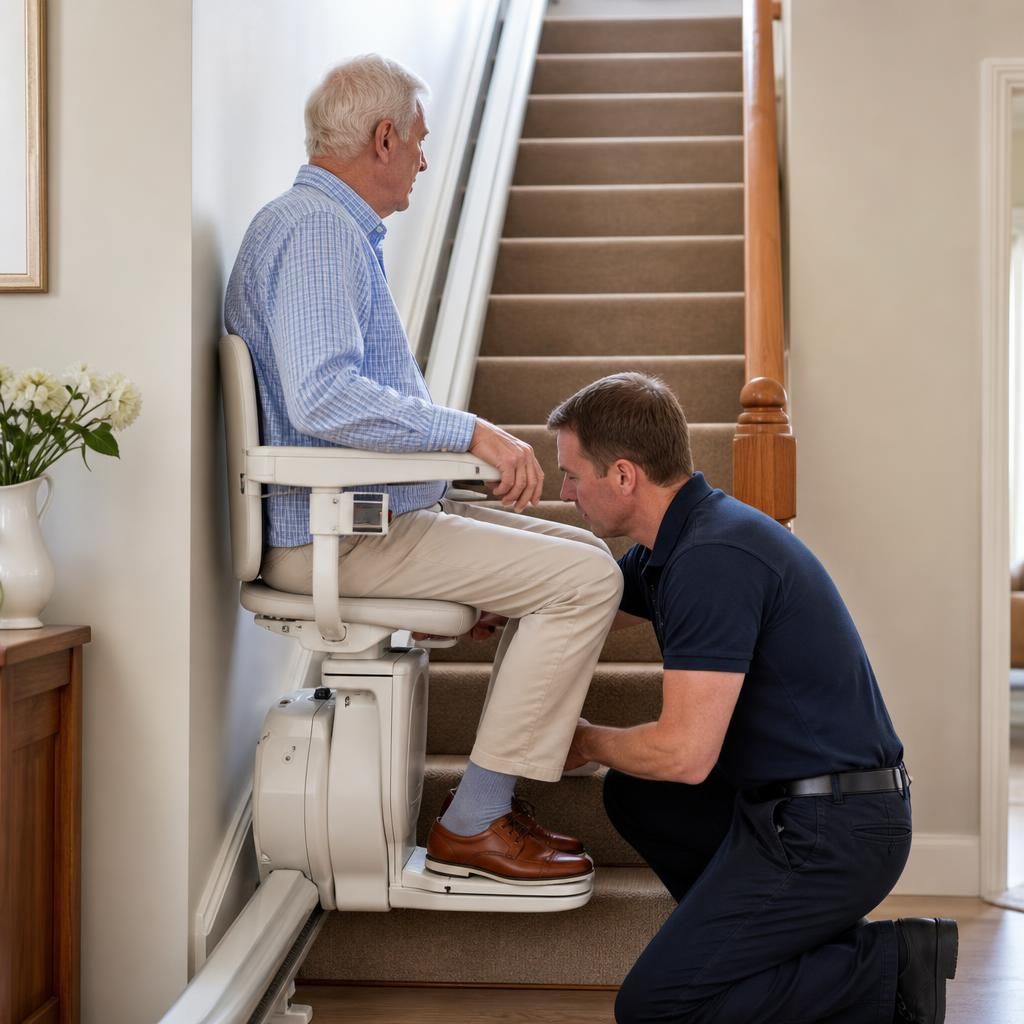
Arrange your reconditioned stairlift assessment
Arrange a professional assessment with Independent Stairlifts to confirm which reconditioned stairlift suits your staircase, mobility needs and budget. We can explain the available options, warranty and installation arrangements before you decide.