
How does the quality of reconditioned stairlift installations compare to those of new stairlift installations?
A reconditioned stairlift installation can provide a quality, safe and reliable result comparable to a new installation when the unit has been thoroughly inspected, professionally refurbished and correctly fitted to the staircase. The main differences are usually the stairlift’s age, available features and cosmetic condition, rather than the standard of installation itself.
A professionally installed reconditioned stairlift can be comparable in installation quality, safety and day-to-day reliability to a new stairlift. The principal differences usually relate to the age of the equipment, its available features, cosmetic condition and remaining service life, rather than the standard of fitting. Quality depends on the condition of the particular unit, the refurbishment process and the competence of the installer.
Whether the stairlift is new or reconditioned, a good installation should begin with an assessment of the staircase and the user’s needs. This includes checking the stairway layout, available space, landing access, seating position, weight requirements, transfer points and any difficulties the user has when getting on or off the lift. For a curved staircase, the rail must be measured and manufactured or adapted accurately to follow the existing steps, bends and landings. A suitable assessment is essential because an incorrectly specified stairlift cannot be made safe or comfortable simply through careful fitting.
What is checked on a reconditioned stairlift?
A reconditioned stairlift should be more than a used unit that has been cleaned and installed again. Before installation, the provider should establish the lift’s history where possible and inspect its mechanical, electrical and safety-critical components. The refurbishment process may include:
- checking the motor, gearbox, drive system and charging equipment;
- testing the batteries and replacing them if they do not meet the required standard;
- examining the seat, armrests, footrest, swivel mechanism and safety belt;
- checking sensors, controls, limit switches and safety edges;
- inspecting the rail, brackets, wiring and fixing points for damage or excessive wear;
- cleaning and replacing worn or damaged parts where necessary; and
- testing the complete stairlift after installation, including its movement, stopping points and safety functions.
The exact work varies according to the model, its age and its condition. A reputable provider should be able to explain what has been inspected, which parts have been replaced and what testing has been completed. It should also provide clear information about the warranty, servicing arrangements and any limitations that apply to a reconditioned unit.
How installation quality compares with a new stairlift
The fitting principles are broadly the same for both types. The rail must be securely fixed, the stairlift must travel smoothly without obstructing the staircase unnecessarily, and the controls and safety systems must operate correctly. The installer should also check that the lift is positioned for safe transfers and that the user can operate it confidently.
With a reconditioned stairlift, the installer may need to take additional care when assessing previously used components. For example, a rail may have been removed from another staircase, or a lift may have experienced regular use before refurbishment. This does not automatically make it unsuitable, but the condition and compatibility of each component need to be confirmed. On a straight staircase, a suitable reconditioned rail may be relatively straightforward to reuse. Curved installations require more careful checking because the rail is made for a particular staircase and may need to be retained, adapted or replaced to achieve the correct fit.
A new stairlift will generally offer the latest design, controls and optional features, and all of its components begin their service life at the point of installation. A reconditioned model may show minor cosmetic marks, have an older control layout or offer fewer options. These differences should be considered separately from safety and fitting quality. An older-looking seat or casing does not indicate poor installation, while a new stairlift can still be unsuitable if it has been poorly specified or fitted.
Factors that affect the quality of the finished installation
- Accurate surveying: Measurements and observations must reflect the staircase, the user’s mobility and the way the lift will be used.
- Correct compatibility: The stairlift, rail, charging points and accessories must be suitable for the staircase and compatible with one another.
- Condition of the equipment: Motors, batteries, controls, safety systems and structural parts must be inspected rather than assumed to be serviceable.
- Installer competence: The installer should follow the manufacturer’s instructions and applicable safety requirements, and know how to deal with the particular stair configuration.
- Commissioning and handover: The completed lift should be tested under operating conditions, and the user should be shown how to use the controls, swivel seat, safety belt, emergency stop and charging system.
- Aftercare: Clear warranty and servicing arrangements help maintain performance and identify wear before it affects reliability.
Are reconditioned installations reliable?
Reliability depends on the individual stairlift and the quality of its preparation, not simply on whether it is new or reconditioned. Batteries and other wear components have a finite service life, so their condition is particularly important. A provider should not rely solely on the lift operating during a brief demonstration; it should assess the relevant components and replace those that are no longer suitable.
It is also important to distinguish between a temporary fault and normal maintenance. Batteries may eventually need replacement, and moving parts may require servicing as they age. Ask what the warranty covers, whether labour and replacement parts are included, how faults are reported and whether servicing is available after the warranty period. Keeping the stairlift clean, using it as instructed and arranging appropriate servicing can help preserve its performance.
What you should expect at installation and handover
At the appointment, the installer should confirm the proposed position, protect the surrounding area, fit and secure the rail and connect the stairlift in accordance with the manufacturer’s requirements. Once installed, the lift should be operated through its travel path and its safety features checked. The installer should explain charging, controls, safe seating, obstruction sensors, emergency procedures and what to do if the lift stops or displays a fault.
You should receive information about the model, warranty, user instructions and ongoing support. If the stairlift feels unstable, stops short of the expected position, moves unevenly, obstructs a doorway or is difficult to use, raise this before the installation is signed off. Small adjustments to the seat, controls or parking position may make a substantial difference to safe and convenient use.
In practical terms, a reconditioned stairlift is likely to offer the best comparison with a new installation when it has been selected through an individual assessment, refurbished to a defined standard and fitted by an experienced installer. New equipment may be preferable when you need the latest features, a particular specification or the longest expected service life. A reconditioned installation may be appropriate when the available model meets the user’s needs and its condition, warranty and support arrangements are clearly explained. The most important measure is not whether the stairlift is new, but whether the equipment is suitable, properly prepared, correctly installed and supported after fitting.
The quality of a reconditioned stairlift installation can be comparable to a new installation when the equipment is suitable, thoroughly checked and fitted by a competent installer. The main differences are usually the stairlift’s age, cosmetic condition and available features, rather than the standard of the installation itself.
Before fitting, the installer should assess the staircase, the user’s transfer needs and the condition of key components, including the motor, batteries, controls, safety sensors, seat and rail. After installation, the stairlift should be tested throughout its travel path, with particular attention to smooth movement, secure fixings, charging, stopping points and emergency features.
A new stairlift has unused components and the latest specification, while a reconditioned model may have some signs of previous use or a shorter remaining service life. These factors should be explained clearly, alongside the refurbishment work, warranty and servicing arrangements. Correct surveying, careful preparation and proper commissioning are the best indicators of a reliable finished installation.
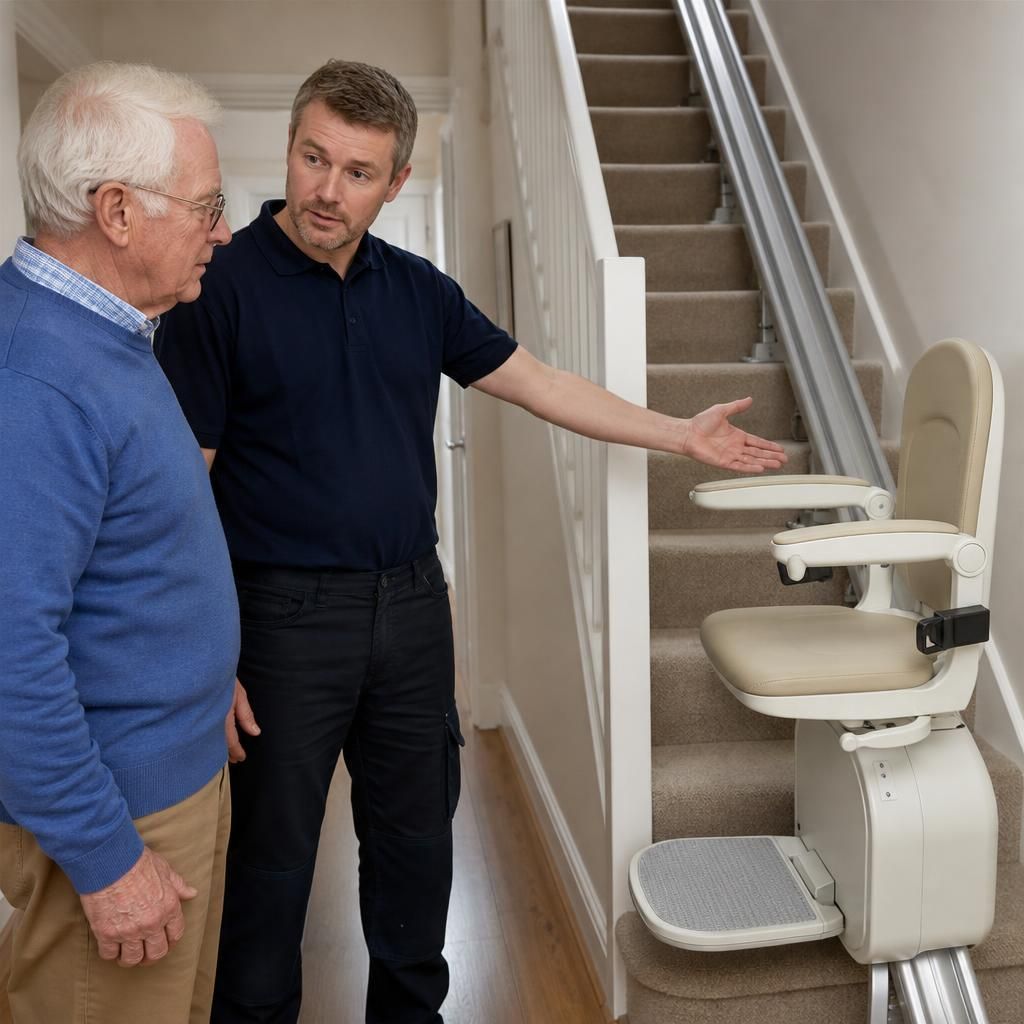
Discuss your reconditioned stairlift installation options
If you would like to discuss whether a reconditioned stairlift is suitable for your staircase and needs, contact Independent Stairlifts to review your installation options.