
How do reconditioned stairlifts compare with new models in terms of performance and value?
Professionally reconditioned stairlifts can provide performance, safety and reliability comparable to new models when they are thoroughly inspected, refurbished and correctly installed. New stairlifts generally offer the widest choice of features and finishes, while reconditioned models usually provide better value through a lower purchase price, subject to condition, suitability and warranty terms.
Professionally reconditioned stairlifts can deliver performance and safety comparable to new models, provided the lift is suitable for the staircase, has been thoroughly inspected and refurbished, and is installed correctly. New stairlifts usually offer the broadest choice of models, colours, features and custom options. Reconditioned stairlifts generally offer stronger value because their purchase price is lower, although the right choice depends on the lift’s condition, specification, warranty and expected use.
Performance in everyday use
A stairlift’s day-to-day performance depends more on its design, condition, installation and maintenance than on whether it was originally sold as new. A properly reconditioned unit should operate smoothly, stop accurately, charge correctly and provide dependable movement between floors. Its controls, seat, armrests, footrest, safety sensors, swivel mechanism and braking system should all be checked before installation.
Many reconditioned lifts are proven models with established operating systems. This can make them a practical choice where straightforward, reliable access is the priority. A new model may have a newer drive system, quieter operation or additional convenience features, but these benefits are not essential for every home or user.
What is checked during reconditioning
Reconditioning should involve more than cleaning a previously used stairlift. The equipment should be assessed for wear, tested for safe operation and refurbished where necessary. Depending on the model and its condition, this can include:
- checking the motor, gearbox, drive mechanism and charging system;
- testing the batteries and replacing them if they no longer hold a suitable charge;
- checking safety sensors, controls, switches and braking functions;
- examining the rails, fixings, seat, belts, armrests and footrest;
- replacing worn or damaged components with suitable parts; and
- carrying out operational tests after installation on the customer’s staircase.
The precise work varies according to the make, model, age, usage history and condition of the individual stairlift. Ask what inspection and refurbishment process is included rather than assuming that every used lift has been prepared to the same standard.
Safety comparison
A new stairlift is not automatically safer than a reconditioned one. Safety depends on the condition of the equipment, the suitability of its design, the quality of the installation and the way it is used. A reconditioned lift should have its safety features tested and should be installed so that it follows the staircase correctly, remains secure and provides suitable clearance at landings and bends.
The installer should assess the user’s mobility, posture, weight, transfer ability and preferred operating position. This is particularly important where the user needs a powered swivel seat, a specific seat height, a folding or powered footrest, a different control arrangement or additional support. A new lift may provide more configuration options, but a reconditioned model can still be safe and appropriate when its specification matches the user and the property.
New stairlifts: where they tend to have an advantage
New models normally provide the widest choice of current features and finishes. Depending on the range available, this may include improved upholstery options, powered seat or footrest functions, different control systems, enhanced diagnostic features and newer battery or drive technology. A new stairlift may also be preferable when the staircase is unusual, the user requires a highly specific configuration or a particular finish is important.
Buying new can also make it easier to specify the exact model and options from the outset. There is no previous usage history to consider, and the manufacturer’s current support arrangements and warranty terms may be more straightforward. These advantages can justify the higher initial cost where the additional features will be used regularly.
Reconditioned stairlifts: where they tend to have an advantage
The main advantage of a reconditioned stairlift is usually the lower purchase cost. This can make powered access more attainable where a new installation would exceed the available budget. It may also be a sensible option when the stairlift is needed for a shorter period, provided the expected use, warranty and future servicing arrangements are clearly understood.
Reconditioned options can be available for both straight and curved staircases, although curved lifts are made to suit individual rail layouts. A suitable pre-owned curved stairlift may require a compatible rail or an adapted installation, so availability and fit must be confirmed during the assessment. The lowest-priced option is not necessarily the best value if it needs extensive alterations, has limited support or does not suit the user’s needs.
Comparing total value rather than purchase price
Value should be assessed over the period you expect to use the stairlift. Consider the installation price, warranty, battery condition, likely servicing needs, availability of replacement parts and the cost of removing the lift if it is no longer required. A reconditioned lift with a clear warranty and documented checks may offer better overall value than a cheaper unit with uncertain condition.
It is also important to establish what the quoted price includes. Confirm whether it covers the home assessment, fitting, demonstration, adjustments after installation and removal of an existing stairlift where applicable. For a curved staircase, check whether the quotation includes the rail required for that specific layout. Comparing quotations on the same basis prevents a lower headline price from obscuring additional costs.
Warranty, servicing and support
Warranty terms can differ between new and reconditioned stairlifts and between suppliers. Check the length of cover, which parts are included, whether labour and call-outs are covered, and whether batteries or consumable items have separate terms. Ask how faults are reported and who will provide technical support after installation.
Both new and reconditioned stairlifts benefit from sensible maintenance. Keep the rail and charging points clear, follow the operating instructions and report unusual noises, jerky movement, charging problems or repeated safety stops promptly. Batteries and other wear-related components may eventually need replacement regardless of whether the lift was bought new or reconditioned.
How to choose between the two
- Choose a reconditioned model when a suitable lift is available, the inspection and refurbishment work are clear, the warranty is appropriate and the essential features meet the user’s needs.
- Choose a new model when you need a particular specification, want the widest selection of options, require a specific finish or expect the newest technology to provide meaningful everyday benefits.
- For either option, prioritise a detailed assessment, correct installation, user comfort, safe transfers, reliable charging and accessible aftercare.
In practical terms, a well-prepared reconditioned stairlift can provide dependable access without the cost of a new unit. A new stairlift offers greater choice and a completely new equipment package. The most appropriate option is the one that fits the staircase, supports the user safely, includes suitable warranty protection and represents good total value for the intended period of use.
A reconditioned stairlift can offer performance comparable to a new model when it has been thoroughly inspected, fitted correctly and matched to the user and staircase. The main difference is that a new lift provides the widest choice of current features, while a reconditioned lift can reduce the initial cost without compromising essential functions such as smooth movement, secure braking, reliable charging and effective safety sensors.
When comparing value, look beyond the purchase price. Check that the quotation and warranty cover the relevant installation work, batteries, parts, labour and aftercare. The lift should also be assessed for:
- the condition of its motor, drive system, seat, controls and safety features;
- compatibility with the staircase and the user’s transfer and seating requirements;
- the availability of suitable replacement parts and future servicing; and
- any costs associated with adjustments, removal or later changes.
A new stairlift may be the better choice where a specific configuration, finish or powered feature is essential. Where the required specification is available, a professionally reconditioned model can provide dependable everyday access and stronger overall value.
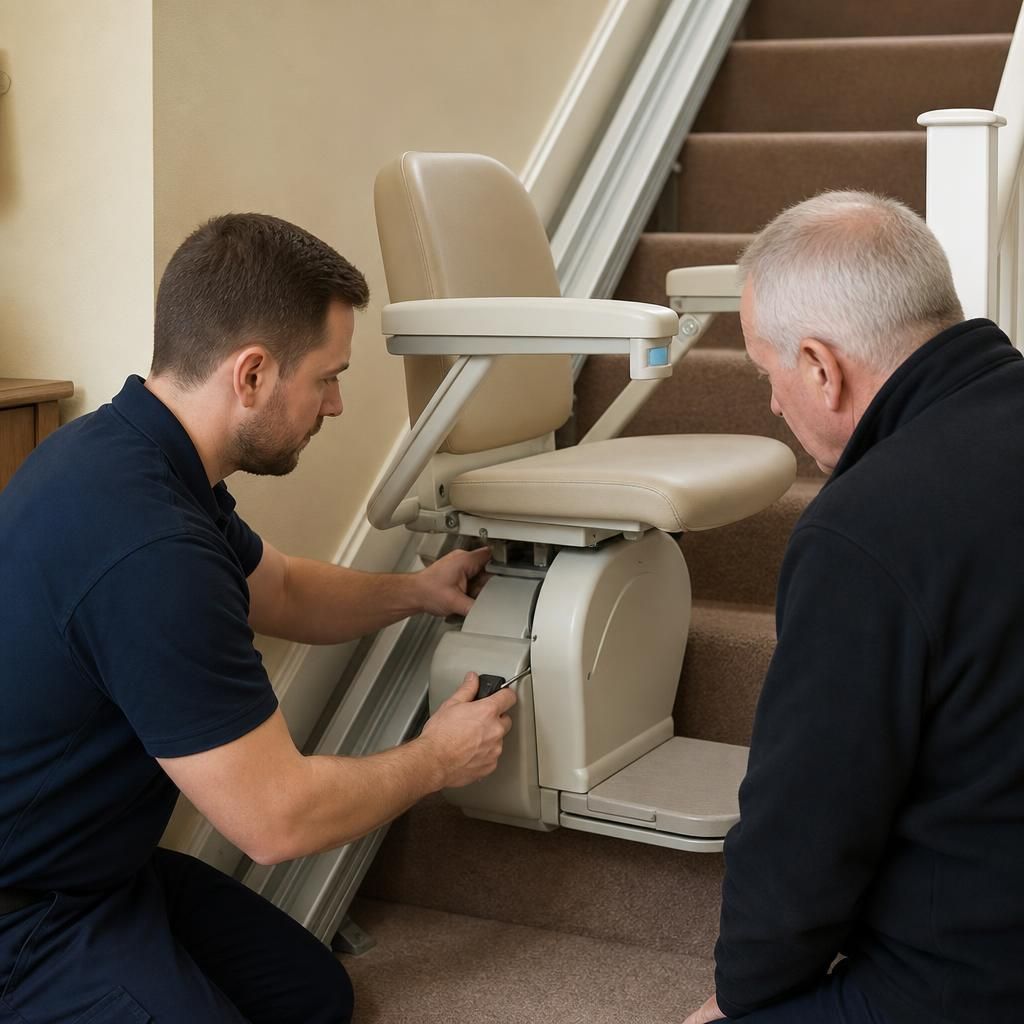
Compare your reconditioned and new stairlift options
Contact Independent Stairlifts to compare a suitable reconditioned stairlift with new options for your staircase, mobility needs and budget. We can explain the specification, warranty, installation and aftercare included before you decide.