
Are reconditioned stairlifts as safe as new units?
Yes, a properly reconditioned stairlift can be as safe and reliable as a new unit when it has been professionally inspected, serviced, safety-tested and installed by a qualified provider. The key difference is the unit’s previous use, so check that it includes appropriate safety checks, replacement of worn parts and a clear warranty.
Yes, a properly reconditioned stairlift can be as safe as a new unit. Its safety depends less on whether it has been used before and more on the quality of the inspection, refurbishment, safety testing and installation. A reputable provider should only supply a reconditioned stairlift when it is suitable for the user and the staircase, with worn or defective parts repaired or replaced.
A reconditioned stairlift is not simply a second-hand unit that has been cleaned and resold. It should go through a controlled preparation process before installation. This normally includes checking the drive system, motor, batteries, charging points, seat, armrests, footrest, controls, sensors, safety edges, seat belt and track. The stairlift should also be run through its operating cycle to confirm that it starts, stops, charges and travels smoothly.
Safety features must work correctly before the stairlift is installed. Depending on the model, these may include obstruction sensors that stop the lift if something is in its path, swivel-seat locks, armrest or seat switches, a seat belt, braking systems and controls that require continuous pressure. Batteries and other parts affected by age or use should be assessed carefully rather than assumed to be serviceable.
Installation is equally important. Even a well-refurbished stairlift will not be safe if it is poorly fitted or unsuitable for the staircase. A qualified installer should assess the layout, available space, steps, landings, access points and the user’s ability to get on and off safely. The track must be securely fitted, the lift positioned to provide a safe transfer and the controls set up so the user can operate them comfortably.
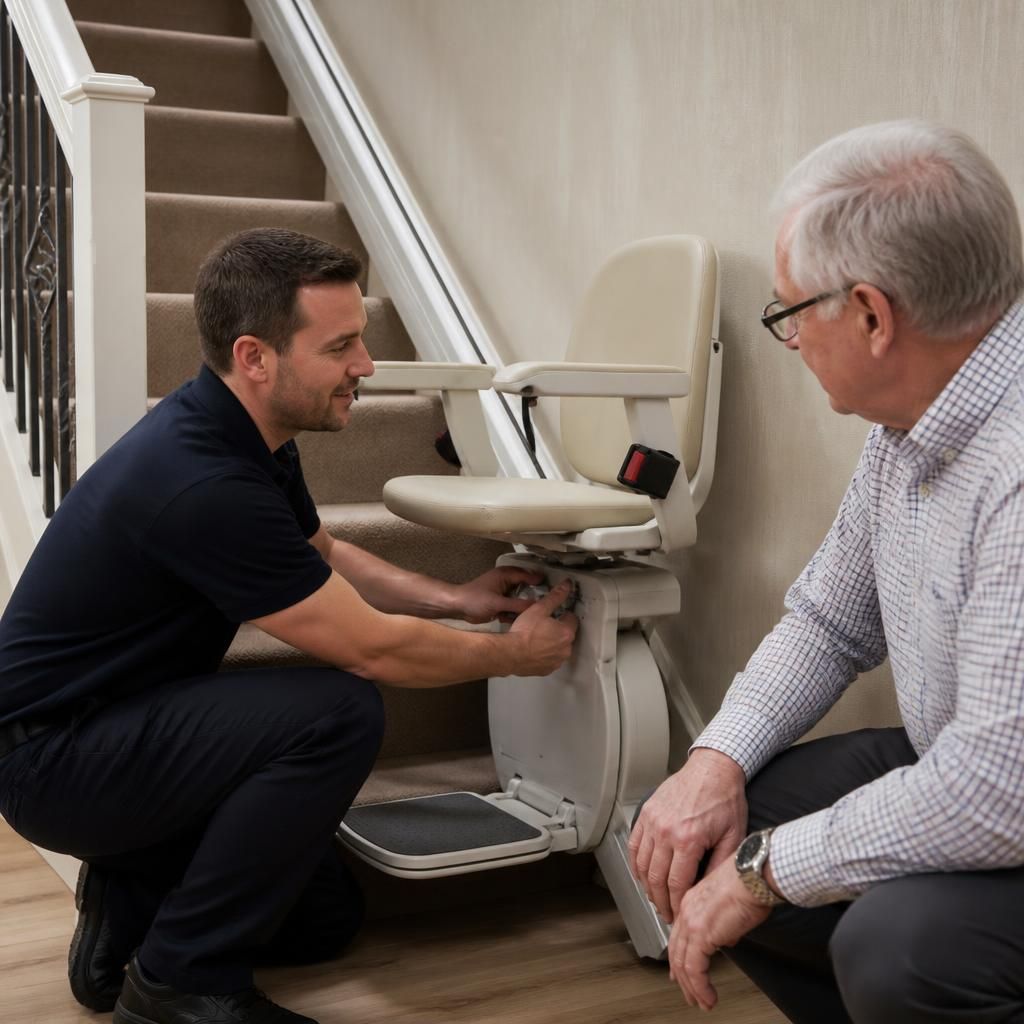
After installation, the installer should demonstrate the stairlift and explain its controls, charging routine, safety features and emergency procedures. You should know how to stop the lift, what to do if it stops away from its charging point and who to contact if a fault develops. It is sensible for the user or their family member to operate the stairlift under supervision before the installation is completed.
There are several practical differences between a reconditioned and a new stairlift:
- Previous use: a reconditioned stairlift has already been installed and used, so its history and condition should be assessed before it is offered.
- Condition of components: parts subject to wear, including batteries, rollers, belts, switches or upholstery, may need servicing or replacement.
- Model availability: reconditioned models are generally selected from available stock, whereas a new model can usually be specified from the manufacturer’s current range.
- Warranty and support: cover can differ, so confirm what is included, how long it lasts and whether call-outs, parts and labour are covered.
- Appearance: a reconditioned unit may show minor cosmetic signs of previous use even when its operating and safety systems have been thoroughly checked.
A lower purchase price should not mean that essential safety checks are reduced. Before agreeing to a reconditioned stairlift, ask whether it has been professionally inspected, what work has been carried out, which parts have been replaced and whether the final installation is covered by a written warranty. You should also receive clear information about servicing and who will provide technical support.
Be cautious if a provider cannot explain the unit’s refurbishment process, offers no meaningful warranty, avoids a proper assessment or suggests that a stairlift will fit without viewing the staircase. A stairlift that has been stored for a long time may also require particular attention to its batteries and electrical systems. These points do not automatically make a unit unsafe, but they should be checked before installation.
Reconditioned does not mean that every model will be right for every user. The stairlift must suit the person’s weight, posture, balance, mobility and ability to use the controls. For example, a user who has difficulty bending may need a particular seat arrangement, while a narrow staircase or unusual landing may require a different track or seating configuration. A professional assessment helps identify these requirements before a suitable unit is selected.
For most households, the safest choice is the stairlift that is correctly matched to the user and staircase, professionally prepared and installed with appropriate aftercare. A new unit may offer the latest features and a wider choice of specification, but a properly reconditioned unit can provide comparable day-to-day safety when it has passed thorough checks and is supported by an experienced installer. If you are unsure, ask us to explain the condition of the available stairlift, the checks completed, the warranty provided and whether it remains suitable for your circumstances.
A reconditioned stairlift is as safe as a new unit only when its safety-critical components have been professionally inspected, tested and, where necessary, replaced before installation. Cleaning or cosmetic refurbishment alone is not enough.
Checks should include the motor, drive system, batteries, charging points, brakes, seat belt, controls, sensors, safety edges and swivel-seat mechanism. The stairlift should also complete a full operating cycle smoothly, stop correctly and respond to its safety features. After these checks, correct installation is essential: the track must be secure, the lift must suit the staircase and the user must be able to transfer, travel and operate the controls safely.
Before accepting a reconditioned unit, ask what work has been completed, whether worn parts were replaced, what warranty is provided and who will handle servicing if a fault develops.
Arrange a reconditioned stairlift assessment
Arrange a reconditioned stairlift assessment with Independent Stairlifts to discuss your staircase, mobility needs and the condition of suitable units. We can explain the checks completed, available warranty and ongoing servicing before you decide.