
What post-purchase services and support are available when opting for a reconditioned stairlift?
After purchasing a reconditioned stairlift, you can typically access professional installation, a user handover, warranty cover, servicing and repair support from the installer. Independent Stairlifts can also advise on routine care, replacement parts and fault reporting, with the exact warranty and ongoing support arranged for your individual stairlift and installation.
After buying a reconditioned stairlift, post-purchase support commonly includes professional installation, a user handover, warranty protection, fault diagnosis, repairs, servicing and access to replacement parts. Independent Stairlifts can explain the support available for your particular lift, as cover and service arrangements depend on the model, its condition, the installation and the terms agreed at purchase.
Professional installation and commissioning
A reconditioned stairlift should be installed and checked by a suitably trained engineer rather than treated as a simple self-installation product. The installation service normally includes securing the rail, connecting the lift to its power supply, checking the charging points and testing the safety systems. On a curved or outdoor installation, the engineer will also check that the bespoke rail, track position and environmental protection are suitable for the staircase and location.
Before the installation is completed, the engineer should run the lift through its travel path and confirm that it starts, stops, charges and parks correctly. Any agreed adjustments, such as positioning the seat or controls to suit the user, should be dealt with at this stage.
User instruction and handover
You should receive an explanation of the stairlift’s controls and safety features after installation. This usually covers operating the armrest controls, using the remote controls, fastening the safety belt, charging the batteries and stopping the lift safely if necessary. The handover should also explain what the warning sounds or indicator lights mean and where to find the user manual.
If a family member or carer regularly assists the user, it is sensible for them to attend the handover. They can learn how to move the stairlift to a parked position, isolate the power if instructed and report a fault accurately.
Warranty and protection after purchase
Warranty cover for a reconditioned stairlift may apply to specified parts, labour or both. The duration and scope can differ from the cover supplied with a new stairlift, so the written warranty should be checked carefully. It should state what is covered, how to report a fault and whether there are any conditions relating to servicing, misuse or unauthorised repairs.
Warranty terms may exclude damage caused by accidents, unsuitable use, alteration by another person or failure to follow the manufacturer’s care instructions. Batteries and other wear items may have separate conditions. Keep the purchase documents, installation details and warranty information in a safe place, as these may be needed when requesting support.
Fault reporting, repairs and replacement parts
If the stairlift stops working, first check that it is switched on, the charging points are unobstructed and the lift is correctly positioned. Check the manual for the meaning of any warning light or audible alert, but do not remove covers or attempt electrical repairs yourself. Report the problem to the support team, giving the lift model, the symptoms, any displayed warning and whether the lift is occupied or blocking the stairs.
Depending on the diagnosis, an engineer may be able to resolve the issue by adjusting a sensor, checking the charging system or replacing a worn component. Common service items can include batteries, chargers, remote controls, safety sensors and other model-specific parts. The availability of parts and the repair approach will depend on the age and design of the stairlift.
If the lift has stopped on the stairs, follow the supplied instructions and contact support. Do not try to lift or force the stairlift manually, and take particular care if the user is left in an unsafe or uncomfortable position.
Servicing and preventative maintenance
Regular servicing helps identify wear before it causes a breakdown. A service visit may include checking the rail, drive system, seat, armrests, footrest, safety belt, sensors, batteries, charging points and remote controls. The engineer may clean or adjust relevant components and advise whether a part is approaching the end of its useful service life.
The required frequency depends on the stairlift, how often it is used, the installation environment and the manufacturer’s guidance. Outdoor lifts may need additional attention because moisture, dirt and temperature changes can affect exposed components. Servicing should be arranged through the appropriate provider, particularly where the warranty requires work to be completed by an approved engineer.
Advice on everyday care
- Keep the rail, footrest and charging points clear of objects and spillages.
- Use the stairlift only as instructed and do not exceed its stated user or load limits.
- Park the lift at its designated charging point when it is not in use.
- Keep the remote controls dry and replace their batteries when required.
- Do not use the stairlift if a safety belt, armrest, seat or footrest is damaged.
- Report unusual noises, jerky movement, reduced travel speed or repeated warning alerts promptly.
Support when circumstances change
Your requirements may change after installation. Independent Stairlifts can advise on matters such as control positioning, replacement accessories, servicing arrangements or adaptations where these are technically suitable. If you move home, the stairlift may need to be assessed before it is removed, stored or reinstalled. A straight stairlift may be suitable for another staircase only after a new survey, while a curved rail is normally designed for the staircase for which it was made.
The most useful support arrangement is one that gives you a clear contact route, written warranty terms, an installation record and straightforward instructions for reporting faults. If you are unsure what is included with your reconditioned stairlift, contact Independent Stairlifts and ask for the specific warranty, servicing and repair arrangements recorded for your installation.
Post-purchase support for a reconditioned stairlift usually includes installation checks, user instruction, warranty assistance, fault diagnosis, repairs and servicing. The exact cover depends on the stairlift model, installation and written terms agreed at purchase, so keep the warranty and installation documents available.
If a problem develops, report it promptly rather than attempting to remove covers or repair electrical components yourself. Describe any warning lights, unusual noises or changes in movement, and explain whether the stairlift is occupied or obstructing the stairs. An approved engineer can assess the fault, check safety systems and advise on parts or servicing. Regular maintenance can also help identify wear in batteries, sensors, charging points and other components before they affect reliable operation.
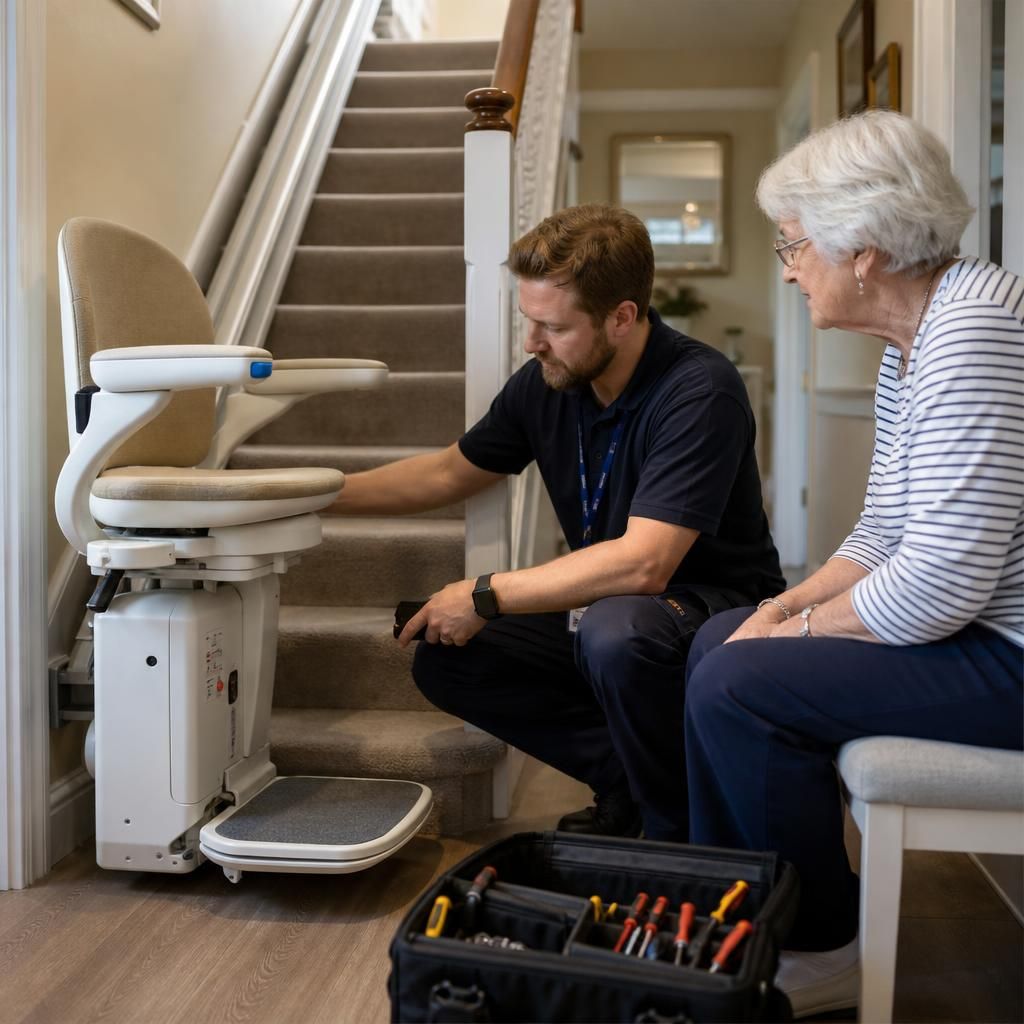
Ask about your reconditioned stairlift aftercare
Contact Independent Stairlifts to confirm the warranty, servicing and repair arrangements for your reconditioned stairlift. We can also advise on fault reporting, replacement parts and any support you may need after installation.