
How does the cost of a reconditioned stairlift compare to purchasing a new one, and what value does this offer?
A reconditioned stairlift usually costs less than a new model because previously used equipment is professionally refurbished and tested before installation. The value comes from combining a lower purchase price with expert fitting, safety checks and appropriate warranty and aftercare, subject to the stairlift’s condition, specification and staircase type.
A reconditioned stairlift generally costs less than a new stairlift because the main unit has been previously installed, then professionally inspected, refurbished and tested for safe reuse. The saving can be substantial, but the exact difference depends on the stairlift specification, the staircase layout, the condition of the equipment, installation requirements and the warranty and aftercare included. A lower purchase price is most valuable when it still includes appropriate fitting, safety checks and dependable support.
New stairlifts are built to order or supplied directly from the manufacturer, so the price normally includes new components, the latest available specification and a manufacturer-backed warranty. A reconditioned model uses a suitable pre-owned stairlift that has been assessed and prepared for another installation. Components may be cleaned, replaced, adjusted or tested before the stairlift is offered for sale. This reduces the cost of the equipment without necessarily reducing its practical suitability for everyday use.
The potential saving is usually easier to achieve with a straight stairlift. Straight staircases use a standard rail configuration, whereas a curved stairlift requires a rail designed around the individual bends, landings and changes in direction. A reconditioned curved stairlift may still offer good value, but the cost of adapting or manufacturing the rail can make the difference between reconditioned and new less predictable. Outdoor installations also involve weather-resistant equipment, suitable protection and additional installation considerations, so they should be assessed separately from an indoor straight-stairlift comparison.
When comparing quotations, look at the complete installed price rather than the price of the stairlift alone. Check whether the quotation includes:
- A home assessment to confirm that the stairlift is suitable for the staircase, user and available space.
- Removal or preparation of any existing equipment where relevant.
- Delivery, installation and testing by a suitably trained installer.
- Any required alterations to charging points, rails or safety features.
- A warranty covering the equipment and, where applicable, labour and call-outs.
- Advice on operation, charging, cleaning and safe day-to-day use.
- Access to servicing, repairs and replacement parts after installation.
A very low advertised price may not represent the lowest overall cost if fitting, repairs or essential warranty cover are excluded. The condition of the batteries, drive system, controls, seat mechanism, sensors and charging equipment should be considered as part of the assessment. These components affect reliability and may cost more to replace after installation than they would as part of a properly managed refurbishment.
Professional refurbishment is important because a used stairlift should not simply be removed from one property and installed in another without checks. The equipment should be examined for wear, cleaned and tested, with safety-critical parts inspected and replaced where necessary. The rail and carriage must also be checked for compatibility with the intended staircase. A suitable installation includes operational checks, confirmation that safety sensors work correctly and an explanation of the controls for the person using the stairlift.
The value of reconditioned equipment is therefore a combination of price and service. It can provide a practical way to improve access between floors where a new stairlift is not required or where the available budget is limited. It may be particularly appropriate when the staircase is relatively straightforward, the required features are available on the refurbished model and the customer wants a reliable solution without paying for the newest specification.
A new stairlift may offer better value in some circumstances. This can apply where the user needs a specific seat, control arrangement or powered option that is not available in suitable reconditioned stock, or where the staircase requires a bespoke curved rail. A new model can also be preferable where the customer wants the latest design, a longer expected period of use or a warranty structured around new equipment. The right choice depends on the user’s mobility, the home and the intended duration of use, not simply the initial price.
It is also worth considering the likely length of use. If the stairlift is needed for a limited period, a reconditioned model with suitable warranty cover may offer particularly good value. If it is expected to be used frequently for many years, the features, condition, serviceability and long-term support may matter more than the initial saving. A home assessment can identify whether a reconditioned stairlift is appropriate and explain any trade-offs before a decision is made.
Ask for clear information about the warranty before agreeing to purchase. Confirm how long it lasts, which parts are covered, whether labour and call-outs are included, and what happens if a fault occurs. You should also establish whether servicing is available locally and whether replacement batteries and other parts can be supplied when required. These details help distinguish a professionally supplied reconditioned stairlift from an unverified used stairlift.
Independent Stairlifts can assess the staircase and discuss whether a new or reconditioned solution is more suitable for the home and the person using it. The recommendation should take account of the staircase type, available space, user comfort, required features, installation work, warranty and ongoing support. Comparing these factors alongside the quotation gives a more accurate view of value than comparing purchase prices alone.
The value of a reconditioned stairlift is best judged by its complete installed cost, not the advertised equipment price alone. A suitable model can reduce the initial expense while still providing professional fitting, safety testing and practical aftercare.
When comparing a reconditioned stairlift with a new one, check whether the quotation includes:
- A home assessment and confirmation that the stairlift suits the user and staircase.
- Professional installation, testing and instruction on safe operation.
- Inspection or replacement of key components, including batteries, sensors, controls and charging equipment.
- Clear warranty terms covering parts, labour and call-outs where applicable.
- Access to servicing, repairs and replacement parts after installation.
These details help show whether the lower price represents genuine value or simply fewer services. Independent Stairlifts can explain the differences between available options so the decision reflects the staircase, required features, expected length of use and ongoing support.
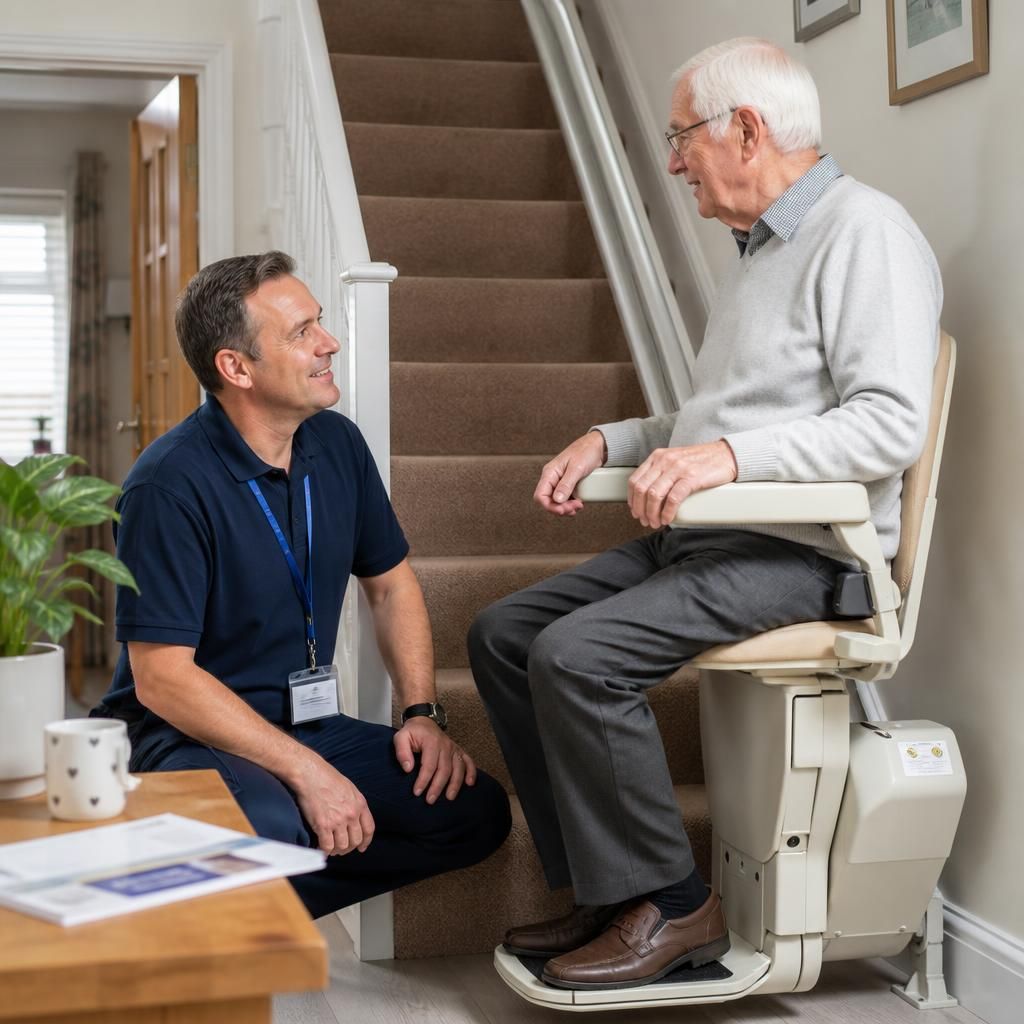
Compare Your Stairlift Options and Costs
Contact Independent Stairlifts to compare the total installed cost of a new or reconditioned stairlift for your staircase. We can assess your requirements and explain the warranty, fitting and aftercare included with each option.