
What steps are included in the refurbishment process to ensure the safety of reconditioned stairlifts?
The refurbishment process includes a detailed inspection, thorough cleaning, replacement of worn or unsuitable components, and testing of the motor, batteries, controls, track and safety features. Before installation, the stairlift is checked for secure operation and then commissioned in your home to confirm it is correctly fitted and safe to use.
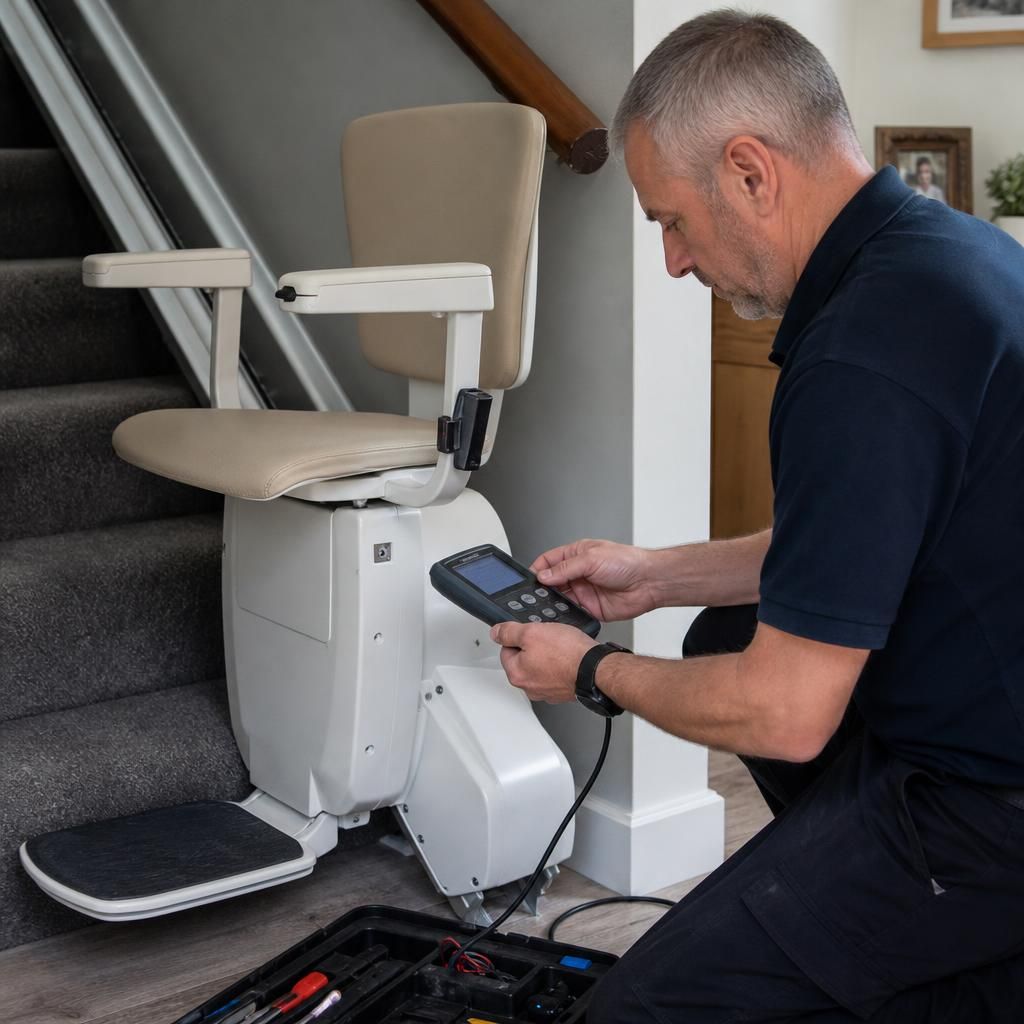
A reconditioned stairlift is made safe through a controlled process of inspection, cleaning, component replacement, functional testing and professional commissioning. The unit is assessed against the manufacturer’s operating requirements, unsuitable or worn parts are dealt with, and the finished installation is checked in the customer’s home before it is handed over for use.
1. Initial assessment and identification
The refurbishment begins with an inspection of the stairlift and its available service history. The engineer identifies the model, checks its configuration and assesses whether it is suitable for further use. This includes examining the carriage, seat, controls, track, charging equipment, batteries and safety systems for signs of damage, excessive wear, corrosion or previous modification.
The unit is also considered in relation to its intended installation. A stairlift that has been suitable for one staircase may need a different track arrangement, charging position or control configuration in another home. Refurbishment therefore does not replace the need for a proper assessment of the staircase and the user’s mobility requirements.
2. Cleaning and preparation
Dirt, dust and residue are removed from the accessible mechanical and electrical areas. Cleaning allows the engineer to inspect surfaces and moving parts more accurately, while also ensuring that the seat, armrests, footrest, controls and other user-contact areas are presented in a suitable hygienic condition.
Cleaning is not a substitute for repair. If inspection reveals a damaged cover, loose fitting, contaminated electrical connection or other defect, that issue is assessed separately and resolved where appropriate before the stairlift proceeds through the refurbishment process.
3. Detailed inspection of mechanical parts
The engineer examines the parts responsible for supporting and moving the user. These can include the seat, swivel mechanism, armrests, footrest, carriage, drive mechanism, rollers, track and fixing points. Particular attention is given to smooth movement, unusual noise, looseness, alignment and signs that a component may not continue to operate reliably.
Parts are not retained simply because the stairlift is still operational. Components that are worn, damaged, unsuitable for the planned installation or outside the manufacturer’s acceptable condition are repaired or replaced. The precise parts required depend on the model, its previous use and the findings of the inspection.
4. Inspection of electrical and safety systems
The electrical system is checked for secure connections, damaged wiring and signs of overheating or deterioration. The batteries and charger are assessed because reliable charging is essential to the stairlift’s availability, particularly where the lift needs to operate during a temporary interruption to the household electricity supply.
Safety features are checked as part of the same process. Depending on the model, these may include sensors that detect an obstruction, controls that prevent unintended movement, a seat belt or harness, swivel-seat locking, armrest and footrest interlocks, emergency stop controls and systems that stop the lift if an unsafe condition is detected. The engineer verifies that the relevant features respond correctly rather than relying only on a visual inspection.
5. Replacement and repair of components
Any required replacement parts are selected for compatibility with the stairlift model and its proposed configuration. Typical examples can include batteries, worn rollers, damaged covers, control components, switches, charging parts or other mechanical and electrical items. Replacement is based on condition and suitability, not on a fixed list that applies to every stairlift.
Using compatible parts matters because a component that appears similar may not provide the correct fit, electrical performance or safety response. Repairs and replacements should therefore be carried out by a suitably trained engineer following the relevant technical instructions.
6. Workshop or pre-installation testing
Before installation, the refurbished stairlift is operated and tested to confirm that the drive system, controls, charging function and safety devices work as intended. The engineer looks for smooth starting and stopping, consistent travel, secure seat movement and appropriate responses from the controls and obstruction sensors.
Testing also provides an opportunity to identify faults that may not have been apparent during a static inspection. If the stairlift does not perform correctly, it should not be released for installation until the problem has been investigated and resolved.
7. Assessment of the customer’s staircase
At the home, the installer confirms that the stairlift and track arrangement are suitable for the staircase. The assessment takes account of the stair width, landings, bends, doors, available clearance, fixing points and the position of the user when getting on and off the lift. For an outdoor installation, exposure to weather and the suitability of external materials and electrical arrangements also need to be considered.
This stage helps prevent a technically sound stairlift from being installed in a position that creates avoidable access or clearance problems. It also confirms practical details such as the location of remote controls and charging points.
8. Secure installation and commissioning
The track is fixed securely to the staircase or in accordance with the approved installation arrangement, and the carriage, seat, controls and charging equipment are fitted and connected. The installer then runs the stairlift along the complete route, checking clearances, stopping positions, travel, charging and the operation of the safety features in the actual environment.
Commissioning is an important distinction from simply fitting the equipment. It confirms that the refurbished stairlift remains safe and functional after assembly, fixing and adjustment in the customer’s home. Any necessary adjustments are made before the installation is considered complete.
9. Handover and ongoing checks
The customer is shown how to use the controls, seat belt, swivel seat, charging position, remote controls and emergency features. The installer should also explain basic daily checks, safe use on the stairs and what to do if the stairlift stops or displays a fault. Keeping the track clear, using the lift as instructed and arranging servicing when required all contribute to continued safe operation.
Details of the refurbished unit, work completed and any relevant aftercare arrangements should be recorded. If you notice unusual noise, jerky movement, reduced battery performance, a loose fitting or a safety feature that does not respond as expected, stop using the stairlift and contact the service team for advice rather than attempting a repair yourself.
Safety testing confirms that a refurbished stairlift operates correctly before it is handed over for use. The engineer checks the motor, controls, batteries, charger, track, seat, belt and relevant safety sensors, including obstruction detection and emergency stopping. The lift is then operated through its full route after installation to confirm secure movement, clearances, stopping positions and charging in the customer’s home. Any fault or adjustment identified during these checks must be resolved before the stairlift is commissioned.
Arrange a reconditioned stairlift assessment
Arrange a reconditioned stairlift assessment with Independent Stairlifts to confirm the most suitable equipment, installation arrangement and safety requirements for your home. Contact our team to discuss your staircase and mobility needs.