
How does the refurbishment process ensure the safety and reliability of a reconditioned stairlift?
A reconditioned stairlift is refurbished through a structured inspection, servicing and safety-testing process before installation. Each key component is checked, worn or faulty parts are replaced where necessary, and the completed lift is tested on your staircase to confirm safe, reliable operation.
The safety and reliability of a reconditioned stairlift are established through a controlled refurbishment process, not simply by cleaning and reinstalling a previously used lift. The stairlift is assessed, dismantled where appropriate, cleaned, electrically and mechanically checked, and tested before it is considered suitable for another installation. Any component that is worn, damaged or not performing within the manufacturer’s requirements is repaired or replaced.
Initial assessment and identification
When a stairlift is received for refurbishment, its condition and service history are reviewed where available. The main assemblies are identified and assessed for signs of excessive wear, impact damage, corrosion, water ingress or previous faults. This helps determine whether the equipment is suitable for reconditioning and whether any parts need further investigation.
A stairlift is not treated as suitable simply because it was working in its previous home. Its condition, age, usage and intended installation environment all need to be considered. Outdoor equipment, for example, requires particular attention to weather exposure and corrosion, while an indoor lift must still be checked for dust, moisture and general mechanical wear.
Cleaning and detailed inspection
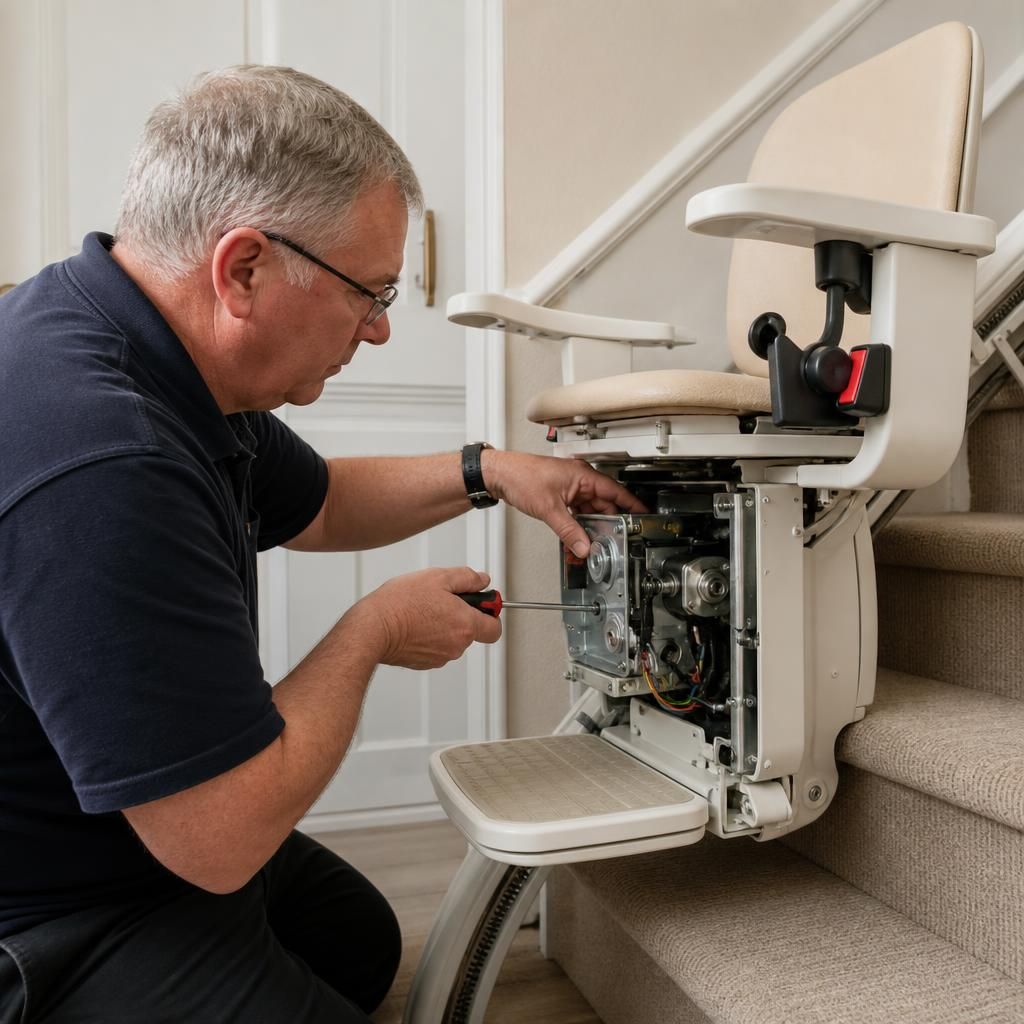
Components are cleaned so that dirt and residue do not conceal damage or interfere with operation. The engineer then inspects the parts that affect safe movement, stopping, charging and user control. This normally includes the rail, drive system, motor, gearbox, seat, swivel and safety mechanisms, controls, batteries, charging equipment, wiring and protective covers.
The inspection looks for issues such as unusual play, damaged cables, loose fixings, worn drive surfaces, deterioration around the seat or armrests, and signs that a safety switch may not operate correctly. The rail and its brackets are also checked for damage and suitability, since they must support the lift securely and provide a stable path of travel.
Repair and replacement of components
Parts that do not meet the required condition are not left in service merely because the stairlift can still move. Depending on the assessment, a component may be adjusted, repaired or replaced. Items commonly requiring attention can include batteries, remote controls, safety edges, seat components, drive parts, wiring, charging contacts and fixings. Replacement decisions are based on condition, function, compatibility and the demands of the proposed staircase.
Consumable or age-sensitive parts receive particular consideration. Batteries, for example, may appear undamaged but fail to hold sufficient charge. A thorough check helps identify this before installation, reducing the risk of unreliable operation or the lift stopping away from its charging point.
Electrical and functional testing
After servicing, the stairlift is tested to confirm that the controls and safety circuits respond correctly. The engineer checks functions such as starting and stopping, direction controls, charging, seat movement, obstruction detection and emergency controls, where fitted. Unusual noise, hesitation, vibration or inconsistent movement can indicate a fault requiring further attention.
Safety features are especially important because they are intended to stop or prevent movement when an unsafe condition is detected. These may include sensors around the footrest or carriage, seat and swivel interlocks, armrest controls, braking functions and systems that prevent operation when the seat is not correctly positioned. The exact features depend on the stairlift model, but each fitted safety function must operate as intended.
Assessment of the installation location
Refurbishment of the lift itself is only part of the safety process. Before fitting, the staircase and surrounding area are assessed to confirm that the rail, brackets, seat and controls can be installed correctly. The survey considers the stair layout, available clearances, landing space, power supply, charging position and the user’s method of getting on and off the lift.
This assessment is also used to identify practical risks, such as a doorway, radiator, bannister or narrow landing affecting access. A reconditioned stairlift must be compatible with the individual staircase rather than treated as a standard, one-size-fits-all installation. Where alterations or additional safeguards are needed, these should be discussed before the installation proceeds.
Testing after installation
Once fitted, the stairlift is run on the actual staircase rather than relying only on workshop checks. The engineer confirms that it travels smoothly along the rail, stops at the intended positions, charges correctly and leaves suitable clearance at the top and bottom of the stairs. The seat, swivel, controls, safety sensors and belt are checked in the installed position.
The installation is also examined for secure fixings, stable rail support, correctly routed wiring and safe positioning of the charging equipment. Any adjustments needed to improve alignment, access or operation are completed before handover. This final check is important because the staircase, user position and surrounding fixtures can affect performance in ways that cannot be fully assessed away from the home.
Handover and ongoing reliability
At handover, the user is shown how to operate the controls, use the seat and swivel safely, fasten the seat belt where fitted, call the lift, charge it and respond to an interruption or fault. The user should also understand basic precautions, including keeping the rail clear, reporting unusual sounds or movement, and avoiding use if a safety feature is not working correctly.
These checks do not make a reconditioned stairlift maintenance-free. Batteries and moving parts can wear over time, and the lift should be kept clean and serviced in line with the applicable manufacturer’s guidance and aftercare arrangements. Promptly reporting changes in performance allows faults to be investigated before they become more serious.
In practice, safety comes from the combination of careful component selection, appropriate replacement of worn parts, structured testing, a properly assessed installation and clear user instruction. This process allows a reconditioned stairlift to provide dependable access while ensuring that its condition is judged against the requirements of the customer’s home and intended use.
The refurbishment process ensures safety by combining detailed component checks with testing on the customer’s actual staircase. After cleaning and servicing, the engineer checks the rail, drive system, seat, controls, batteries, wiring and safety features. Worn or unreliable parts are repaired or replaced before the stairlift is approved for installation.
Once fitted, the lift is operated through its full route to confirm smooth travel, secure stopping, correct charging and safe clearances. The engineer also checks the seat swivel, belt, sensors, controls and fixings in their installed positions. This final assessment confirms that the reconditioned stairlift is suitable for the staircase and ready for reliable everyday use.
Discuss Your Reconditioned Stairlift Requirements
Discuss your reconditioned stairlift requirements with our team so we can assess your staircase, mobility needs and the most suitable available solution.