
Are reconditioned stairlifts suitable for both indoor and outdoor use?
Reconditioned stairlifts can be suitable for indoor or outdoor use, but they must be designed and refurbished for the environment where they will be installed. Indoor models are not suitable for exposed external stairs, so an assessment is needed to confirm the stairlift’s weather resistance, condition and compatibility with your staircase.
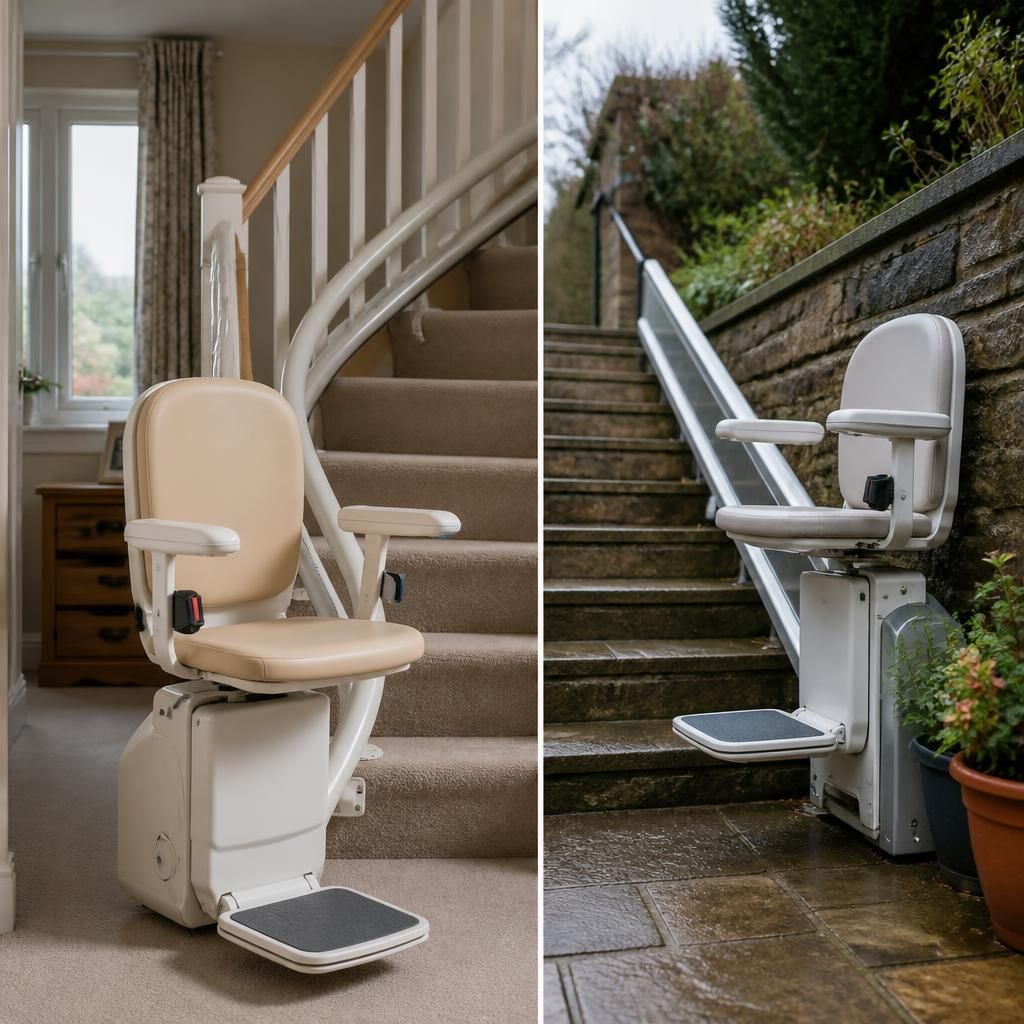
Reconditioned stairlifts can be suitable for both indoor and outdoor use, but only when the model has been designed for the intended environment and has been properly refurbished for installation. An indoor stairlift should not be installed on exposed external stairs. Outdoor use requires equipment with suitable protection against rain, moisture, sunlight, temperature changes and corrosion, together with an assessment of the staircase and its surroundings.
Indoor reconditioned stairlifts are generally suitable for staircases within the home, including straight and curved layouts. During assessment, the installer considers the shape and condition of the stairs, available space at the top and bottom, the position of doors and walkways, and the location of the charging points. The stairlift must be securely fitted and allow safe transfers without obstructing normal access through the property.
Most indoor installations are protected from the weather, but the room itself can still affect the equipment. Areas such as garages, entrance halls, conservatories or unheated porches may experience damp, condensation or significant temperature changes. These conditions should be identified before installation, as they may make an indoor model unsuitable or require additional protection and positioning.
Outdoor reconditioned stairlifts are built or specified for external conditions. They normally incorporate weather-resistant materials and finishes, protected controls, suitable electrical components and upholstery or seating that can tolerate outdoor exposure. However, weather resistance does not mean that the lift can be left unprotected in every situation. A cover may be recommended when the stairlift is not in use, particularly where it is exposed to persistent rain, direct sunlight, frost, leaves or coastal conditions.
The installation environment is just as important as the stairlift itself. An outdoor assessment should consider:
- whether the staircase is fully exposed, partially covered or enclosed;
- the likelihood of standing water, poor drainage, snow, ice or heavy rainfall;
- exposure to salt air, dust, grit and other materials that can accelerate corrosion;
- the location and protection of the power supply and charging equipment;
- safe access at the top and bottom of the stairs, including suitable handrails and lighting;
- the condition, width and fixing strength of the steps, walls and landing areas; and
- how the stairlift can be secured, covered, cleaned and maintained between visits.
A reconditioned outdoor stairlift must also be checked for the effects of its previous use. The refurbishment should include inspection, cleaning, functional testing and replacement of worn, damaged or weather-affected components where necessary. Particular attention is needed for the drive system, batteries, charging contacts, safety sensors, controls, seat, armrests, footrest, wiring and protective covers. A component that is acceptable for an indoor installation may not be appropriate for an exposed outdoor one.
Compatibility is assessed against the manufacturer’s specifications rather than assumed from appearance alone. The fact that a reconditioned stairlift has operated successfully indoors does not make it suitable for outside use. Likewise, an outdoor model may not be the best choice for a damp internal location if the charging arrangement, ventilation or available space is unsuitable.
Outdoor conditions can increase maintenance requirements. Keeping the rail and moving parts free from grit, removing accumulated moisture and debris, using the recommended cover and reporting unusual noises or operating problems promptly can help protect the equipment. Batteries and charging contacts should be checked as part of routine servicing, particularly if the lift is used infrequently or exposed to cold weather. The user should follow the operating and care instructions provided for the specific model.
Independent Stairlifts can assess whether a reconditioned stairlift is appropriate for your indoor or outdoor staircase, taking account of the environment, the condition of the equipment and the way it will be used. If a particular reconditioned model is not suitable, the assessment should identify whether another model, additional weather protection or a new stairlift would provide the safer and more reliable solution.
Reconditioned stairlifts can be used outdoors only when the specific model has been designed for external conditions and refurbished to a suitable standard. An indoor stairlift is not appropriate for exposed outdoor stairs because rain, condensation, frost, sunlight and grit can damage its electrical and moving components.
Before fitting an outdoor model, Independent Stairlifts assesses the staircase, power supply and surrounding environment. The inspection also considers drainage, salt air, safe access, available shelter and the condition of weather-exposed parts such as the batteries, controls, wiring, seat and protective covers. A suitable cover and regular cleaning may be recommended to reduce moisture and debris build-up.
Arrange an assessment for your indoor or outdoor stairlift
Arrange an assessment with Independent Stairlifts to confirm whether a reconditioned stairlift is suitable for your indoor or outdoor staircase and environment.