
What should I know about the warranty and aftercare support for reconditioned stairlifts?
A reconditioned stairlift should come with clear written warranty terms covering specified parts and labour for an agreed period, although coverage can differ from that offered with a new model. Aftercare typically includes installation support, fault reporting, servicing advice and access to replacement parts, so check what is included, what is excluded and who to contact before purchase.
A reconditioned stairlift should be supplied with clear, written warranty terms covering specified parts and labour for an agreed period. The warranty may be different from that offered with a new stairlift, but it should still explain what is covered, what is excluded, how to report a fault and what aftercare support is available. Keep these details with your installation paperwork, as they are the quickest way to confirm the correct support route.
What the warranty normally covers
Warranty cover is intended to protect you if a covered fault develops during the agreed warranty period. Depending on the stairlift and the supplier’s terms, this may include:
- Replacement or repair of specified mechanical and electrical components.
- Labour for diagnosing and rectifying a covered fault.
- Engineer attendance where remote advice cannot resolve the problem.
- Parts that were inspected, tested or replaced during the reconditioning process.
- Work required to restore the stairlift to safe working order, where the fault falls within the warranty terms.
Coverage is not necessarily identical for every component. For example, batteries and other consumable items may have separate conditions because their performance is affected by usage, charging patterns, age and storage. Ask for a component-by-component explanation if the warranty document uses broad terms such as “parts and labour” without listing exclusions.
Check the written terms before relying on the warranty
The paperwork should identify the stairlift covered, the start date, the duration of cover and the party responsible for administering it. It should also state whether the warranty applies to the complete installation or only to the reconditioned unit. Important points to check include:
- Whether call-outs, diagnosis, labour and replacement parts are included.
- Whether cover applies to the lift, its charging points, controls, seat functions and safety components.
- Whether batteries, remote controls and upholstery are treated separately.
- Whether a fault must be reported within a particular process or through a particular contact route.
- Whether servicing or other maintenance is required to keep the warranty valid.
- Whether damage caused by misuse, alteration, accidental impact, water, power problems or unauthorised repairs is excluded.
- Whether the warranty remains valid if you move home or the stairlift is transferred to another owner.
A warranty is different from a guarantee only in the wording commonly used by suppliers; the practical protection depends on the terms provided. Do not assume that a product described as guaranteed includes unlimited parts, labour or call-outs. The written conditions take priority over a general verbal description.
Warranty protection and your legal rights
A warranty is an additional contractual promise from the supplier. It does not remove your legal rights under UK consumer law. If the stairlift is faulty, not as described or does not meet the required standard, contact the supplier promptly and explain the problem. The available remedy can depend on the circumstances, the time since supply and whether the issue relates to the product or the installation. A warranty cannot be used to exclude rights that the law does not allow a supplier to exclude.
Keep the quotation, invoice, warranty document, installation records and any engineer reports. These documents can help establish what was supplied and make it easier to resolve a warranty query.
What aftercare support should include
Aftercare is broader than the warranty. It covers the practical help available after installation, whether or not a reported issue ultimately qualifies as a warranty repair. A well-defined aftercare service should explain how to:
- Report a fault or unusual noise.
- Obtain advice if the stairlift stops, will not charge or displays a warning.
- Arrange an engineer visit where telephone guidance is insufficient.
- Book routine servicing or a safety check.
- Order compatible replacement parts, batteries or chargers when these are not covered by the warranty.
- Request help if the stairlift needs adjustment because of a change in use or the home environment.
Installation support is also part of useful aftercare. The installer should explain normal operation, charging, safety features, swivel or folding mechanisms, remote controls and the procedure for stopping the lift in an emergency. You should know how to leave the stairlift safely if it stops between floors and who to contact before attempting any reset or repair.
Servicing and maintenance
Reconditioned does not mean maintenance-free. Regular use gradually affects batteries, drive components, rollers, belts, switches and other moving parts. Follow the operating and care instructions supplied with the stairlift, keep the track and charging areas free from obstructions, and report changes in performance rather than waiting for a complete failure.
Servicing may be recommended at intervals based on the model, condition, usage and installation. Confirm whether routine servicing is included in the aftercare package or charged separately. A service visit is not always a warranty repair: it may identify normal wear, a consumable that needs replacing or a problem caused by an external factor. The engineer should explain any charge before carrying out non-warranty work where practicable.
Common warranty exclusions
Typical exclusions can include damage from incorrect use, deliberate or accidental damage, unauthorised modification, unsuitable cleaning products, electrical faults outside the stairlift, flooding or other environmental damage. Normal wear and tear may also be treated differently from a sudden component failure. A warranty may not cover the cost of recovering a lift that has been moved, dismantled or repaired by someone who is not authorised by the supplier.
These exclusions are not automatically unreasonable, but they should be stated clearly. If a repair is declined, ask which term applies and request an explanation of any chargeable work. Do not dismantle the stairlift or use non-approved parts to investigate a fault, as this can create a safety risk and may affect warranty eligibility.
What to do if your stairlift develops a fault
- Stop using the lift if it behaves unpredictably, makes an unusual noise, smells of burning or shows visible damage.
- Check that the power supply is on, the lift is correctly positioned on a charging point and the safety controls have not been activated. Only carry out checks described in your user instructions.
- Note the symptoms, any warning light or display message, and when the problem occurs.
- Contact the aftercare or service contact shown in your paperwork and provide the stairlift details, installation address and warranty information.
- Ask whether the proposed visit or parts are covered before agreeing to chargeable work.
Do not continue using a lift that has a safety-related fault, and do not rely on a household member to support or push the chair manually unless the manufacturer’s instructions specifically permit a safe procedure.
Questions to ask about your reconditioned stairlift
- What is the warranty start date and end date?
- Which parts and labour are included?
- Are batteries and call-outs covered, and under what conditions?
- Who should I contact outside normal office hours?
- Is routine servicing required, and is it included?
- What happens if a required part is no longer available?
- Can the stairlift be repaired or serviced if I move home?
- What support is available after the warranty expires?
The most reliable protection comes from matching the stairlift to the user and staircase, having it installed correctly and understanding the support arrangements before installation is completed. If you are unsure whether a current problem is covered, report it through the agreed aftercare route rather than arranging an independent repair first. The service team can then confirm whether the issue is a warranty fault, routine maintenance matter or chargeable repair.
The warranty for a reconditioned stairlift is the written agreement that sets out which faults, parts and labour are covered, while aftercare is the wider support available after installation. Before relying on either, check the warranty period, exclusions, fault-reporting process and whether servicing or batteries are treated separately.
- Keep the warranty document, invoice and installation records together.
- Contact the agreed aftercare team before arranging an independent repair.
- Stop using the stairlift if it behaves unpredictably, makes an unusual noise or shows visible damage.
- Ask whether a proposed call-out, part or repair is covered before chargeable work begins.
Reconditioned stairlifts still need routine care, and normal wear may not be covered in the same way as a sudden failure. Follow the operating instructions, keep charging points clear and report changes in performance promptly so the issue can be assessed safely.
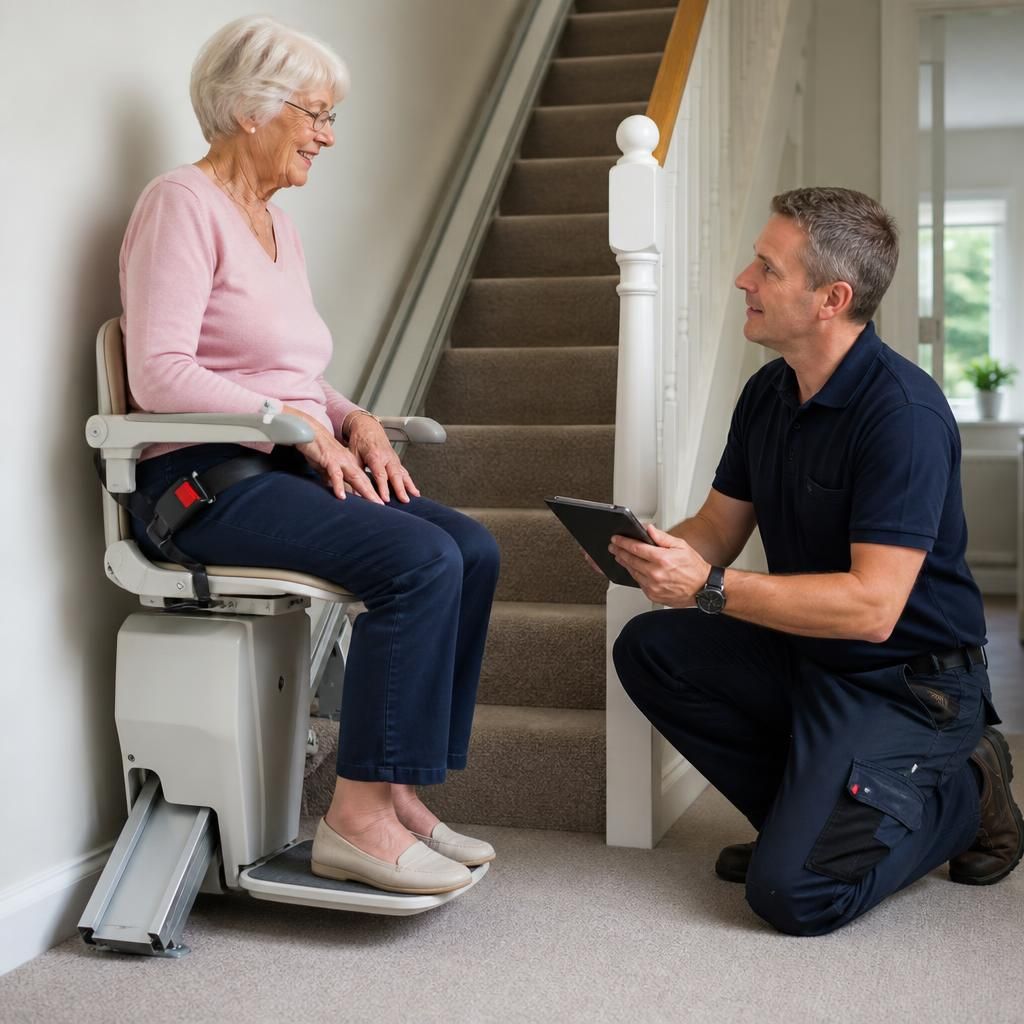
Check Your Warranty and Aftercare Options
Review your reconditioned stairlift warranty and aftercare options with our team, including cover for parts, labour, batteries and servicing. Contact Independent Stairlifts before arranging chargeable repairs so we can confirm the correct support route.