
What are the cost savings when choosing a reconditioned stairlift over a new one?
A reconditioned stairlift usually costs less than a comparable new model because its main components have been previously used, inspected and prepared for reuse. The actual saving depends on the stairlift type, staircase, installation requirements, warranty and aftercare included in the quotation, so compare the complete fitted price rather than the equipment cost alone.
A reconditioned stairlift can reduce the initial cost compared with a new equivalent, but the saving is determined by the complete fitted package rather than the lift alone. Reconditioned models use previously installed components that have been inspected, tested, cleaned and prepared for further use. The amount you save depends on the stairlift type, the condition and compatibility of the equipment, the staircase, installation work, warranty and aftercare included in the quotation.
For a meaningful comparison, request like-for-like prices for a new and reconditioned stairlift. The quotation should show the total cost of supplying and installing the lift, not just the price of the seat or drive unit. A lower equipment price may not represent a genuine saving if additional work, a shorter warranty or replacement parts are excluded.
When comparing quotations, check whether each includes:
- the stairlift, rail and charging equipment;
- delivery, installation and testing;
- removal of an existing stairlift, if required;
- replacement batteries, controls or other parts where necessary;
- adaptations to the staircase, landing or electrical supply;
- demonstration and instruction for the user;
- warranty cover and the length of that cover; and
- ongoing servicing, call-out support and engineer charges.
The largest potential saving is usually on the equipment itself. The main drive system, seat, controls and other suitable components can be reused after a professional inspection and preparation process. This avoids the full cost of manufacturing and supplying a new unit. Installation, assessment and support costs still apply, however, so the total reduction will not necessarily match the difference between new and reconditioned equipment prices.
The type of staircase also affects the saving. A reconditioned straight stairlift is often easier to compare with a new model because the rail is designed for a standard straight flight and may be suitable for another home after assessment. Curved stairlifts are more individual: their rails are made to follow a particular staircase. A reconditioned curved lift may therefore offer good value only when its rail, seat position, bends and landing arrangement are compatible with the new property. If substantial rail alterations or a replacement rail are needed, the cost advantage may be reduced.
Outdoor, heavy-duty and specialist stairlifts should also be assessed on more than the initial price. Weather exposure, weight capacity, seat design, charging arrangements and the condition of protective components can affect future maintenance. A cheaper model may not be suitable if it does not provide the support, transfer position or operating controls the user needs.
It is useful to separate the saving into three areas:
- Upfront equipment saving: the difference between the reconditioned and new stairlift before fitting and additional services.
- Installation saving: any difference in fitting requirements, particularly where an existing compatible rail or charging position can be used.
- Whole-life value: the likely cost of warranty cover, servicing, batteries, repairs and eventual removal over the period you expect to use the stairlift.
Whole-life value is important because a reconditioned lift is not automatically the cheapest option in every situation. Ask what inspection and preparation have been carried out, which parts have been replaced, and whether the equipment has been tested under load and through its full travel. You should also establish whether the warranty covers parts, labour and call-outs, or whether some items are excluded. Batteries and consumable items may have different terms from the main lift.
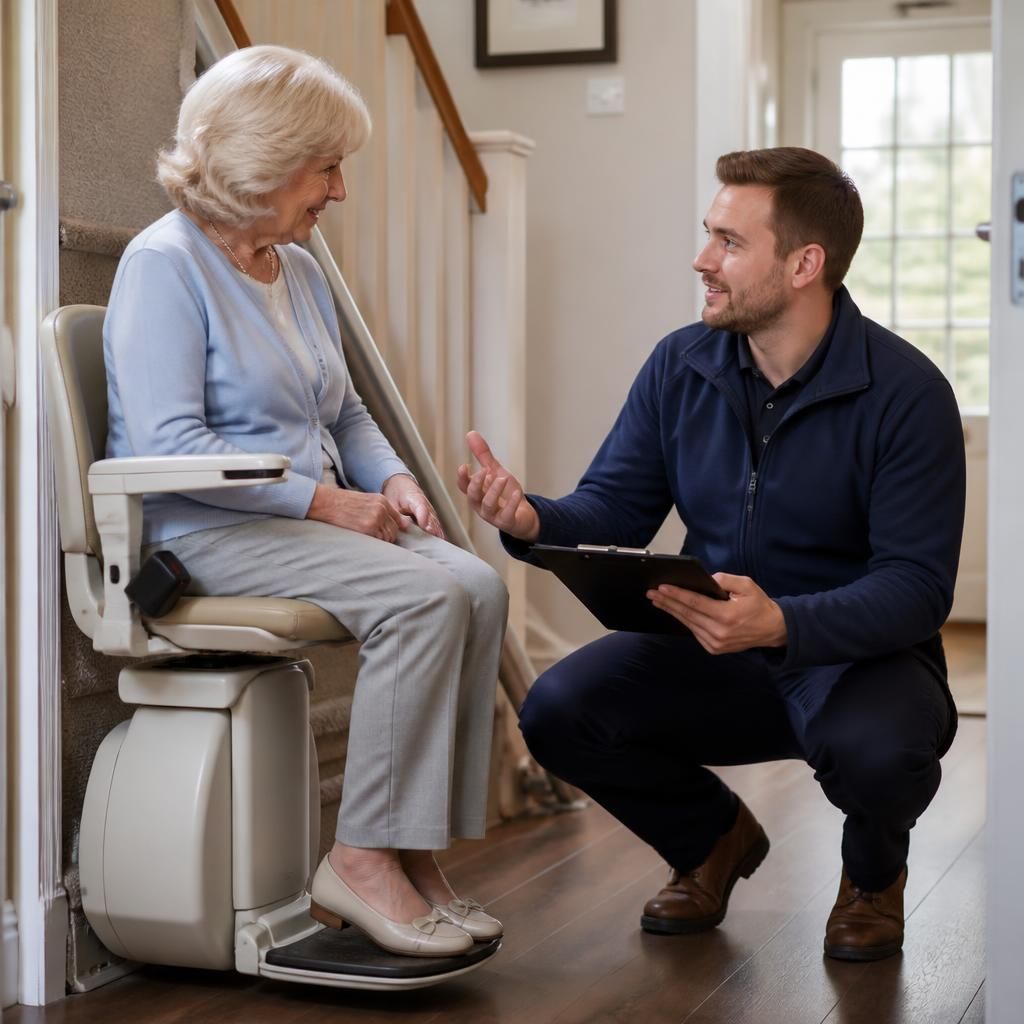
A professionally supplied reconditioned stairlift should be assessed against the user’s needs and the staircase before installation. The survey should consider the width and shape of the stairs, available space at the top and bottom, transfer requirements, the user’s mobility and weight, whether other people need to use the stairs, and the position of charging points. This helps prevent a low purchase price from becoming an expensive compromise.
There may also be tax considerations. Some customers may qualify for VAT relief on mobility equipment and installation where the relevant UK conditions are met. Eligibility depends on the individual and the intended use, so ask for the correct treatment to be confirmed when the quotation is prepared rather than assuming that every stairlift purchase is treated in the same way.
Before accepting an offer, ask for both prices in writing and compare them using the same specification. Confirm the model, seat and control options, rail arrangement, installation date, warranty period, aftercare arrangements and any exclusions. If the reconditioned option is less expensive but has a shorter warranty or does not include the same level of support, consider whether the initial saving justifies that difference.
In practical terms, choosing reconditioned equipment can be a cost-effective option when the stairlift is suitable for the user, fits the staircase without major modification and is supplied with proper testing, installation and aftercare. The most reliable saving is the difference between two complete, comparable quotations—not an advertised equipment price. A personal assessment can establish whether a suitable reconditioned model is available and what the final installed cost would be for your home.
The genuine cost saving from a reconditioned stairlift is the difference between comparable, fully installed packages—not simply the difference in advertised equipment prices. Both quotations should cover the same type of stairlift, seat options, rail arrangement, installation work, warranty and aftercare.
A reconditioned lift may have a lower equipment cost, but expenses such as a replacement battery, additional parts, removal of an existing lift or specialist fitting can affect the final price. Ask for these items to be listed clearly so you can identify what is included and avoid comparing a basic equipment price with a complete new installation.
- Confirm that the lift has been inspected, tested and prepared for reuse.
- Check whether delivery, fitting and user instruction are included.
- Compare warranty cover for parts, labour and call-outs.
- Allow for future servicing, batteries and repairs when assessing whole-life value.
A reconditioned stairlift is most likely to provide a worthwhile saving when it fits the staircase without major alteration and includes appropriate installation and support. A personal assessment can confirm whether the available model is suitable and establish the complete fitted cost.
Request a personalised reconditioned stairlift quotation
Request a personalised reconditioned stairlift quotation to compare the complete fitted cost for your staircase and requirements. We can assess suitable equipment, installation, warranty and aftercare options with you.