
What factors influence the cost of reconditioned stairlifts?
The cost of a reconditioned stairlift is influenced mainly by your staircase design, the lift model and features required, its condition, and the complexity of installation. Straight stairlifts are typically simpler to price, while curved or outdoor installations may cost more because they require tailored equipment, additional preparation and specialist fitting.
The cost of a reconditioned stairlift is influenced mainly by the staircase design, the lift model and features required, its condition, and the complexity of installation. A reconditioned stairlift for a standard straight staircase is usually more straightforward to price, while curved or outdoor installations may cost more because they require tailored equipment, additional preparation and specialist fitting.
Staircase design and measurements are often the most important factors. A straight staircase may be suitable for a reconditioned lift with a standard rail, provided the rail length and layout are compatible. Curved staircases require a rail made to follow the bends, landings and changes in direction. Although a reconditioned curved stairlift may offer savings compared with a new installation, the bespoke rail remains a significant part of the overall cost.
The survey will also consider the width of the stairs, the position of doors and hallways, the available parking space at the top or bottom, and whether the lift needs to fold away to maintain access. A narrow staircase, restricted landing or unusual turn can require additional planning or a different model.
The type and model of stairlift affect the price because different lifts have different specifications, controls and levels of adjustment. A basic model may be suitable where the user needs straightforward support on a standard staircase. Other situations may call for a powered swivel seat, powered footrest, hinged rail, perch seat or a model with a higher weight capacity. These features can increase the cost, but they may also improve safety, comfort and usability.
User requirements should be assessed alongside the staircase. For example, a person who has difficulty bending their knees may need a different seating position from someone who has limited balance. The most suitable reconditioned lift is not necessarily the one with the lowest initial price; it is the one that can be operated safely and comfortably in the intended home.
The condition and age of the equipment also influence the price. Reconditioning should normally include inspection, cleaning, testing and replacement of worn or unsuitable components. The extent of this work varies between individual stairlifts. A lift that needs little preparation may be priced differently from one requiring replacement batteries, upholstery, controls or mechanical parts.
Batteries are particularly important because they affect whether the lift can complete journeys reliably during normal use and during a power cut. Ask whether the batteries have been tested or replaced, what other checks have been completed, and whether suitable replacement parts remain available for the model. Older equipment may have a lower purchase price but could require more careful consideration when budgeting for future maintenance.
Installation complexity is another cost factor. Fitting a straight stairlift is generally less involved than fitting a curved model, but the installer still needs to secure the rail correctly, connect the charging points, test the safety systems and make sure the lift travels safely along the full staircase. Additional work may be needed where there is limited access, an unusual power supply arrangement or a requirement to reposition charging points.
Outdoor stairlifts have further requirements. Components must be suitable for exposure to changing weather conditions, and the installation may need protection from rain, damp and direct sunlight. The condition of the outdoor staircase, the position of the charging point and the distance between the entrance and the parking location can all affect the final quotation.
Optional features and accessories can change the total cost. Common examples include:
- Powered swivel or lift-up seats
- Powered footrests
- Perch or high-seat configurations
- Hinged or sliding rails where a doorway or walkway could be obstructed
- Additional remote controls
- Different upholstery or seat finishes
- Weather protection for outdoor equipment
Some features are primarily a matter of convenience, while others may be important for safe transfers. They should be selected according to the user’s mobility and the layout of the home rather than added automatically.
Availability and compatibility can affect the price of a reconditioned stairlift. Straight stairlifts are more likely to be available in a range of suitable configurations, whereas a curved lift depends on whether an appropriate rail and compatible equipment can be sourced. A reconditioned lift may need to be adapted or matched with a different rail, and that work will be reflected in the quotation.
It is also important to distinguish between a reusable standard rail and a rail that has been made for a particular curved staircase. A second-hand curved stairlift is not always a direct fit for another home. The rail may need to be modified, replaced or manufactured to suit the new measurements, so the equipment price alone does not show the likely installation cost.
Warranty and aftercare should be considered as part of the value of the installation. A quotation should explain what is covered, how long the cover lasts, whether call-outs or labour are included, and how faults will be dealt with. The terms may differ according to the model, its age and the level of reconditioning carried out.
A lower upfront price may not represent the best value if it provides limited support or excludes important parts and labour. Ask about servicing, battery replacement, fault diagnosis and ongoing support before making a decision. Clear aftercare arrangements can make future costs easier to plan.
Removal, preparation and additional work may also be included in the total. If an existing stairlift needs to be removed, this should be identified during the assessment. The quotation should make clear whether removal, disposal, minor making-good work and electrical adjustments are included or charged separately. Moving furniture or preparing restricted access areas may also affect the installation process.
Other financial details can influence the amount payable. VAT treatment may depend on the customer’s circumstances and eligibility, so this should be confirmed when the quotation is prepared. Delivery, installation, warranty cover and any optional accessories should be shown clearly rather than left as unspecified extras.
For an accurate comparison, look beyond the advertised price and check that each quotation covers the same equipment, survey, installation work, safety testing, warranty and aftercare. A proper home assessment is essential because it confirms whether the reconditioned model is compatible with the staircase and suitable for the person using it.
The best way to establish the likely cost is to arrange a tailored assessment. This allows the stairlift, rail, features and installation requirements to be considered together, giving you a clearer view of both the initial price and any future maintenance considerations.
The staircase design is usually one of the biggest influences on the cost of a reconditioned stairlift. A straight staircase may accommodate a standard rail, whereas a curved staircase needs a rail shaped to its bends, landings and changes in direction. This bespoke rail can remain a significant part of the price even when the lift unit itself has been reconditioned.
During the assessment, the installer will also consider the stair width, available space at the top and bottom, nearby doors and whether the rail needs to fold or hinge out of the way. These details affect the equipment selected and the complexity of fitting, so a home assessment provides a more reliable cost than an advertised equipment-only price.
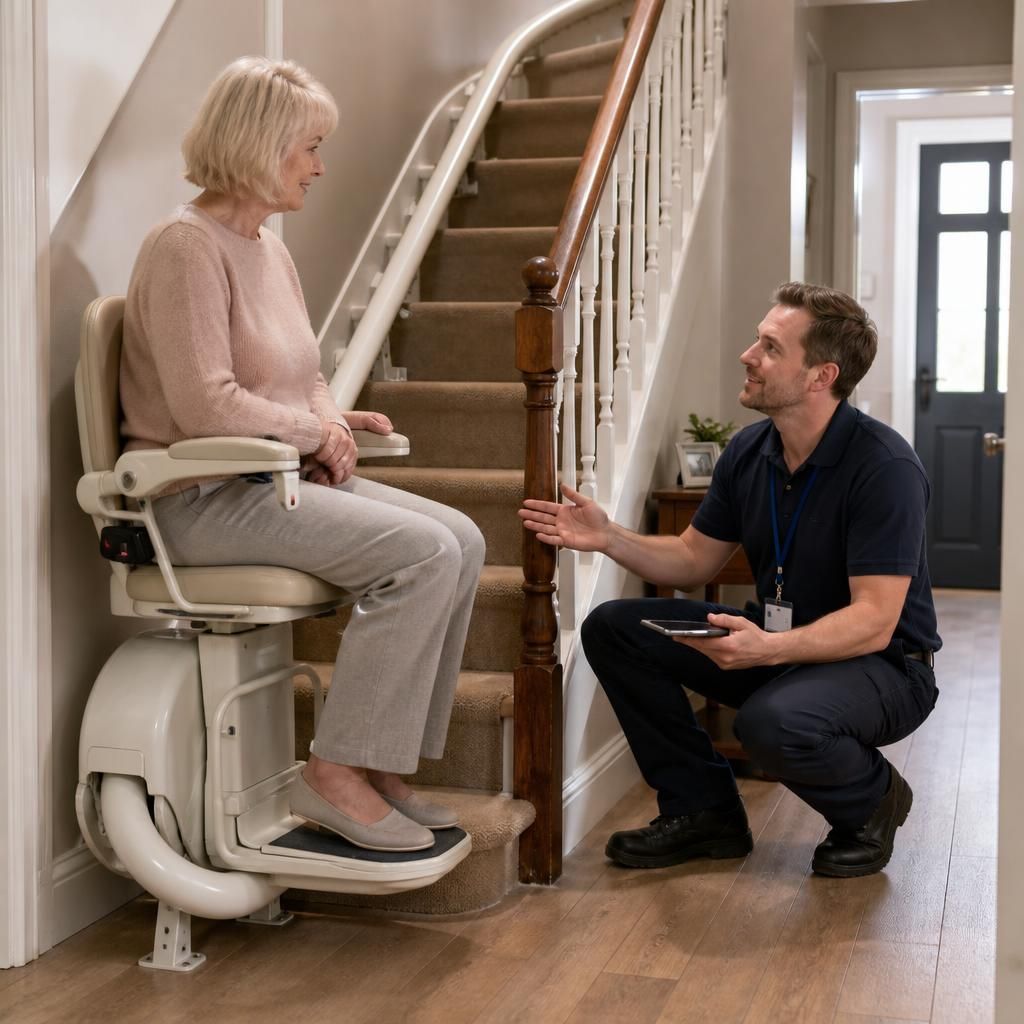
Arrange a tailored reconditioned stairlift assessment
Arrange a tailored reconditioned stairlift assessment to confirm which model, features and installation work suit your staircase and mobility needs. You’ll receive a clear quotation covering the equipment, fitting, warranty and aftercare.