
What advantages do reconditioned stairlifts have over new models in terms of environmental impact and sustainability considerations?
Reconditioned stairlifts can have a lower environmental impact than new models because professionally restored equipment extends the life of existing components, reduces waste and avoids some of the raw materials and manufacturing energy needed to produce a new stairlift. When correctly inspected, refurbished and supported, a reconditioned stairlift can provide a practical, sustainable alternative without compromising safety.
Reconditioned stairlifts can be a more sustainable choice than new models because they keep existing equipment in use, reduce demand for new raw materials and avoid some of the energy and waste associated with manufacturing. The environmental benefit is greatest when a stairlift is professionally assessed, refurbished with suitable replacement parts, installed correctly and maintained throughout its further service life.
Extending the useful life of existing equipment
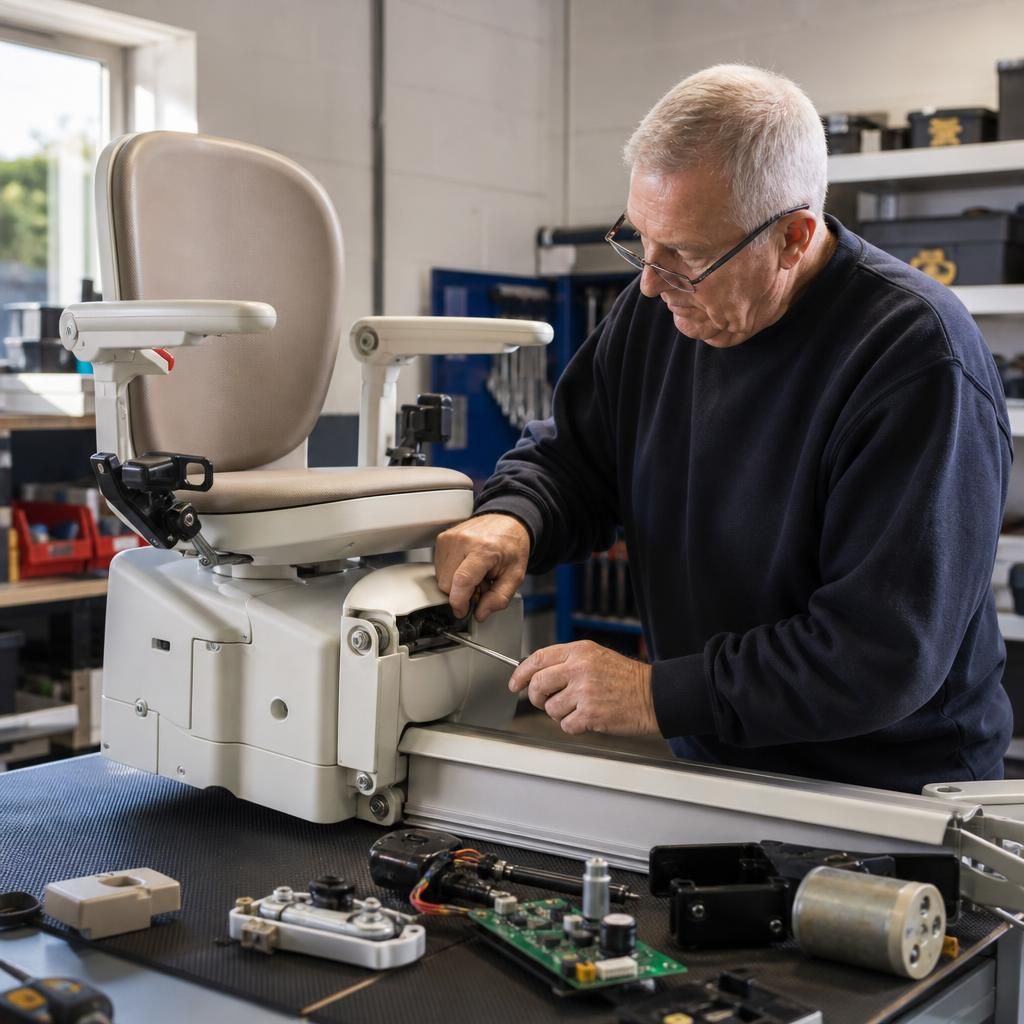
A stairlift contains a combination of metals, plastics, electronic components, batteries, wiring and upholstery. Reconditioning allows many of these components to be reused rather than discarded when a stairlift is removed from a property. The main unit, charging system, rail and seat may remain suitable for further use after inspection and refurbishment, depending on their condition and compatibility with the new installation.
This approach supports the principle of using products for longer before recycling or disposal. It can also reduce the environmental impact associated with extracting raw materials, processing them into components and assembling a completely new stairlift.
Reducing manufacturing-related energy and waste
Producing a new stairlift requires materials, factory processes, packaging and transportation. A reconditioned model will still involve some energy and materials during inspection, cleaning, testing, replacement of worn parts and installation, but these requirements are generally limited to restoring an existing product rather than manufacturing every component from the beginning.
Reconditioning can also reduce packaging waste and prevent usable parts from entering the waste stream. Components that are no longer suitable should be separated and handled responsibly, particularly electrical parts and batteries, rather than simply being disposed of with general household waste.
How the environmental benefit depends on the refurbishment process
Not every used stairlift has the same sustainability profile. The quality and extent of the reconditioning work matter. A responsible process should include:
- an assessment of the stairlift’s mechanical, electrical and structural condition;
- cleaning and inspection of the rail, drive system, seat, controls and safety features;
- replacement of worn, damaged or unreliable components with suitable parts;
- functional and safety testing before installation;
- correct fitting and commissioning in the customer’s home; and
- appropriate recycling or disposal of parts that cannot be reused.
Reusing equipment that is unsafe, incompatible with the staircase or near the end of its practical life would not be a sustainable decision. It could lead to repeated repairs, premature replacement and additional transport or waste. Sustainability therefore needs to be considered alongside safety, reliability, suitability and expected service life.
Transport and installation considerations
A stairlift’s overall environmental impact is also influenced by how far it travels and how many visits are needed. A properly matched reconditioned stairlift can help avoid unnecessary exchanges, modifications or repeat installations. A home assessment is useful because it confirms the staircase layout, user requirements and equipment compatibility before installation.
For curved staircases in particular, the rail is usually made to suit the individual staircase. This means that the reuse potential of a curved rail may be more limited than that of some standard components. Even so, other parts of the stairlift may be suitable for reconditioning, and a professional assessment can identify what can responsibly be reused.
Energy use during operation
A reconditioned and new stairlift both require electricity for charging and operation. The difference in sustainability is therefore mainly associated with the equipment’s manufacture, reuse, repair and eventual disposal rather than a guaranteed difference in day-to-day energy consumption. Energy use will depend on the model, charging system, usage pattern, battery condition and staircase design.
A correctly maintained stairlift is more likely to operate as intended. Keeping the charging point clear, following the manufacturer’s instructions and arranging repairs when necessary can help prevent avoidable faults and extend the product’s serviceable life.
Reconditioning and the circular economy
Reconditioned stairlifts form part of a circular approach to products. Instead of following a simple pattern of manufacture, purchase and disposal, equipment is inspected, repaired, reused and eventually recycled where possible. This helps retain the value of materials and components for longer.
The circular benefit is not limited to the stairlift itself. Rails, seats, motors, controls and other parts may be recovered for suitable future installations, subject to condition, compatibility and safety requirements. Parts that cannot be reused can often be directed towards appropriate waste or recycling routes rather than being left in general waste.
Does choosing reconditioned compromise safety?
Reconditioned does not mean unchecked or simply second-hand. However, safety depends on the condition of the equipment and the standard of the inspection, refurbishment and installation. Ask what checks are carried out, which components are replaced as part of the process, what warranty or aftercare is provided and whether the stairlift is suitable for the intended user and staircase.
Controls, sensors, brakes, batteries, charging equipment, seat belts and other safety-related components should be assessed as part of the installation. The stairlift should also be demonstrated after fitting, with clear guidance on operation, charging and reporting faults.
Questions to ask when comparing the sustainability of options
- Which parts of the stairlift are being reused?
- What inspection, servicing and safety testing will be completed?
- Will worn batteries, controls or other components be replaced where necessary?
- How is the equipment matched to the staircase and the user’s needs?
- What warranty, maintenance and repair support is available?
- How are removed components and batteries recycled or disposed of?
- Is a new model genuinely necessary, or would a suitable reconditioned model meet the same requirements?
For many homes, a professionally reconditioned stairlift offers a practical way to improve access while making better use of existing materials. It is not automatically the greener option in every case: the condition of the equipment, the quality of the refurbishment, the suitability of the installation and the length of time it remains in service all affect the result. A detailed assessment can establish whether a reconditioned stairlift is both environmentally sensible and appropriate for the user.
Reconditioned stairlifts can reduce environmental impact by extending the useful life of existing equipment. Reusing suitable rails, seats, motors and controls means fewer components need to be manufactured from new raw materials, while inspection, repair and testing use fewer resources than producing a complete new stairlift.
The benefit depends on responsible refurbishment. Parts must be checked for safety and compatibility, worn components replaced and unsuitable electrical items or batteries recycled through appropriate routes. A professionally assessed reconditioned stairlift can therefore reduce waste without compromising safe, reliable access.
Discuss a Sustainable Reconditioned Stairlift Option
Speak to Independent Stairlifts about whether a professionally reconditioned stairlift is a suitable, more sustainable option for your home and mobility needs. A personalised assessment can confirm compatibility, refurbishment standards, warranty and aftercare before you decide.