
How do maintenance requirements and potential repair costs differ between reconditioned and new stairlifts, and what should buyers consider in their budget planning?
Reconditioned stairlifts generally cost less initially but may require more frequent maintenance or earlier replacement of wear parts, whereas new stairlifts usually offer longer warranty protection and more predictable repair costs. When planning your budget, compare the purchase price with servicing, batteries, call-out charges, parts, warranty terms and the lift’s condition, age and suitability for your staircase.
Reconditioned stairlifts usually have a lower purchase price than new models, but their maintenance and repair costs can be less predictable because they have already been used. A new stairlift generally offers a longer period of warranty protection, newer components and a clearer maintenance history, which can make early ownership costs easier to budget. The best comparison is therefore not the initial price alone, but the likely total cost of ownership, including servicing, batteries, replacement parts, call-out charges and any work excluded from the warranty.
A properly reconditioned stairlift should have been inspected, cleaned, safety tested and fitted with replacement wear parts where necessary before installation. This does not make it identical to a new stairlift: some components may already have accumulated operating hours, and the remaining service life can depend on the lift’s age, model, usage and previous environment. A reliable assessment should identify the condition of the main drive system, rail, seat, controls, batteries, charging points and safety features before you commit to the purchase.
Maintenance requirements for reconditioned stairlifts
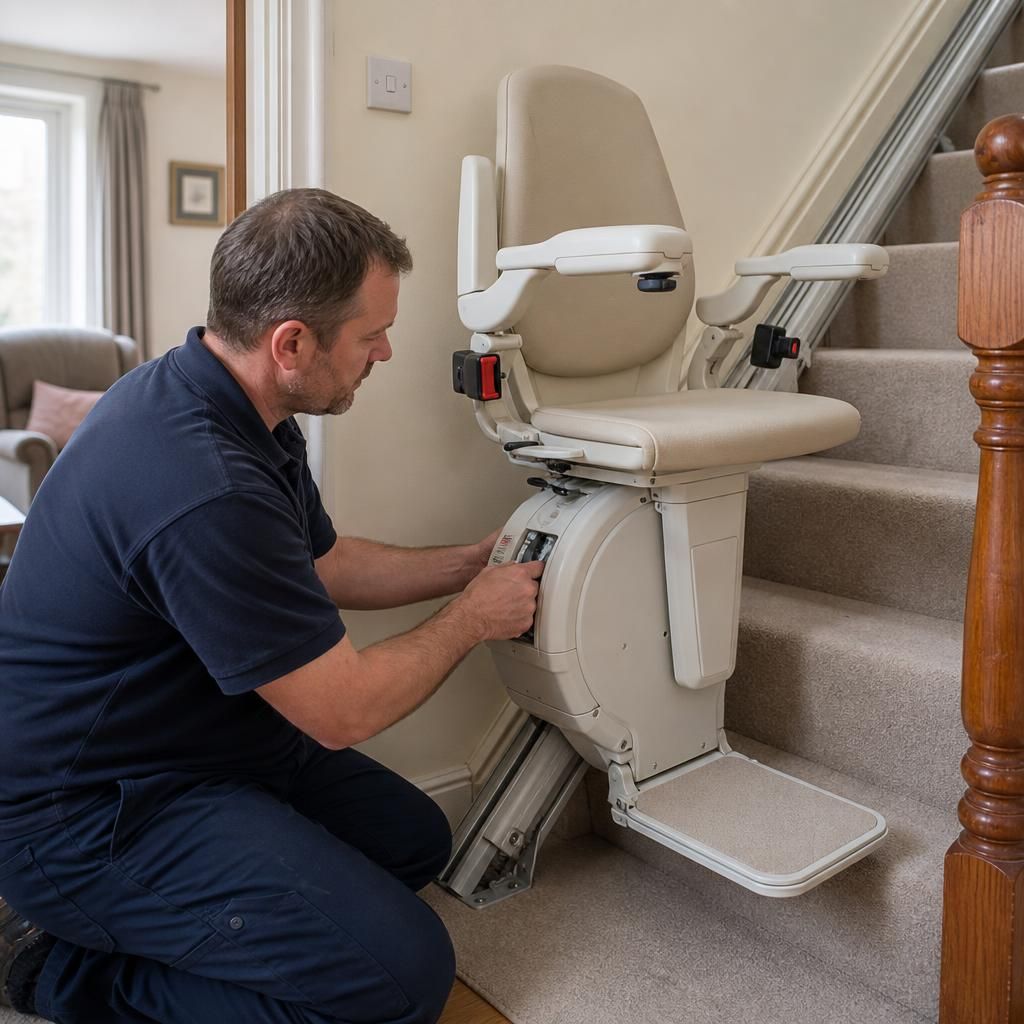
Routine maintenance is broadly similar for reconditioned and new stairlifts. Both should be kept clean, used according to the manufacturer’s instructions and checked if they develop unusual noises, movement, stopping or charging behaviour. A service may include inspection of the drive mechanism, rail, seat belt, arm controls, sensors, charging system and batteries. The installer should also confirm that the lift remains securely fixed and operates safely on the staircase.
With a reconditioned lift, the timing of maintenance can be more important because some wear parts may be nearer the end of their expected working life. Batteries are a common example. They are rechargeable items that gradually lose capacity, particularly if the stairlift is used frequently or is left without adequate charging. Other potential wear items include rollers, switches, gears, upholstery, arm controls and components within the drive unit. Not every reconditioned stairlift will need these parts soon, but their condition should be considered when preparing a budget.
New stairlifts can also require servicing and replacement parts. New does not mean maintenance-free, and batteries and other consumable components will eventually need attention. However, the lower accumulated usage and manufacturer warranty may reduce the likelihood of paying for significant repairs during the early ownership period. Always check the actual warranty terms rather than assuming that every component and every type of fault is covered.
How potential repair costs differ
- Reconditioned stairlifts: the initial saving can be partly offset if an older component fails or if a replacement part is difficult to source. Repair costs may be more variable, particularly where the lift is an older or discontinued model.
- New stairlifts: faults arising within the warranty period may be covered, subject to the terms and exclusions. Once cover ends, repairs can still be required, but parts availability and technical support are often more straightforward for a current model.
- Both types: costs can arise from batteries, accidental damage, misuse, power supply problems, access visits, emergency call-outs and work outside the agreed warranty or service plan.
A repair estimate should distinguish between the part itself and the associated labour, travel or call-out charge. On a curved stairlift, for example, the bespoke rail and more complex configuration can make component replacement or troubleshooting more involved than on a standard straight installation. Outdoor stairlifts may also need closer attention to weather exposure, covers, charging equipment and corrosion protection. These differences affect budgeting regardless of whether the lift is new or reconditioned.
What to check before buying a reconditioned stairlift
- Ask for the lift’s age, model and known usage history where available.
- Confirm which parts have been inspected, serviced or replaced during reconditioning.
- Check the length of the warranty and whether it covers parts, labour, batteries, call-outs and return visits.
- Ask whether servicing is included, recommended or available through a separate plan.
- Find out how faults are reported, whether telephone support is provided and what response arrangements apply.
- Confirm that replacement parts remain available and that the lift is suitable for the staircase, user and expected frequency of use.
- Request a clear written price that separates the stairlift, installation, alterations, delivery, VAT where applicable and any optional aftercare.
The condition of the staircase and the user’s requirements are also important budget considerations. A lift that is technically cheaper may not represent good value if it needs alterations, does not suit the user’s weight or mobility needs, has controls that are difficult to operate, or is unsuitable for the available landing space. A proper home assessment should check the staircase layout, available power supply, parking and access for installation, seat position, transfer space and whether a straight, curved or outdoor solution is required.
Planning a realistic ownership budget
Start with the complete installed price, then add the likely costs that may fall outside the initial quotation. These can include scheduled servicing, battery replacement, repairs after the warranty expires, call-out fees and eventual removal or replacement. It is sensible to retain a contingency for unexpected repairs, especially when choosing an older reconditioned model or when the warranty is limited. The exact amount will depend on the lift’s condition and the provider’s terms, so a written quotation is more useful than relying on a general allowance.
Compare warranties on like-for-like terms. A longer warranty is valuable only if it clearly explains what is covered, who pays for labour and travel, how faults are assessed and which exclusions apply. Some policies exclude batteries, accidental damage, lack of servicing or faults caused by misuse. Ask whether warranty protection can continue through a service agreement and whether cover is transferable if the stairlift is later moved or the property changes hands.
A reconditioned stairlift can be a cost-effective choice when it is correctly assessed, professionally reconditioned, suitable for the staircase and supported by dependable aftercare. A new stairlift may justify its higher initial price where predictable early ownership costs, the latest features or longer-term manufacturer support are priorities. For either option, value depends on safe installation, the lift’s condition, realistic warranty protection and access to replacement parts—not simply on whether it is labelled new or reconditioned.
Before making a decision, ask for the purchase and installation price, expected maintenance arrangements, warranty exclusions and likely charges for batteries, parts and call-outs in writing. This allows you to compare the immediate saving from a reconditioned stairlift with the longer-term financial certainty of a new model and choose a solution that remains practical for your home and budget.
The main difference between reconditioned and new stairlifts is the predictability of repair costs. A reconditioned lift may have older wear parts, so ask which components were checked or replaced and whether the warranty covers parts, labour, batteries and call-out charges.
When comparing quotations, consider the complete ownership cost rather than the purchase price alone. Include servicing, likely battery replacement and a contingency for repairs outside the warranty, particularly if the lift is an older or discontinued model. A new stairlift may cost more initially but can provide greater certainty through newer components and broader early warranty protection.
Request a stairlift assessment and tailored quotation
Request a stairlift assessment and tailored quotation to compare the purchase, installation, warranty and potential maintenance costs of a reconditioned or new stairlift for your home.