
Are reconditioned stairlifts environmentally friendly compared to new models?
Yes. Reconditioned stairlifts are generally more environmentally friendly than new models because reusing existing equipment reduces manufacturing demand, raw-material use and waste, provided the lift is professionally refurbished and responsibly maintained.
Reconditioned stairlifts are generally more environmentally friendly than new models. Reusing an existing stairlift can avoid some of the raw materials, manufacturing energy, packaging and transport associated with producing a new one. It can also keep usable equipment and components out of the waste stream. The environmental benefit is greatest when the lift is professionally assessed, refurbished to a safe standard, installed in a suitable home and maintained so that it remains in service for as long as possible.
A stairlift is made from a range of materials, including metals, plastics, electronic components, batteries, wiring and upholstery. Manufacturing a new lift requires the extraction and processing of materials, factory production, quality testing, packaging and distribution. Choosing a reconditioned model does not remove all environmental impact, but it can reduce the need for these processes because the main lift structure and some components are already available for reuse.
Reconditioning normally involves more than simply cleaning and reselling a used stairlift. A responsible process should include inspection, testing, cleaning and the replacement of worn, damaged or unsuitable parts. Safety features, controls, the motor, charging system, seat and track should be checked before installation. Where a component cannot be relied upon, replacing it can extend the useful life of the complete stairlift and prevent premature disposal.
The track is particularly relevant to the environmental comparison. A straight stairlift may be suitable for reuse in another home if the stair configuration and installation requirements are compatible. Curved stairlift tracks are usually made for a specific staircase, although some parts or systems may still be reusable after professional assessment. Reusing a suitable track avoids the manufacture of an entirely new one, while adapting or replacing unsuitable equipment simply to avoid buying new would not necessarily be the most responsible option.
There are several environmental advantages to choosing a properly reconditioned stairlift:
- Reduced demand for new materials: reusing the main equipment can reduce the need for fresh metal, plastic and electronic components.
- Less manufacturing activity: a reconditioned lift may avoid some of the energy and industrial processes required to produce a new model.
- Lower packaging and distribution requirements: fewer new products may need to be packaged and transported through the supply chain.
- Less waste: refurbishment gives a usable stairlift and its recoverable components another purpose instead of sending them for disposal.
- Useful component recovery: parts that are safe and suitable may be tested and reused, while damaged components should be handled through appropriate recycling or disposal routes.
However, a reconditioned stairlift is not automatically the greener choice in every situation. A poorly refurbished lift may need repeated repairs, replacement parts or early removal. The manufacture and transport of those replacement components can reduce the initial environmental advantage. An unsuitable lift may also be adapted extensively for a staircase when a different model would provide a safer and more durable installation.
Reliability and service life therefore matter when considering sustainability. A stairlift that works safely for many years is usually a better environmental choice than equipment that is inexpensive initially but fails frequently or has to be replaced quickly. This is why the condition of the lift, the quality of the refurbishment, the suitability of the model for the staircase and the availability of future support should all be considered together.
Energy use during operation is another part of the comparison, although it is only one element of the lift’s overall environmental impact. Reconditioned and new stairlifts both use electricity for charging and operation. Differences in energy consumption depend on the model, battery condition, travel pattern, charging system and how efficiently the lift is maintained. A modern new model may include updated components, but a well-maintained reconditioned stairlift can still provide practical, efficient service. The most meaningful comparison should be based on the specific models rather than on age alone.
Batteries require particular attention. Stairlift batteries are consumable components and eventually need replacement, whether the lift is new or reconditioned. Old batteries should not be placed in household waste. They should be replaced by a suitable professional and sent through an appropriate battery recycling or waste-handling route. Ask how removed batteries, damaged electronic parts and other replaced components will be dealt with, particularly when arranging a replacement or removing an older lift.
Responsible installation and aftercare also support sustainability. Correct fitting reduces the risk of damage, poor performance and unnecessary call-outs. Regular servicing can identify worn parts before they cause a larger failure, while prompt repairs may prevent the need to replace the complete unit. Keeping the stairlift clean, using it as intended and reporting unusual noises, movement or charging problems can help protect both its safety and its service life.
When comparing the environmental credentials of a reconditioned and new stairlift, consider the full lifecycle rather than the purchase decision alone. Useful questions include:
- Has the stairlift been inspected and functionally tested by a competent installer?
- Which parts have been replaced, and which original components remain?
- Is the model suitable for the staircase and the user’s mobility needs?
- Is a warranty or other protection provided, and what aftercare is available?
- Can replacement parts and batteries be sourced and disposed of responsibly?
- What will happen to the existing stairlift if it is removed?
Removing an unwanted stairlift for reuse can also improve its environmental outcome. If the equipment is safe and suitable, it may be refurbished for another installation. If it cannot be reused, its materials and components should be separated where practical and handled through responsible waste or recycling channels. This is preferable to treating the complete lift as general waste.
For most suitable installations, a professionally reconditioned stairlift offers a lower-impact alternative to buying new because it extends the life of equipment already in circulation. The decision should still be based on safety, suitability, expected service life, warranty and aftercare as well as environmental considerations. A properly assessed and maintained reconditioned stairlift can support accessible living while reducing avoidable use of resources and waste.
A professionally reconditioned stairlift can be more environmentally friendly because it extends the working life of equipment that already exists. Reusing the main lift, track and suitable components can reduce the need for new raw materials, manufacturing and packaging, while helping to keep usable equipment out of the waste stream.
The environmental benefit depends on the quality of the refurbishment. The stairlift should be inspected, cleaned and functionally tested, with worn or unsafe parts replaced before installation. Correct fitting and ongoing servicing also matter: a reliable lift that remains in use for many years is generally a better environmental choice than a poorly refurbished model that requires frequent repairs or early replacement.
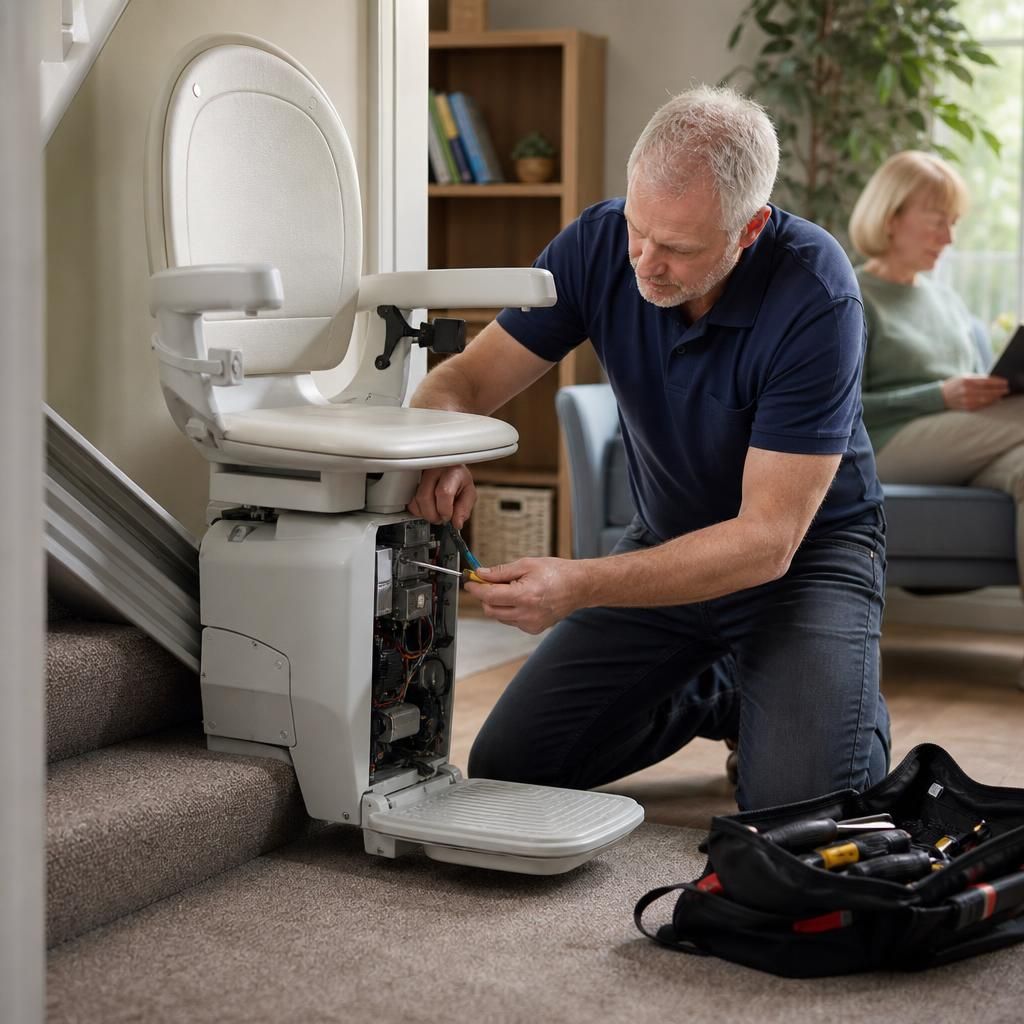
Discuss a Reconditioned Stairlift for Your Home
Discuss a reconditioned stairlift for your home with our team, including its suitability, condition, warranty and expected aftercare.