
Are reconditioned stairlifts as reliable as new ones?
Reconditioned stairlifts can be as reliable as new ones when they have been professionally inspected, serviced, safety-tested and correctly matched to your staircase. Reliability depends on the lift’s condition, the quality of its reconditioning, the installation and the warranty and aftercare provided—not simply whether it is new or reconditioned.
Reconditioned stairlifts can be as reliable as new ones when they have been professionally assessed, serviced, safety-tested and correctly installed. Reliability depends more on the lift’s condition, the quality of the reconditioning, its suitability for the staircase and the support available after installation than on whether it was originally sold as new.
A reconditioned stairlift is not simply a used lift taken from one home and fitted in another. A reputable supplier should inspect the complete system, replace worn or unsuitable parts, test its safety features and confirm that it is appropriate for the intended user and staircase. The lift should then be installed by a suitably trained engineer and demonstrated to the customer before it is put into regular use.
What professional reconditioning should include
The exact process varies according to the model and its condition, but a thorough assessment will normally cover:
- Inspection of the rail, carriage, seat, armrests, footplate, swivel mechanism and safety belt.
- Testing of the motor, gearbox, batteries, charging system and control switches.
- Checks on sensors, braking, obstruction detection and the lift’s stopping position.
- Cleaning and examination of electrical connections, wiring and moving parts.
- Replacement of parts that are worn, damaged or unlikely to provide dependable service.
- Operational and safety testing after installation on the customer’s staircase.
These checks are important because a stairlift must operate consistently every time it is used. A supplier should be able to explain what has been inspected and serviced rather than describing a lift as reconditioned without providing meaningful detail.
Why a new stairlift is not automatically more reliable
New equipment has the benefit of unused components and the latest available specification, but reliability still depends on correct installation, appropriate use and regular maintenance. A new stairlift can develop faults if it is poorly matched to the staircase, incorrectly fitted, left without a suitable charging routine or used in conditions outside the manufacturer’s guidance.
By contrast, a properly reconditioned lift has already been examined in service and can be prepared for its next installation. This does not remove the possibility of faults, but it means that its condition should have been reviewed before it is offered to another customer. The important distinction is between a professionally reconditioned stairlift and an untested second-hand stairlift.
Suitability affects dependability
The lift must be suitable for the staircase and the person using it. Straight and curved staircases require different types of rail, while narrow stairs, intermediate landings, unusual bends and changes in floor level can affect the available options. Outdoor installations also require equipment designed to cope with exposure to weather.
User requirements matter as well. The seat size, weight capacity, transfer position, controls, footplate and swivel arrangement should all be considered. If the user has difficulty bending their knees, maintaining balance or operating a control, the design and configuration may affect how safely and confidently the lift is used. A detailed assessment before recommending a model helps prevent avoidable problems after installation.
Warranty and aftercare
A warranty provides useful protection, but its scope should be understood before you agree to the purchase. Ask what is covered, how long the cover lasts, whether labour and call-out costs are included, and which parts may be excluded. It is also sensible to confirm who will respond if the lift stops working and whether servicing or repairs are carried out by the installing supplier.
Good aftercare should include clear operating instructions, advice about charging and safe use, access to technical support and a process for reporting faults. Keep the warranty information, installation paperwork and user instructions in an accessible place. If the lift is intended for an older person who may need assistance, make sure a family member or carer also knows how to isolate the equipment and contact support.
Maintenance and everyday use
Regular maintenance can help preserve reliability in both new and reconditioned stairlifts. Keep the rail and charging points free from obstructions, follow the manufacturer’s charging guidance and avoid placing objects on the steps or footplate. The lift should not be used if the seat, belt, controls or safety features appear damaged.
Warning signs that warrant professional attention include unusual noises, jerky movement, repeated stopping, reduced battery performance, failure to charge or error alerts. Do not attempt to repair electrical or mechanical components yourself. A qualified engineer can identify whether the issue is caused by a battery, control, sensor, motor or another part and can advise whether repair or replacement is appropriate.
Questions to ask before choosing a reconditioned model
- Has the lift been fully inspected, serviced and safety-tested?
- Which parts have been replaced or renewed, and are replacement parts available?
- Is the model suitable for the staircase, user requirements and expected frequency of use?
- Who will install it, and will the installation be tested before handover?
- What warranty is included, and what exactly does it cover?
- Who provides repairs and aftercare if a fault develops?
- Will the lift be removed or adapted if circumstances change?
Be cautious if a supplier cannot explain the lift’s history, will not provide written warranty terms, avoids a proper home assessment or offers a price without confirming the installation requirements. A low initial price may not represent good value if the lift is unsuitable or support is difficult to obtain.
In practical terms, a professionally reconditioned stairlift can provide dependable daily access and may be a sensible alternative to a new model. The decision should be based on documented checks, correct fitting, suitable equipment and reliable aftercare. If those points are confirmed, the fact that the stairlift has been previously used does not by itself make it unreliable.
A reconditioned stairlift can be as reliable as a new one when it has been professionally inspected, serviced and safety-tested before installation. Its reliability depends on the condition of the main components, the quality of the reconditioning work and whether the model is correctly suited to the staircase and user.
Before installation, the engineer should check the rail, motor, batteries, controls, seat, swivel mechanism, footplate, safety belt, sensors and braking system. Worn or damaged parts should be replaced, and the completed installation should be tested on the staircase. Ask for a clear explanation of the work carried out rather than relying on the word “reconditioned” alone.
It is also important to check the written warranty and aftercare arrangements. Confirm what is covered, whether labour and call-out costs are included, and who to contact if the lift develops a fault. With proper preparation, installation and support, previous use does not automatically make a stairlift less dependable.
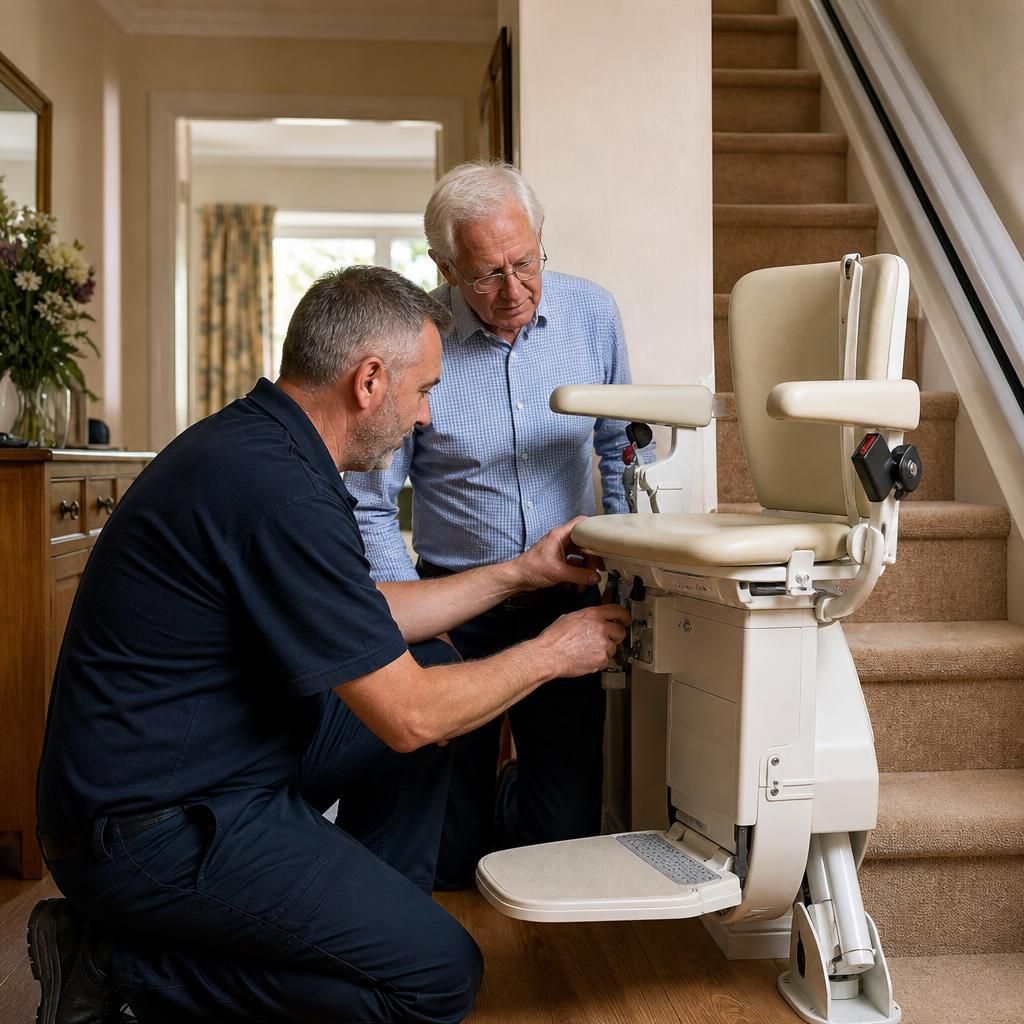
Discuss Your Reconditioned Stairlift Options
If you are considering a reconditioned stairlift, discuss your staircase, user requirements, available models, warranty and aftercare with our team. We can help you assess whether a professionally reconditioned lift is a suitable and reliable option for your home.