
What is the typical lifespan of a reconditioned curved stairlift?
A properly refurbished curved stairlift can provide several years of dependable service, but its remaining lifespan depends on the age and condition of its components, how frequently it is used, and the quality of its refurbishment. Regular servicing, prompt battery replacement and a clear warranty can help you understand and maintain the service life of the specific stairlift installed in your home.
A reconditioned curved stairlift will typically provide several years of dependable service, but there is no fixed lifespan that applies to every installation. Its remaining service life depends on the age of the original lift, the condition and availability of replacement components, how often it is used, the quality of the refurbishment, and how well it is maintained after installation.
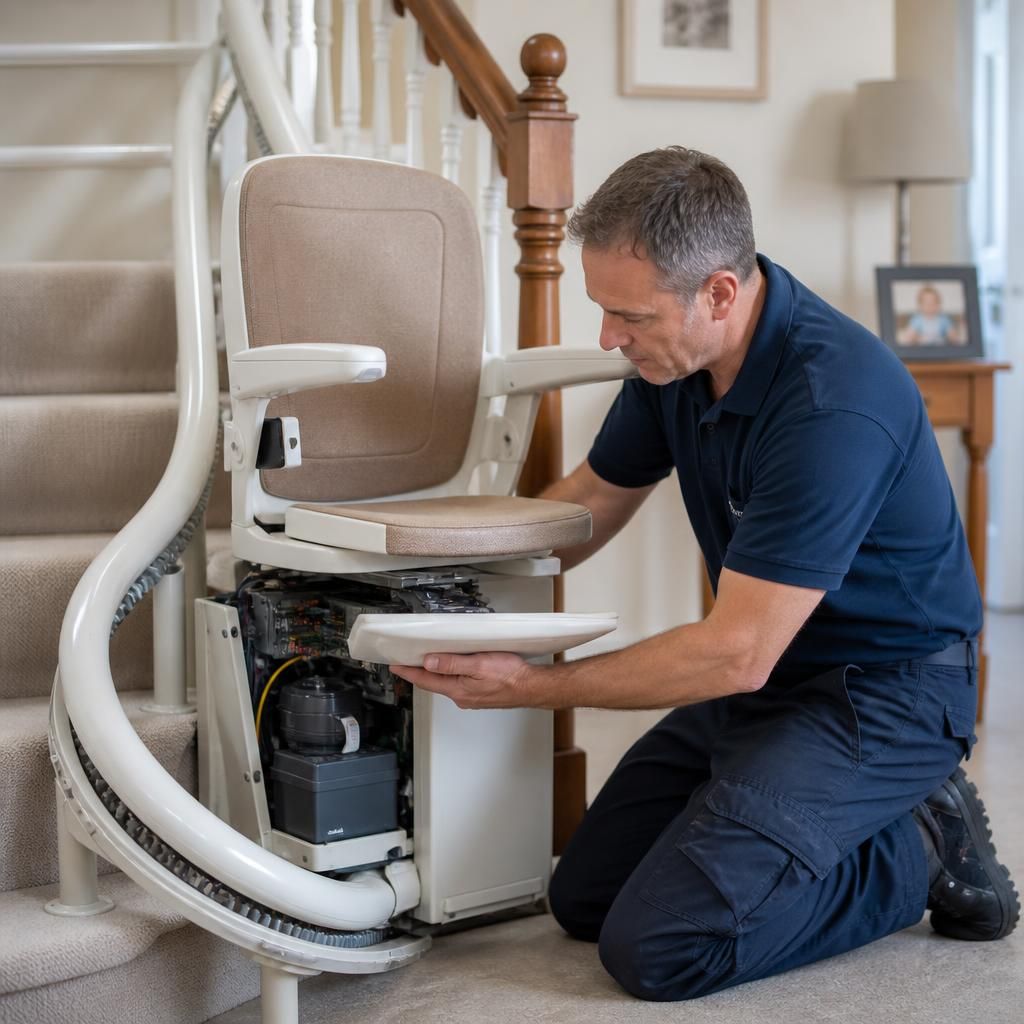
A reconditioned stairlift is not simply a second-hand lift that has been cleaned and resold. A reputable refurbishment process should include a detailed inspection, replacement of worn or unreliable parts, safety checks, testing of the drive system and controls, and confirmation that the lift is suitable for the intended staircase. The condition of the individual lift is therefore more important than its age alone.
Curved stairlifts can require particular attention because their made-to-measure rail, carriage and running components have to work accurately around bends, landings and changes in gradient. A lift that has been used lightly and refurbished properly may have considerable service life remaining. Conversely, a heavily used lift with worn rollers, a tired motor or a deteriorating battery may need more frequent repairs even if its overall appearance is good.
The main factors that influence lifespan include:
- Previous use: A stairlift used several times each day will experience more wear than one used occasionally. Usage affects the motor, gearbox, rollers, seat mechanism and controls.
- Refurbishment quality: The inspection should identify worn parts rather than only address cosmetic defects. Batteries, charging components, safety sensors, belts, gears, rollers and electrical connections should be assessed as appropriate.
- Component condition: Some parts may have been replaced during refurbishment, while others may be original. Ask which components were renewed, which were tested and whether replacement parts remain available.
- Installation quality: Correct rail alignment, secure fixings, reliable charging points and accurate adjustment of the carriage all help reduce unnecessary strain on the lift.
- Operating environment: Dust, damp, cold conditions and poor charging habits can affect performance. Outdoor curved stairlifts require components and protection suitable for external use.
- Maintenance: Regular servicing can identify developing faults before they become breakdowns and helps keep safety systems working correctly.
The battery is one of the components most likely to need replacement during the stairlift’s working life. Rechargeable batteries gradually lose capacity, particularly if the lift is left away from its charging point or is used heavily. Slow travel, warning sounds, failure to complete a journey or difficulty operating when disconnected from the mains can indicate that the batteries need testing. Battery replacement should be carried out with the correct specification for the lift.
Other signs that a reconditioned curved stairlift may be approaching the end of its practical service life include repeated breakdowns, increasing noise or vibration, uneven movement, unreliable controls, frequent charging problems and difficulty obtaining compatible parts. A single fault does not necessarily mean the lift needs replacing. An engineer can usually determine whether the issue is a replaceable component, a maintenance problem or evidence of wider wear.
Before buying or accepting a reconditioned curved stairlift, ask for its available service history and refurbishment details. It is useful to establish the approximate age of the carriage, whether the rail is being reused or adapted for the installation, which major parts have been replaced, and what testing has been completed. You should also receive clear information about the warranty, servicing arrangements and the process for reporting a fault.
A warranty provides useful protection against specified faults during the warranty period, but it should not be treated as a guaranteed lifespan. Check what is covered, whether batteries and accidental damage are excluded, who carries out repairs, and whether call-out or labour charges apply. The terms should be explained before installation.
To maximise the service life of the lift, keep the rail and charging areas clear, use the controls as instructed, leave the lift correctly positioned for charging, avoid placing excess weight on the seat, and report unusual sounds or movement promptly. Do not attempt electrical or mechanical repairs yourself. Servicing should be carried out by a suitably competent stairlift engineer, particularly where safety switches, sensors or the drive mechanism are involved.
In practical terms, the best estimate comes from assessing the specific stairlift rather than relying on a general age-based figure. A properly refurbished curved stairlift with sound components, a suitable installation, appropriate warranty cover and regular maintenance can remain a reliable accessibility solution for several years. An individual assessment will give you a more meaningful indication of expected service life and any likely maintenance costs than the label “reconditioned” alone.
The practical lifespan of a reconditioned curved stairlift depends more on the condition of its carriage, drive system, batteries and safety components than on the fact that it has been previously used. A thorough refurbishment should identify worn parts, replace those needing attention and test the lift on the specific curved rail before it is installed.
Regular servicing helps protect the remaining service life. Keep the lift positioned correctly for charging, report unusual noise, vibration or slow movement promptly, and have batteries tested when the lift struggles to complete a journey. An engineer can then establish whether the problem is routine wear, a replaceable component or a sign that the lift may need more extensive repair.
Discuss the Expected Lifespan of Your Curved Stairlift
Contact Independent Stairlifts to discuss the expected lifespan of your reconditioned curved stairlift, including its component condition, maintenance needs and warranty cover.