
What factors should be considered when evaluating the warranty and aftercare services provided with reconditioned stairlifts in Manchester?
When evaluating a reconditioned stairlift in Manchester, check exactly what the warranty covers, its duration, exclusions, call-out arrangements and whether parts, labour and batteries are included. Also confirm the provider’s aftercare process, response times, engineer coverage and servicing options so support remains available if the lift needs adjustment or repair.
When evaluating a reconditioned stairlift in Manchester, assess the warranty and aftercare as carefully as the lift itself. A suitable package should state how long cover lasts, which components and services are included, what is excluded, how to report a fault, and how quickly an engineer can attend. The provider should also explain the ongoing servicing arrangements and any charges that could apply after installation.
Start by asking for the warranty terms in writing. Do not rely solely on a verbal description during a home assessment. The documentation should identify the stairlift, installation date, warranty period and the provider responsible for dealing with faults. Check whether the cover applies from the date of installation or from an earlier refurbishment or purchase date, as this can affect the practical length of protection.
For a reconditioned stairlift, establish whether the warranty covers the complete system or only selected components. The following points are particularly important:
- Parts: Check whether the motor, gearbox, control board, charging equipment, sensors, carriage and remote controls are included. Some terms may treat consumable or wear-related items differently.
- Labour: Confirm whether engineer time for diagnosis, repair and replacement is covered, or whether labour is charged separately.
- Call-outs: Ask whether attendance at your Manchester address is included and whether there are different arrangements outside normal working hours.
- Batteries: Find out whether batteries are covered, how battery faults are assessed and whether replacement batteries are treated as a maintenance item.
- Travel or access charges: Check for any charges associated with travel, repeated visits or difficult access, particularly where the property is outside the provider’s usual local service area.
- Repaired or replacement parts: Ask whether replacement components are new, refurbished or approved equivalents, and whether the repaired part receives further cover.
Warranty exclusions deserve equal attention. Common exclusions can include damage caused by misuse, accidental impact, water ingress, unauthorised alterations, failure to follow operating instructions or faults caused by unsuitable electrical supplies. Normal wear and tear may also be treated differently from a manufacturing or installation fault. These exclusions are not necessarily unreasonable, but they should be explained clearly so you understand the protection being purchased.
Confirm what happens if the stairlift develops a fault during the warranty period. A clear aftercare process should tell you which telephone number to use, what information to provide, whether an initial fault assessment can be completed remotely and how an engineer visit is arranged. Ask whether the service team covers your part of Manchester directly or uses an external engineer, and whether the same support is available for properties in surrounding towns and villages.
Response arrangements are a practical measure of aftercare quality. Ask the provider to explain its usual response process for a stairlift that has stopped working, rather than accepting a general promise of assistance. You should understand:
- how faults are logged and acknowledged;
- whether urgent breakdowns are prioritised;
- the usual appointment process for non-urgent repairs;
- whether engineers carry commonly required parts;
- what happens if the first visit does not resolve the fault; and
- who you can contact if you need an update.
Where the stairlift is essential for access between floors, ask what temporary advice is available if it becomes unusable. A responsible provider should not suggest unsafe workarounds. Until assistance arrives, follow the operating instructions, avoid attempting repairs yourself and keep the staircase clear. If the user cannot safely reach essential rooms, consider in advance what alternative arrangements may be needed.
Aftercare should extend beyond breakdown repairs. Ask whether the installation includes an operating demonstration, written instructions and guidance for authorised users. A proper handover should cover the controls, charging points, seat belt, swivel seat, safety sensors, remote controls and the correct procedure for stopping the lift in an emergency. It should also explain simple user checks, such as keeping the track and sensor areas clear, without asking you to carry out technical maintenance.
Find out whether routine servicing is recommended and whether it is included in the purchase price, warranty or a separate maintenance plan. A service visit may check the track, carriage, drive system, batteries, charging contacts, safety features and fixings. The provider should explain the recommended interval based on the model, usage and installation rather than presenting servicing as an unexplained requirement. Ask for a record of completed work and details of any parts that need attention.
It is also worth checking whether the warranty remains valid if another engineer carries out work, if the lift is moved, or if a third party installs a replacement part. Unauthorised modifications can create safety risks and may affect warranty rights. Any changes to the stairlift or staircase should therefore be discussed with the original provider first.
Because the lift is reconditioned, ask for information about its refurbishment and inspection history. The provider should be able to explain which safety checks were completed before installation and whether the warranty reflects the condition and age of the equipment. This does not mean an older lift is unsuitable, but it makes the warranty wording especially important. A short or restricted warranty may indicate that more of the future repair risk rests with you.
Check whether the warranty is transferable if you move home or if the stairlift is sold with the property. This is relevant where a curved or bespoke lift has been made for a particular staircase. A warranty may be linked to the original purchaser, the equipment or the original installation address. Ask whether it can be extended, renewed or transferred, and whether a new assessment or reinstallation would be required after a house move.
Before agreeing to buy, compare the full cost of support rather than comparing warranty length alone. A longer warranty with significant exclusions may provide less useful protection than a clearly written warranty that includes parts, labour and local engineer attendance. Consider the cost of servicing, batteries, repairs outside the warranty and any call-out charges. Request a written quotation that separates the stairlift, installation, warranty and optional aftercare so there is no uncertainty about what has been agreed.
UK consumer protection may apply in addition to any commercial warranty, but a warranty does not replace the seller’s legal responsibilities. If the stairlift is faulty, not as described or not fit for its intended purpose, discuss the issue promptly with the business that supplied it and keep records of the fault, dates of contact and repair visits. The written warranty may provide additional support, but it should not be presented as your only protection.
A useful final check is to ask the same practical questions before installation: who provides support, what is covered, how faults are reported, how quickly help is normally arranged, what charges can arise and what maintenance is recommended. Once the stairlift is installed, keep the warranty documents, invoice, model details and service records together. Make sure everyone who may contact the provider knows the correct fault-reporting number and understands the basic operating guidance.
For a reconditioned stairlift in Manchester, the most dependable choice is one backed by transparent written terms, clear responsibility for repairs, appropriate parts and labour cover, realistic local response arrangements and continuing servicing support. Evaluating those details before purchase helps you judge the complete cost and level of assistance, rather than treating the warranty as a single headline period.
Warranty and aftercare are separate parts of the support package for a reconditioned stairlift in Manchester. The warranty sets out what faults, parts and labour are covered, while aftercare explains how quickly help can be arranged, who provides repairs and whether servicing or call-outs may incur additional charges.
Before installation, ask for the terms in writing and check that they clearly cover:
- the motor, carriage, controls, sensors, charger and batteries;
- engineer attendance, diagnosis and replacement-part labour;
- how breakdowns are reported and prioritised;
- servicing recommendations and possible maintenance costs; and
- exclusions such as misuse, accidental damage, normal wear or unauthorised alterations.
Keep the warranty, invoice and service records together after fitting. Clear documentation and a defined local repair process make it easier to obtain safe, timely support if the stairlift needs attention.
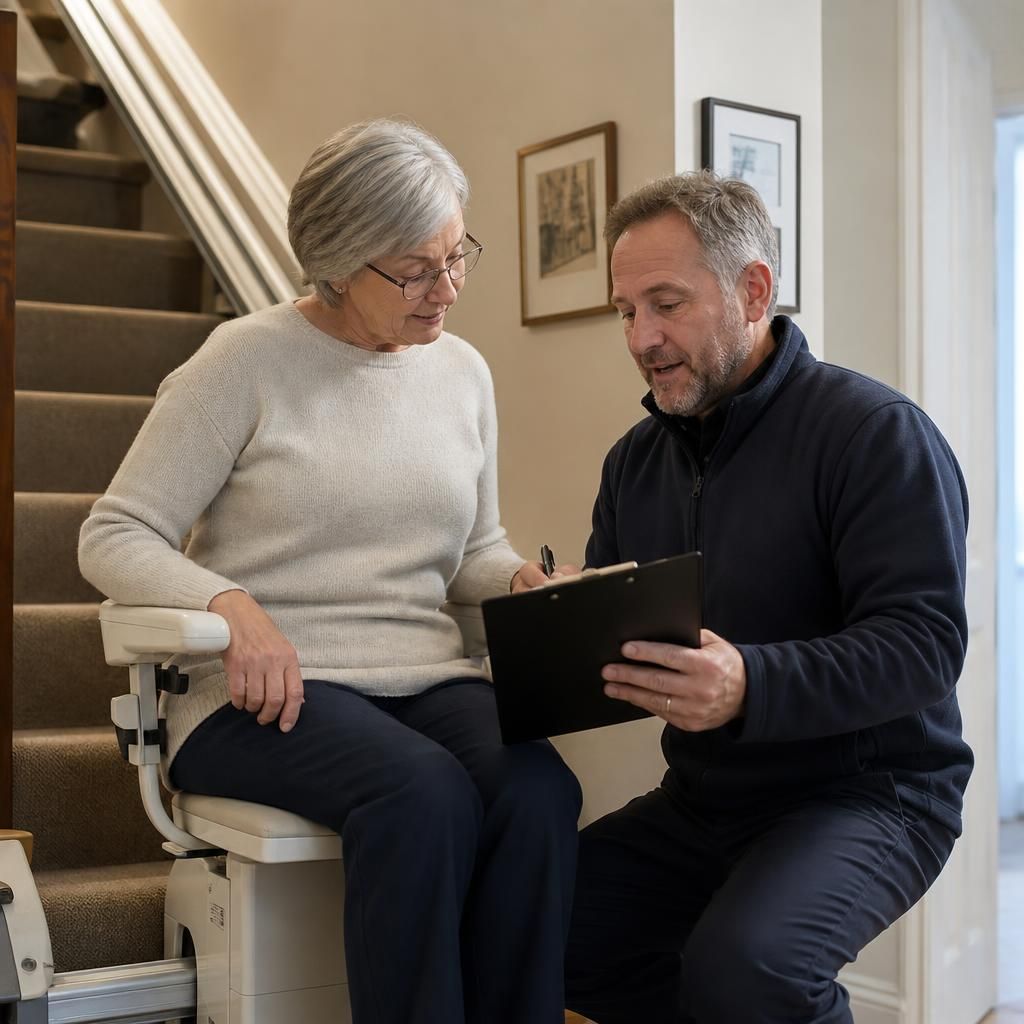
Discuss Your Reconditioned Stairlift Warranty and Aftercare Needs
Contact Independent Stairlifts to review the warranty, repair arrangements and ongoing aftercare available with your reconditioned stairlift in Manchester. We can clarify what is included and help you arrange the right support for your installation.