
How do I evaluate the longevity and maintenance needs of a reconditioned stairlift?
A reconditioned stairlift can provide reliable service for many years, but its remaining lifespan depends on the model’s age, previous use, installation quality, battery condition and ongoing maintenance. Evaluate its service history and warranty, have it professionally inspected before purchase, and arrange regular servicing to check the batteries, drive system, rail, controls and safety features.
A reconditioned stairlift does not have a fixed remaining lifespan. Its longevity depends on the model’s original age, how heavily it was used, the quality of its refurbishment and installation, the condition of its batteries and drive components, and whether it receives appropriate servicing. The most reliable way to assess one is to combine a documented service history with a professional inspection, a clear warranty and a realistic maintenance plan.
Start with the stairlift’s history
Ask for the information available about the stairlift before it was reconditioned. This should include its model, approximate age, previous environment, reason for removal and any recorded faults or repairs. A stairlift removed from a lightly used domestic setting may have experienced less wear than one used frequently by several people, although age alone does not determine condition.
Check whether the seller can provide evidence of the refurbishment work. This may include inspection records, replaced parts, battery testing, electrical safety checks and confirmation that the stairlift was tested after installation. Vague assurances that a stairlift has been “checked” are less useful than a clear record of what was inspected and repaired.
Assess the components that affect remaining life
- Batteries: Batteries are consumable components and may need replacing during the stairlift’s service life. Ask whether they are new, tested or being reused, and check how long the stairlift should operate during a power interruption.
- Drive system: Listen for excessive grinding, knocking, slipping or changes in speed. The motor, gearbox and drive mechanism should operate smoothly throughout the journey.
- Rail and fixings: The rail should be secure, correctly aligned and free from damage. On a curved stairlift, the accuracy of the rail and its joins is particularly important because it has been made to follow the staircase.
- Seat and mechanism: Check the swivel seat, armrests, footrest, seat belt and any powered folding or swivelling functions. These parts should move securely without excessive play.
- Controls and switches: Test the arm controls, remote controls, key switch, emergency stop and charging indicators. Controls should respond consistently and be usable by the person who will operate the lift.
- Safety features: Sensors should stop the stairlift if they detect an obstruction. The braking system, seat belt, swivel lock and footrest safety edges should all be checked by a competent installer.
A demonstration can reveal obvious problems, but it does not replace a technical inspection. A qualified stairlift engineer can assess wear that may not be visible during a short journey, including battery performance, electrical connections, charging behaviour and drive-system condition.
Consider the installation environment
The staircase itself affects maintenance needs. Straight installations generally have fewer moving rail sections, whereas curved installations contain more complex components and are made to suit a particular layout. An outdoor stairlift is exposed to moisture, temperature changes and dirt, so its covers, seals, charging arrangements and corrosion protection need closer attention.
Check that the stairlift is suitable for the user’s weight, posture and mobility needs, and that there is enough room to use the seat and footrest safely. An incorrectly fitted or poorly matched stairlift may suffer unnecessary strain and can be difficult to use even when its mechanical components are in good condition.
Review the warranty and future support
A warranty should state what is covered, how long cover lasts, whether parts and labour are included, and who is responsible for responding to faults. Pay particular attention to exclusions for batteries, accidental damage, misuse, water damage or work carried out by another provider. Ask whether call-out charges apply and whether replacement parts remain available for the model.
Warranty protection is useful, but it should not be treated as a substitute for condition checks. A stairlift with a short warranty may still be suitable if its history and inspection record are strong; conversely, a longer warranty does not make an unsuitable or heavily worn stairlift a good choice.
Understand the routine maintenance required
Follow the manufacturer’s instructions and arrange servicing at the recommended interval. A service normally involves checking the rail, drive unit, batteries, charging points, safety sensors, controls, seat mechanisms, fixings and electrical connections. The engineer should also test the stairlift under normal operating conditions and identify parts that may require attention before they fail.
Between services, keep the rail and surrounding area clear of clothing, toys, pets and other obstructions. Keep the stairlift on its charging point when it is parked, unless the manufacturer gives different instructions. Do not apply household oil or lubricant to the rail or mechanism unless the manufacturer specifically permits it, as unsuitable products can attract dirt or affect braking and drive components.
Clean the seat, controls and accessible surfaces with a suitable product, while keeping liquid away from electrical parts. If the stairlift is not being used for an extended period, ask for advice about battery care rather than simply switching off the power.
Watch for signs of deterioration
Contact the service provider if the stairlift begins stopping unexpectedly, travelling unevenly, making new noises, losing power, failing to charge or showing warning lights. A seat that does not swivel or lock correctly, a loose armrest, a damaged belt or a footrest that catches on the stairs should also be treated as a safety issue.
Do not continue using a stairlift that has a serious fault, visible damage, burning smell or unreliable safety feature. Switch it off if it is safe to do so and obtain professional advice. Repairs and battery replacement should be carried out using suitable parts by a competent engineer.
Compare the total cost, not just the purchase price
When evaluating longevity, include likely costs for servicing, batteries, replacement wear parts, call-outs and eventual removal. A lower-priced stairlift may offer good value if it has been properly refurbished and supported, but a model requiring immediate battery or mechanical work may cost more over its remaining life than a better-documented alternative.
Ask for a written explanation of what is included in the quoted price, including assessment, fitting, demonstration, warranty and aftercare. For a curved stairlift, also confirm that the rail and controls are suitable for the specific staircase rather than assuming that a used unit can be transferred without modification.
Use a practical pre-purchase checklist
- Confirm the model, approximate age and previous use where this information is available.
- Request refurbishment and safety-testing records.
- Ask specifically about the battery’s condition and replacement history.
- Have the stairlift inspected and measured by a qualified installer before agreeing to the installation.
- Test the controls, safety sensors, seat belt, seat swivel, footrest and remote controls.
- Check that the warranty covers the parts most likely to require attention and explains any exclusions.
- Confirm the recommended servicing arrangements and the availability of replacement parts.
- Consider the staircase, the user’s needs and the expected frequency of use.
In practice, a well-maintained reconditioned stairlift can remain dependable for many years, but its condition and support arrangements matter more than a simple age label. A professional assessment, documented refurbishment, suitable installation and regular servicing provide the clearest basis for judging whether a particular stairlift is likely to deliver safe and economical service in your home.
The most reliable way to assess the longevity of a reconditioned stairlift is to review its service history and arrange a professional inspection before installation. Ask what work was completed during refurbishment, whether the batteries and safety systems were tested, and whether any worn parts were replaced.
A demonstration can show how the stairlift travels, but an engineer should also check the drive system, rail, electrical connections, charging points, controls, seat mechanisms and safety sensors. This inspection helps identify likely maintenance needs and confirms that the stairlift is suitable for the staircase and the person using it.
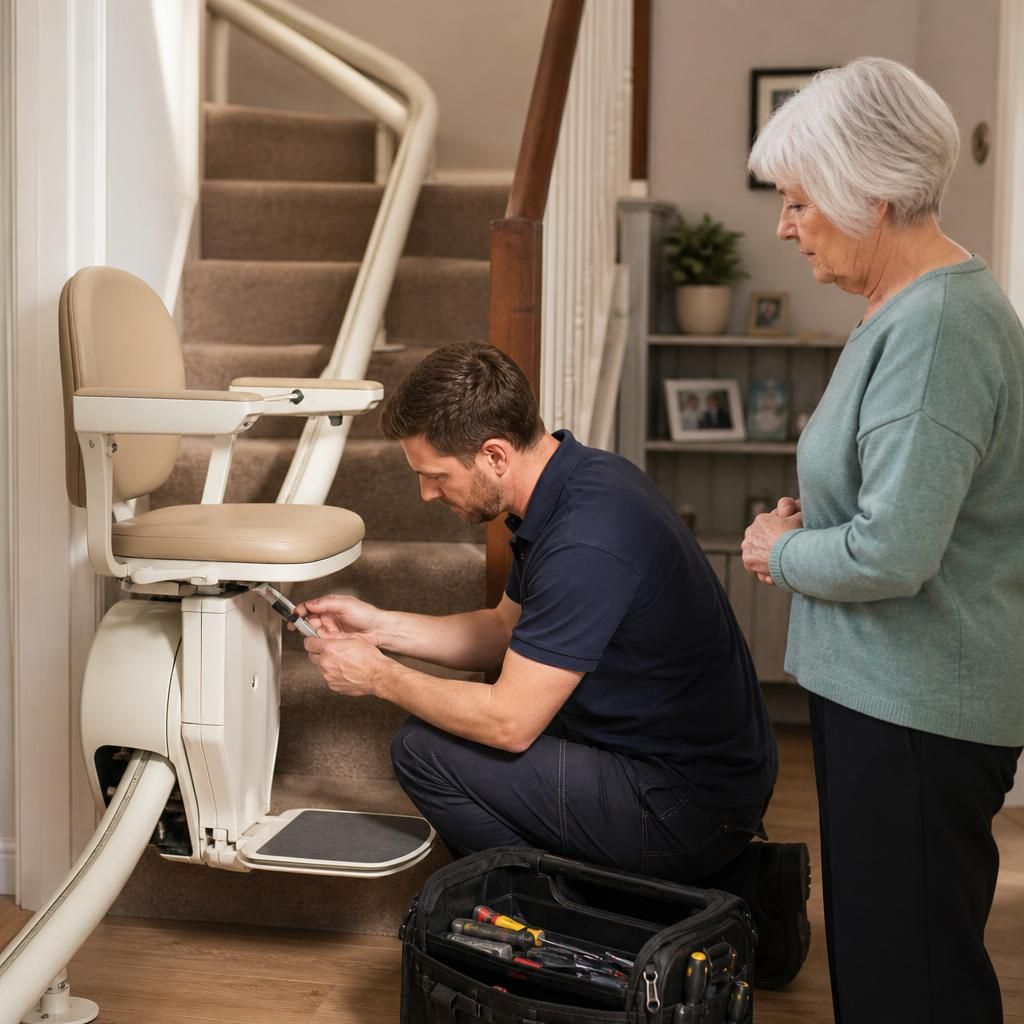
Arrange a professional stairlift assessment
Arrange a professional stairlift assessment to check the reconditioned lift’s condition, safety systems, battery performance and suitability for your staircase. We can also explain likely maintenance needs and ongoing support before installation.