
How are reconditioned stairlifts refurbished and tested for safety and reliability?
Reconditioned stairlifts are inspected, cleaned, repaired and fitted with replacement parts where necessary before being tested by a qualified engineer. Safety checks cover the lift’s mechanical, electrical and control systems to confirm reliable operation on the intended staircase.
Reconditioned stairlifts are refurbished through a controlled process of inspection, cleaning, repair and component replacement, followed by safety and performance testing by a qualified engineer. The checks cover the lift’s mechanical structure, electrical system, controls, batteries and safety features, both before installation and on the customer’s staircase.
The process normally includes the following stages:
- Initial assessment and identification. The stairlift is examined to establish its model, age, configuration and previous condition. The engineer checks whether the lift is suitable for further use and identifies any parts that require attention. For a curved stairlift, the rail and its configuration must also be assessed carefully, as the equipment is generally matched to a particular staircase rather than treated as a universal fit.
- Removal of dirt and residue. The seat, armrests, footrest, carriage, rail and accessible internal areas are cleaned. This is more than cosmetic work: removing dust, hair and debris helps the moving parts, sensors and charging contacts operate correctly. Upholstery and other user-contact surfaces are checked for damage and cleaned or replaced where appropriate.
- Mechanical inspection. The engineer examines the drive mechanism, gearbox, motor, seat swivel, armrests, footrest, rail, brackets and moving joints. Wear, looseness, corrosion, unusual noise and damage are considered. Parts that do not meet the required condition are repaired or replaced rather than being left in service simply because the lift still operates.
- Electrical and control checks. Wiring, connectors, charging points, circuit boards, hand controls, remote controls and switches are inspected. The engineer checks for damaged cables, loose connections and signs of overheating or water ingress. Controls should respond consistently, and the stairlift should stop correctly when a control is released or a safety device is activated.
- Battery assessment and replacement where necessary. Batteries are essential because most stairlifts are designed to continue operating during a power cut. Their condition, charging behaviour and ability to hold charge are checked. Batteries that are weak, damaged or unsuitable are replaced; a used stairlift should not be considered ready for installation solely because its motor runs.
- Safety-device testing. Safety edges and sensors are checked to ensure that the stairlift stops or responds as intended if it encounters an obstruction. The engineer also checks the seat belt or harness where fitted, swivel-seat interlocks, footrest sensors, limit switches, emergency stop controls and other model-specific safety features.
Testing does not end when the lift is switched on. After refurbishment, the stairlift is operated through its normal travel and charging routines. The engineer checks smooth starting and stopping, movement along the rail, operation of the controls, correct parking and charging, and the response of the safety systems. Unusual vibration, juddering, noise or inconsistent movement can indicate a problem and should be investigated before the equipment is handed over.
At installation, the engineer also checks the fit on the intended staircase. This includes the rail position, brackets, clearances, access at the top and bottom, seat and footrest movement, and whether the lift can be used safely alongside existing doors, landings and other household features. A straight stairlift may be reconditioned for a different staircase by using a suitable rail, while a curved model normally requires a rail designed for the specific layout.
A proper handover should explain how to use and charge the stairlift safely. You should be shown the main controls, remote controls, seat belt, swivel mechanism, emergency stop and charging position. The installer should also explain what to do if the lift stops, how to report a fault, and which routine checks the user can carry out without removing covers or attempting repairs.
Reconditioning is different from simply selling a stairlift that has been removed from another home. A used lift may still have serviceable parts, but its history and condition need to be assessed before it is installed again. Professional refurbishment should provide evidence that the equipment has been inspected, that necessary repairs and replacements have been completed, and that it has passed functional and safety checks for the intended installation.
Before agreeing to a reconditioned stairlift, ask what work has been carried out, whether the batteries and other commonly worn components have been checked, who will install and test it, and what warranty or aftercare is included. The precise checks and replacement parts vary according to the model, its age, its previous use and whether it is intended for straight, curved or outdoor stairs. A proper assessment is therefore important: it confirms not only that the stairlift works, but that it is appropriate for the staircase and the person who will use it.
Reconditioned stairlifts are safety tested after inspection, cleaning and repair to confirm that both the equipment and its controls work reliably on the intended staircase. A qualified engineer checks the drive system, rail, seat, footrest, batteries, controls and safety sensors before the lift is handed over.
Testing includes smooth travel, controlled starting and stopping, correct charging and safe response to obstructions or released controls. The engineer also verifies features such as the seat belt, swivel-seat interlock, emergency stop and limit switches where fitted. At installation, the rail position, clearances and access at the top and bottom of the stairs are checked so the stairlift is suitable for the user and the home.
Ask what refurbishment work was completed, whether worn components and batteries were assessed, and what warranty or aftercare is included. A lift that simply operates is not necessarily ready for reuse; it should be inspected, tested and correctly installed for its new setting.
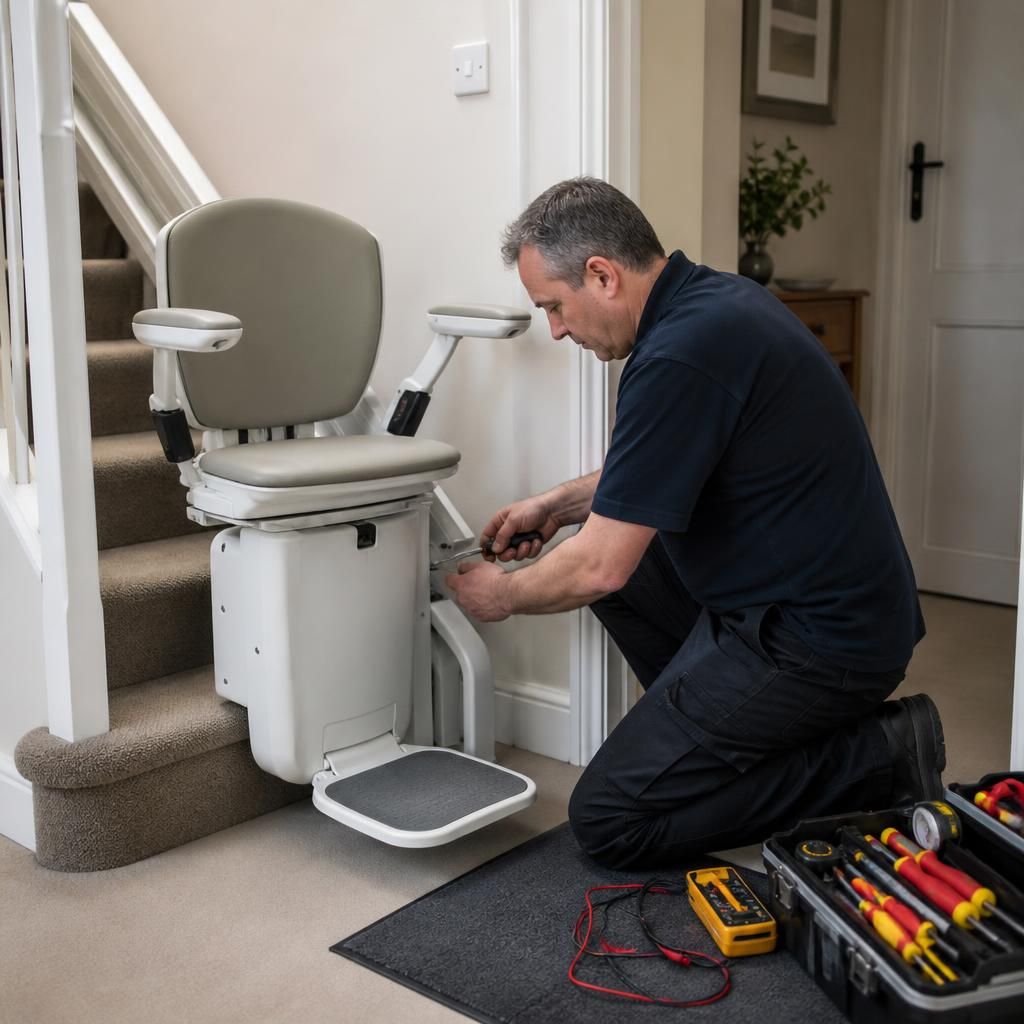
Arrange a professional reconditioned stairlift assessment
Arrange a professional assessment to confirm which reconditioned stairlift is suitable for your staircase, home and mobility needs. We can explain the refurbishment completed, safety checks carried out and aftercare available before installation.