
What should I look for in terms of warranty and service when buying a used stairlift?
Look for a written warranty that clearly covers the stairlift’s key mechanical and electrical components, includes installation, and states how long cover lasts and what exclusions apply. Confirm that the supplier provides ongoing servicing, responsive breakdown support, genuine replacement parts and a clear process for making a warranty claim.
A used stairlift should come with a written warranty and a clear aftercare arrangement covering the equipment, installation and support after fitting. Before you agree to buy, check exactly which components are covered, how long the warranty lasts, whether labour and call-outs are included, what exclusions apply, and who will repair the lift if a fault develops.
Check what the warranty covers
A useful warranty should identify the main parts covered rather than simply stating that the stairlift is sold “with warranty”. This will usually include the drive system, motor, controls, charging equipment, safety sensors and other essential electrical and mechanical components. Ask specifically whether the following are included:
- The seat, armrests, footrest and swivel mechanism
- The motor, gearbox and drive mechanism
- The control unit, handset and charging points
- The batteries, including whether replacement is covered or excluded as normal wear and tear
- The stairlift rail and fittings
- Labour, diagnosis, parts and call-out charges
- Any damage or adjustments resulting from the installation
Battery cover deserves particular attention. Batteries are consumable components and may have limited cover, especially if the stairlift has been stored or unused. A supplier should explain how battery faults are assessed and what you would pay if replacement becomes necessary.
Confirm the length and conditions of cover
Ask for the warranty terms in writing before installation. They should state when cover begins, how long it continues, whether it applies to the particular lift being supplied, and whether it can be transferred if the property is sold. Check whether the warranty requires the stairlift to be serviced by the original supplier or another approved engineer, and whether unauthorised repairs, modifications or relocation would invalidate it.
Read the exclusions carefully. Common exclusions can include accidental damage, misuse, damage caused by water or power problems, faults arising from alterations, and ordinary wear to items such as upholstery or batteries. Exclusions should be specific and understandable. If a term is unclear, ask the supplier to explain it and record the answer.
Make sure installation is included
A used stairlift still needs to be assessed and installed for the individual staircase. The warranty should confirm that the installation is covered, including correct positioning, charging, safety checks and demonstration of the controls. For a curved stairlift, the existing rail may be bespoke to another staircase, so the supplier should confirm that the rail and other components are suitable for your home rather than relying on a visual assumption.
Ask what happens if the stairlift needs adjustment after fitting. A reputable service arrangement should explain how installation-related issues are reported and whether a return visit is included. Keep the installation paperwork, user instructions and warranty certificate in an accessible place.
Assess the ongoing service
Warranty cover is only one part of ownership. Find out whether the supplier provides servicing after the warranty ends and what a routine service includes. This may involve checking the drive system, batteries, charging points, safety sensors, seat and carriage, rail fixings and emergency stop controls. Servicing should be carried out by a suitably trained engineer using appropriate parts.
Ask how to request help, including the telephone number or other contact method for reporting a breakdown. You should understand:
- When the service team is available
- How faults are logged and prioritised
- Whether engineer visits and call-outs are chargeable
- Whether parts and labour are priced separately
- What support is available outside normal working hours
- Whether temporary measures or alternative arrangements are offered if the stairlift cannot be used
Do not assume that “full aftercare” means every visit is free. Ask for the charging structure and any service plan terms in writing.
Check parts and repair support
Because a used stairlift may be an older model, confirm that suitable replacement parts are still available. The supplier should be able to identify the model, explain its serviceability and advise whether batteries, controls and other commonly replaced components can be sourced. A low purchase price is less useful if a minor fault leaves the lift unusable because parts are no longer available.
Ask whether repairs are completed by the supplier’s own engineers or arranged through another company. This does not necessarily determine the quality of the service, but you should know who is responsible for responding to a fault and who will handle a warranty claim.
Understand the claims process
The warranty should explain how to report a fault and what information is needed. Keep the invoice, model details, installation record and warranty documents. If the stairlift stops working, avoid attempting repairs yourself or allowing an unapproved person to dismantle it, as this could create a safety risk and affect the warranty.
Ask whether the supplier will diagnose the problem remotely, arrange an engineer visit and provide a written explanation if a repair is not covered. A clear process reduces disagreement about whether the fault relates to a covered component, installation, accidental damage or normal wear.
Consider the seller and your legal rights
Buying from a professional supplier generally gives you a clearer route to installation support, warranty repairs and aftercare than buying privately. A business selling a used stairlift should provide an accurate description and the service should meet the rights that apply to consumer purchases. A warranty is additional protection; it does not normally remove your statutory rights if the stairlift is not as described, is not fit for its intended purpose or is not of satisfactory quality, subject to the circumstances of the sale.
Before committing, compare the written warranty, installation arrangements, servicing options, parts availability and breakdown response—not just the price of the stairlift. The most suitable used model is one for which you can obtain dependable technical support throughout its expected working life.
A used stairlift warranty is only useful if it provides practical support when the lift develops a fault. Before buying, confirm in writing whether cover includes parts, labour, diagnosis and engineer call-outs, rather than assuming that every repair is included.
Ask the supplier how faults are reported, when engineers are available and whether replacement batteries and other parts can still be sourced for the model. Check the exclusions carefully, particularly for batteries, accidental damage and unauthorised repairs. Keep the warranty, installation record and model details together so a claim can be dealt with efficiently.
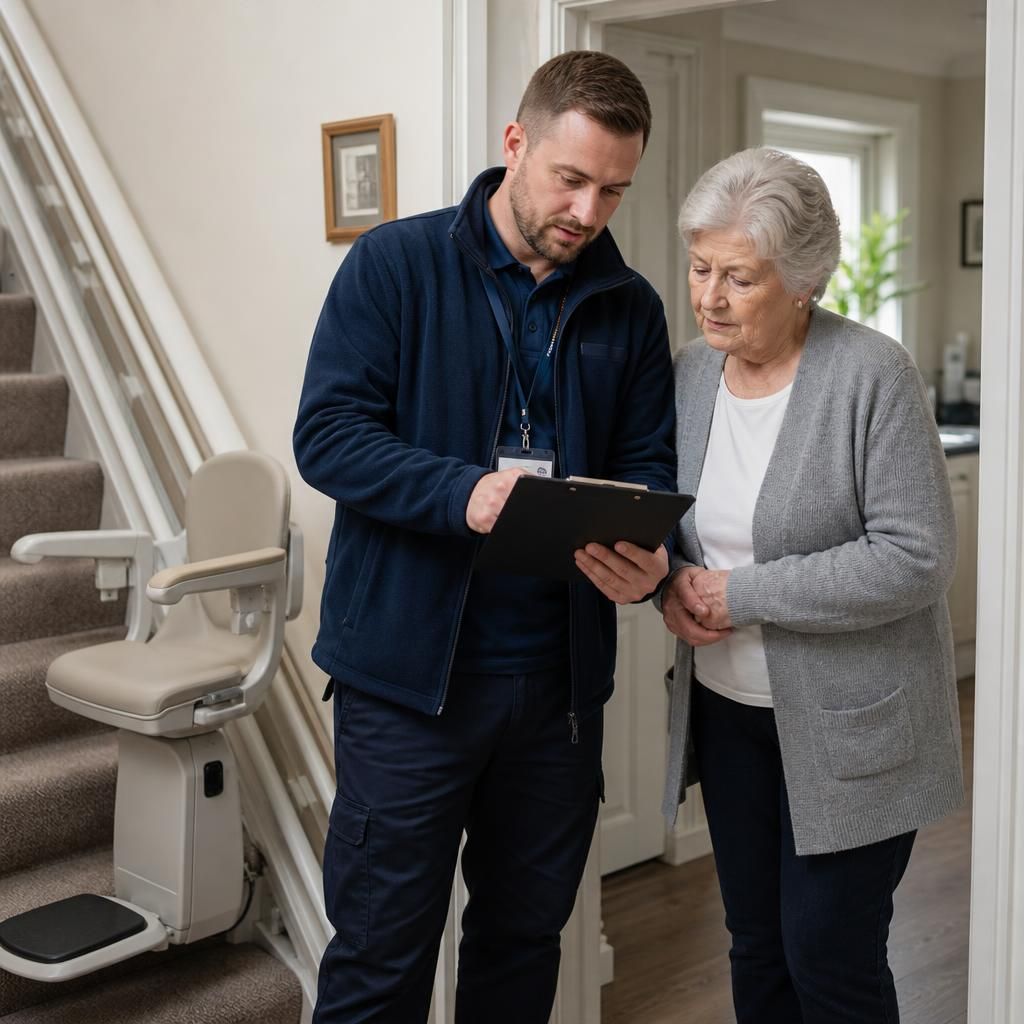
Ask us about used stairlift warranties and aftercare
Contact us to discuss used stairlift warranty options, installation cover and ongoing aftercare for your chosen model. We can explain the terms, servicing arrangements and breakdown support before you buy.