
What should I know about the cost-effectiveness of buying a used stairlift compared to new models?
Buying a used stairlift usually costs less upfront than choosing a new model, but its overall cost-effectiveness depends on its age, condition, compatibility, installation, warranty and likely servicing needs. A professionally assessed and refurbished stairlift can offer good value, provided the saving is not outweighed by repairs, limited support or a shorter remaining service life.
Buying a used or reconditioned stairlift can be more cost-effective than buying a new model because the equipment has already been manufactured and, in some cases, previously installed. However, the purchase price is only part of the calculation. The best value comes from a stairlift that is suitable for your staircase, professionally checked, correctly installed and supported by a meaningful warranty.
Compare the complete cost, not just the advertised price. Ask for a clear quotation covering the stairlift, rail, delivery, installation, testing and any adjustments needed for your staircase. Also check whether the quotation includes removal of an existing lift, follow-up visits, servicing or disposal at the end of its useful life. A lower initial price may not represent good value if essential work is charged separately.
The total cost of a used stairlift can include:
- the refurbished or previously used equipment;
- a suitable rail, which may need to be sourced or adapted for the staircase;
- professional installation and safety testing;
- replacement parts such as batteries, armrests, upholstery or charging components;
- future servicing and repairs; and
- the cost of removing or replacing the stairlift when it is no longer required.
A new stairlift will usually have a higher upfront cost, but it may offer the latest design, a longer expected service life, broader manufacturer support and a more comprehensive warranty. It may also be easier to specify with features such as powered swivelling seats, folding rails or upgraded controls. These advantages can make a new model more economical over a longer period, particularly where the stairlift will be used frequently or is needed for an extended time.
A used stairlift may be the sensible option where the need is temporary, the budget is limited or a suitable reconditioned model is available quickly. Reconditioned equipment should be inspected, cleaned, tested and repaired as necessary before it is offered for installation. Ask what work has actually been carried out rather than assuming that the word “reconditioned” means every component has been replaced.
Age and condition are important to value. A stairlift that has had light use and has been maintained properly may provide reliable service. Conversely, an older lift with worn batteries, noisy movement, damaged controls or discontinued parts could create repair costs soon after purchase. Ask about the equipment’s history, including its approximate age, previous use, maintenance records and reason for removal. The availability of replacement parts is especially important for older models.
The staircase configuration can change the economics. Used straight stairlifts are often easier to match to another home because the rail follows a standard straight flight. Curved stairlifts are made around the shape of a particular staircase, so a used curved model may require a compatible rail or modifications before it can be installed elsewhere. A supposedly inexpensive lift can become less cost-effective if a new rail or substantial adaptation is required. Outdoor stairlifts also need suitable protection from weather and may require more frequent maintenance.
Compatibility should be confirmed through a professional assessment before you agree to buy. The assessment should consider the direction and width of the staircase, landings, bends, doors, radiators, handrails, available parking space and the position of the charging point. It should also consider how you transfer into and out of the seat and whether other people can continue to use the stairs safely. This prevents you paying for equipment that cannot be installed as expected.
Warranty and support can determine whether a used lift is genuinely economical. Check how long the warranty lasts, what parts and labour it covers, whether call-out charges are excluded and who will provide repairs. A warranty limited to the motor may leave you responsible for batteries, controls or installation-related problems. Confirm whether servicing is available in your area and how urgent faults are handled. Written terms are preferable to verbal assurances.
Battery condition deserves particular attention. Stairlifts commonly use rechargeable batteries, and these may lose capacity with age or prolonged storage. Ask whether the batteries have been tested and whether their replacement is included if they fail shortly after installation. The lift should also be tested on its charging points, including at the top and bottom of the stairs where applicable.
When comparing options, consider the likely period of use. If the stairlift is required for a short, clearly defined period, a professionally installed used model with appropriate cover may avoid paying for features or service life that you will not need. If it is likely to be used every day for many years, the reliability, warranty and longer support associated with a new model may justify the additional investment. There is no single choice that is most cost-effective for every household.
Any VAT relief or funding eligibility may also affect the final price. Eligibility depends on the individual circumstances, the type of equipment and the applicable rules, so ask for an itemised quotation and confirm whether any relief has been applied. Do not compare a VAT-inclusive used price with a VAT-exclusive new price.
Before making a decision, ask the installer to compare a suitable used option with a suitable new alternative on a like-for-like basis. The comparison should show the equipment specification, installation requirements, warranty, expected support and any likely additional costs. A used stairlift is usually good value when it is correctly matched to the staircase, professionally refurbished and backed by dependable aftercare. If those safeguards are missing, the initial saving may be outweighed by compatibility problems, repairs and early replacement.
The cost-effectiveness of a used stairlift depends on its total ownership cost, not simply the advertised purchase price. A professionally checked model may offer good value, but installation, replacement batteries, servicing, repairs and eventual removal can reduce the initial saving.
Before choosing, ask for an itemised quotation covering the stairlift, suitable rail, delivery, installation, testing and warranty. Confirm what the warranty includes, whether call-out charges apply and whether batteries and other wear-related parts are covered. A slightly more expensive used stairlift with reliable aftercare may cost less overall than a cheaper model with limited support.
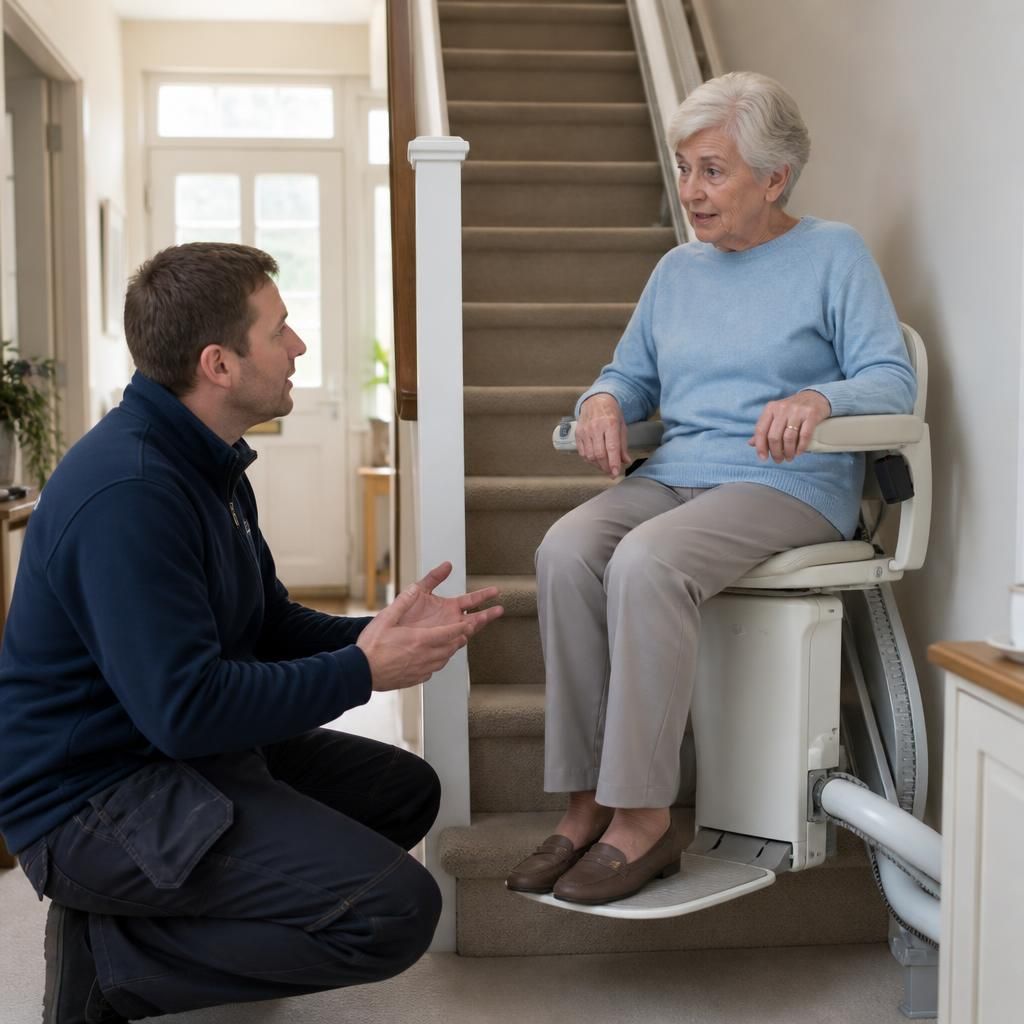
Request a used stairlift cost comparison
Ask Independent Stairlifts for an itemised comparison between a suitable used stairlift and a new model, including installation, warranty, servicing and any likely additional costs.