
What factors should I consider regarding the warranty and support when purchasing a used stairlift?
When purchasing a used stairlift, check exactly what the warranty covers, how long it lasts, whether it includes parts, labour and call-outs, and who will provide repairs if a fault occurs. Confirm that the stairlift will be professionally installed, safety-checked and supported with servicing, spare parts and clear aftercare arrangements.
When buying a used stairlift, assess the warranty and support package as carefully as the lift itself. Check what is covered, how long the cover lasts, whether it includes parts, labour and call-outs, and who is responsible for repairs. Also confirm that the lift will be professionally installed, safety-checked and supported with appropriate servicing and spare parts after installation.
A used stairlift may have been refurbished, removed from another property or previously owned by another customer. Its condition, age and availability of replacement parts can therefore vary. A clear warranty and reliable aftercare reduce the risk of unexpected repair costs and help ensure that faults are dealt with safely.
Check exactly what the warranty covers
Ask for the warranty terms in writing rather than relying on a general statement that the stairlift is “guaranteed”. The documentation should identify:
- the stairlift model and the main components covered;
- the start date and duration of the warranty;
- whether cover applies to parts, labour, diagnostic work and engineer call-outs;
- the geographical area covered and any travel or attendance charges;
- how to report a fault and the expected response process;
- any exclusions, conditions or maintenance requirements; and
- whether the warranty is provided by the installer, a manufacturer or another service provider.
Some warranties cover mechanical and electrical faults but exclude damage caused by misuse, accidental impact, liquid, unauthorised alterations or failure to follow operating instructions. Batteries, chargers, remote controls and upholstery may have different terms from the main stairlift. Confirm these details before agreeing to the purchase.
Do not confuse a warranty with servicing
A warranty generally deals with faults covered by the stated terms. Servicing is planned maintenance intended to check the lift, identify wear and keep it operating safely. Ask whether an initial service or inspection is included after installation, and whether ongoing servicing is available under a separate arrangement.
Find out what a service involves. A competent engineer may check the rails, carriage, drive system, batteries, charging points, seat, footrest, sensors, controls, safety edges and emergency features. The engineer should also explain any signs of wear that may require attention. Keep records of inspections, repairs and replaced parts, as these can help with future troubleshooting and warranty claims.
Confirm that installation is included and covered
Used stairlifts are not simply plug-in products. The rail may need to be adapted to the staircase, and the lift must be positioned and adjusted to suit the user and the property. Confirm that installation will be carried out by a suitably trained professional and that the price includes the necessary fitting, testing and handover.
Ask what happens if a fault is found during or soon after installation. The agreement should make clear whether installation-related problems are covered separately from faults with the stairlift itself. It should also state who is responsible if the lift needs repositioning, adjustment or removal and refitting because the original installation was not suitable.
Ask about repairs, response times and availability
A warranty is only useful if there is a practical way to obtain assistance. Before buying, establish:
- which telephone number or service channel should be used for faults;
- when support is available, including evenings, weekends or bank holidays if relevant;
- how urgent breakdowns are prioritised;
- whether an engineer will attend your area;
- whether remote troubleshooting is offered; and
- what charges may apply if the fault is outside the warranty.
Ask how the provider deals with a stairlift that cannot be repaired during the first visit. You should understand whether further attendance, temporary measures, replacement parts or transport of a component will incur additional costs.
Consider parts and the age of the stairlift
The age and model of a used stairlift can affect long-term support. Before committing, ask whether essential parts, batteries, chargers and remote controls are still available. A lift may be mechanically sound but more difficult or expensive to maintain if its components are no longer commonly supplied.
It is also worth asking whether replacement parts will be new, refurbished or compatible alternatives. This does not automatically make one option unsuitable, but you should know what may be fitted and whether the replacement will be covered by its own warranty.
Check who can carry out warranty repairs
Clarify whether repairs must be completed by the original installer or an approved engineer. Using an unauthorised person may affect the warranty, particularly if they alter wiring, safety systems or the rail. If the provider stops trading or no longer services your area, find out whether another engineer can take over support and whether the warranty remains valid.
The provider should be able to explain how safety-critical faults are assessed and what action is required if the stairlift should not be used. Do not continue operating a lift that is behaving unpredictably, making unusual noises, stopping incorrectly or showing a fault indication. Contact the support provider and follow their instructions.
Read exclusions and customer responsibilities
Warranty conditions commonly require the user to operate the stairlift in accordance with the instructions, keep charging points clear and report faults promptly. They may exclude routine wear, cosmetic damage, consumable items or damage caused by moving house. Stairlift removal, storage and reinstallation are also often treated as separate services.
Check whether the warranty can be transferred if the property is sold or the stairlift is moved to another address. A stairlift fitted to a particular staircase may not be suitable for relocation without a new assessment, even if the model itself can technically be moved.
Understand your legal rights
If you buy from a business, your statutory rights apply in addition to any written warranty. The stairlift should be as described, of satisfactory quality and fit for any purpose made known to the seller. A warranty does not remove these rights, although the way a remedy is handled can depend on the circumstances and the nature of the fault.
Private sales can provide less protection than purchases from a trader, so establish who is selling the stairlift and obtain a written receipt describing the lift, its condition, the agreed price and any warranty. If you are unsure about the terms of a proposed purchase, obtain independent consumer or legal advice.
Use a written checklist before agreeing
Before purchase, ask the provider to confirm in writing:
- the make, model, age and condition of the stairlift;
- what refurbishment or safety checks have been completed;
- the warranty duration and the exact items covered;
- whether parts, labour, call-outs and batteries are included;
- the installation, testing and handover arrangements;
- the servicing options and likely charges after the warranty;
- the procedure for reporting a breakdown;
- the availability of replacement parts; and
- any exclusions, cancellation terms or additional fees.
Compare the complete support arrangements rather than choosing solely on the purchase price. A slightly lower initial cost may not represent good value if installation, call-outs, batteries or essential repairs are excluded. The most suitable used stairlift is one that fits the staircase and user safely, comes with understandable written cover and can be supported by an identifiable service provider for as long as it is needed.
A used stairlift warranty sets out who is responsible if the lift develops a fault, what repairs are included and how support will be provided. Before purchase, ask for the terms in writing and check whether cover includes parts, labour, engineer call-outs, batteries and diagnostic work.
Warranty length is only one consideration. The support arrangement should also explain how to report a breakdown, when engineers are available, whether your area is covered and what charges may apply if the fault falls outside the warranty. Ask whether the installer provides ongoing servicing and whether replacement parts remain available for the stairlift’s make and model.
- Keep the warranty document, receipt and installation records together.
- Check exclusions for accidental damage, misuse, batteries, upholstery and unauthorised repairs.
- Confirm who will handle repairs if the original provider no longer supports the lift.
- Stop using the stairlift and contact the support provider if it behaves unpredictably or shows a fault warning.
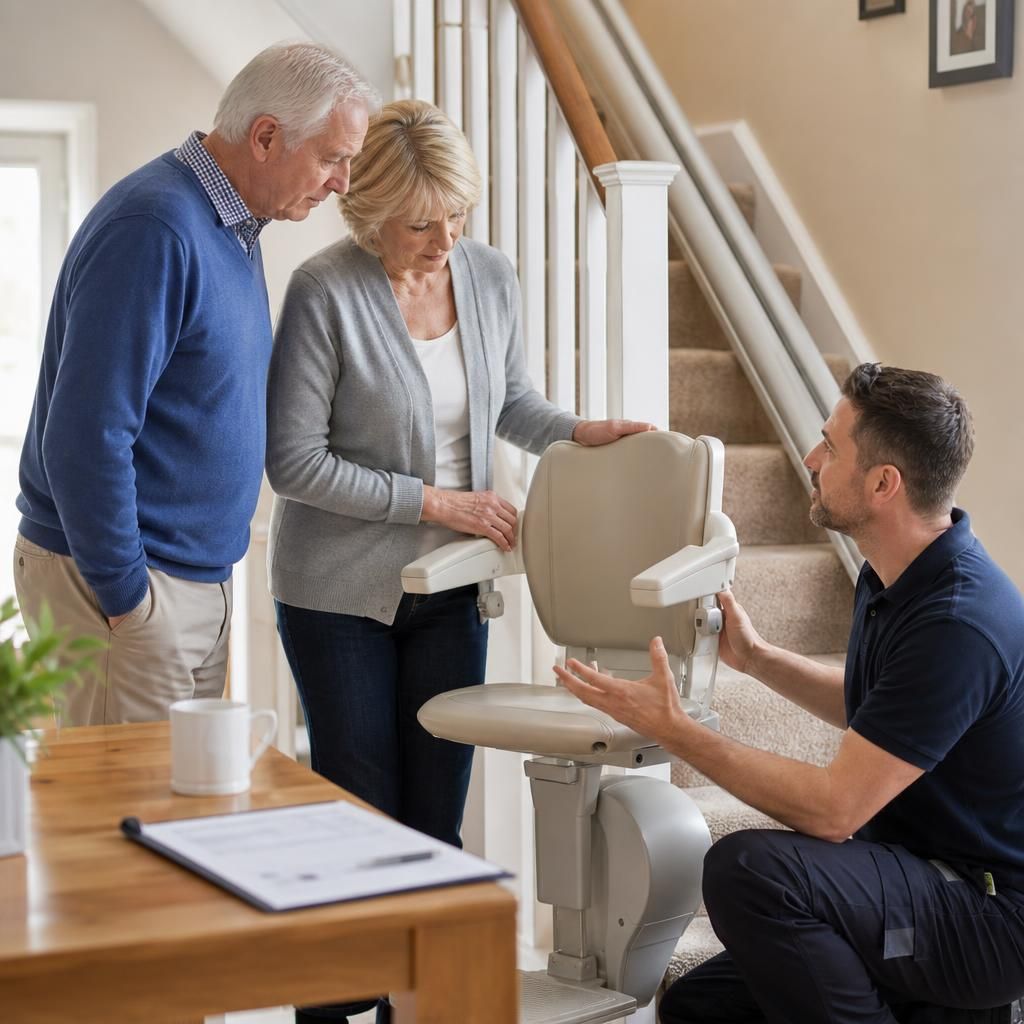
Discuss your used stairlift warranty and support options
Discuss your used stairlift warranty and support options with our team before arranging purchase, including cover for parts, labour, call-outs, installation and future servicing.