
How do I ensure a used stairlift is safe and reliable?
To ensure a used stairlift is safe and reliable, have it inspected, serviced and installed by a qualified stairlift engineer who can check its condition, safety features, battery and compatibility with your staircase. Obtain clear information about its history, any replacement parts, warranty and ongoing support before agreeing to the purchase.
A used stairlift is safest and most reliable when its condition, safety systems, battery, rail and compatibility with your staircase have been checked by a competent stairlift engineer before installation. Do not rely on appearance or a short demonstration alone. Ask for its service history, confirm which parts have been replaced, and make sure it is professionally installed, tested and supported after fitting.
Buy from a source that can inspect and support the stairlift
A used stairlift should come from a supplier or installer willing to explain its history and take responsibility for its condition. The supplier should be able to tell you whether it has been removed from another property, reconditioned, stored for a period of time or previously repaired. A stairlift that has been professionally refurbished may be a suitable option, but reconditioning should involve more than cleaning the seat and rail.
Before agreeing to the purchase, ask whether the stairlift will be assessed for your staircase and installed by an engineer. Be cautious if you are expected to arrange installation separately, fit the equipment yourself or accept a stairlift without a clear service and support arrangement.
Ask for the stairlift’s history
Useful information includes the age and model of the stairlift, how often it was used, why it was removed, where it was previously installed and whether it has had any significant faults. Ask for available service records and details of replaced components, particularly batteries, chargers, drive parts, sensors, switches and remote controls.
A missing history does not automatically mean the stairlift is unsafe, but it means the engineer should carry out a more thorough inspection. The stairlift should not be treated as reliable simply because it was working when it was removed.
Check the main mechanical components
The engineer should examine the rail, brackets, joints and fixings for damage, distortion, corrosion or looseness. The rail must be suitable for the staircase and securely fixed to the correct structural points. On a curved staircase, the shape and measurements of the rail are particularly important; a rail from another property may not be suitable even if the stairs appear similar.
The seat, armrests, footrest, swivel mechanism, safety belt and movement controls should be checked for secure operation and excessive wear. The lift should travel smoothly without unusual vibration, jolting, grinding or hesitation. Any abnormal noise or movement should be investigated rather than accepted as normal for a used product.
Test every safety feature
Safety features should be tested during the professional inspection and again after installation. Depending on the model, these may include:
- a seat belt or restraint that fastens securely and releases correctly;
- obstacle sensors that stop the stairlift when the footrest or carriage meets an obstruction;
- swivel-seat and interlock mechanisms that prevent travel when the seat is not correctly positioned;
- armrest, joystick and remote controls that respond consistently;
- emergency stop controls and warning indicators;
- key switches or user controls that prevent unintended operation;
- limit switches and stopping systems at the top and bottom of the rail; and
- charging contacts and systems that allow the stairlift to recharge when parked correctly.
Some models have additional features, such as powered swivel seats, folding rails or hinged sections. These should be checked for correct operation and safe clearance. A safety feature that works intermittently is a fault and should be repaired before the stairlift is used.
Pay particular attention to the batteries and charger
Batteries are a common source of problems in used stairlifts, especially if the equipment has been stored or left unused. The stairlift may still move during a demonstration while having insufficient battery capacity for dependable daily use. The engineer should check the batteries, charging system, connections and battery condition under suitable operating conditions.
Ask whether the batteries are new, serviceable or being retained from the previous installation. If they are being replaced, confirm that the replacements are compatible with the stairlift and that the charger is functioning correctly. Do not ignore warning lights, slow travel, repeated low-battery alerts or a stairlift that stops away from its charging position.
Confirm that it suits your staircase and home
Compatibility is part of safety, not just convenience. A professional assessment should consider the width and shape of the stairs, landings, bends, doors, radiators, handrails and available space at the top and bottom. The engineer should also check whether the seat, footrest and rail leave suitable clearance for other people using the staircase.
Consider how you will get on and off the stairlift. The seat height, swivel direction, controls and position at the top and bottom should suit the user’s mobility and the layout of the home. If the stairlift is for someone with limited balance, strength or dexterity, explain this during the assessment so the recommended configuration reflects how it will actually be used.
Insist on professional installation and testing
Installation should include secure fitting of the rail, correct connection of the power supply, adjustment of the seat and controls, and a complete operational test. The engineer should run the stairlift along the full route, check its stopping points, test the safety systems and confirm that it charges correctly when parked.
You should receive an explanation of the controls, charging positions, safety belt, emergency procedures and basic care. Ask the engineer to demonstrate what to do if the stairlift stops, displays a warning or does not charge. Do not use the stairlift until installation and testing are complete, particularly if it has been moved from another property.
Clarify the warranty and ongoing service
Read the warranty terms before buying. Check what is covered, how long cover lasts, whether parts and labour are included, and who will respond if the stairlift develops a fault. Some warranties may exclude batteries, accidental damage, misuse or problems caused by unauthorised repairs, so ask for these exclusions in plain language.
Also confirm whether servicing is available in your area and how to request assistance. Keep the installation paperwork, warranty details, service records and engineer’s instructions in an accessible place. Regular servicing can identify wear before it affects safe operation, although it does not replace daily checks and sensible use.
Look for warning signs before purchase
- There is no clear information about the stairlift’s history or condition.
- The seller discourages an inspection or cannot provide professional installation.
- The stairlift has damaged covers, loose fittings, corrosion, worn controls or unusual noises.
- The battery warning light remains on, the lift travels slowly or it fails to charge reliably.
- The safety belt, sensors, swivel seat or emergency controls are not tested.
- The rail appears unsuitable for your staircase or leaves inadequate clearance.
- The warranty, servicing arrangements or responsibility for faults are unclear.
If any of these issues arise, ask for an engineer’s assessment before proceeding. A lower purchase price does not make a stairlift cost-effective if it needs immediate repairs, cannot be installed safely or has no dependable aftercare. The safest approach is to choose a used stairlift that has been properly inspected, matched to your staircase, professionally installed and backed by clear technical support.
A professional inspection is the most reliable way to confirm that a used stairlift is safe before you buy or use it. A qualified stairlift engineer should assess the rail, fixings, seat, controls, safety belt, sensors, charging system and batteries, as well as checking that the lift is suitable for your staircase.
The stairlift should then be professionally installed and tested along the full route. Ask the engineer to demonstrate the safety features, charging positions and emergency procedure, and make sure any faults are repaired before use. A short demonstration or clean appearance cannot confirm reliable operation.
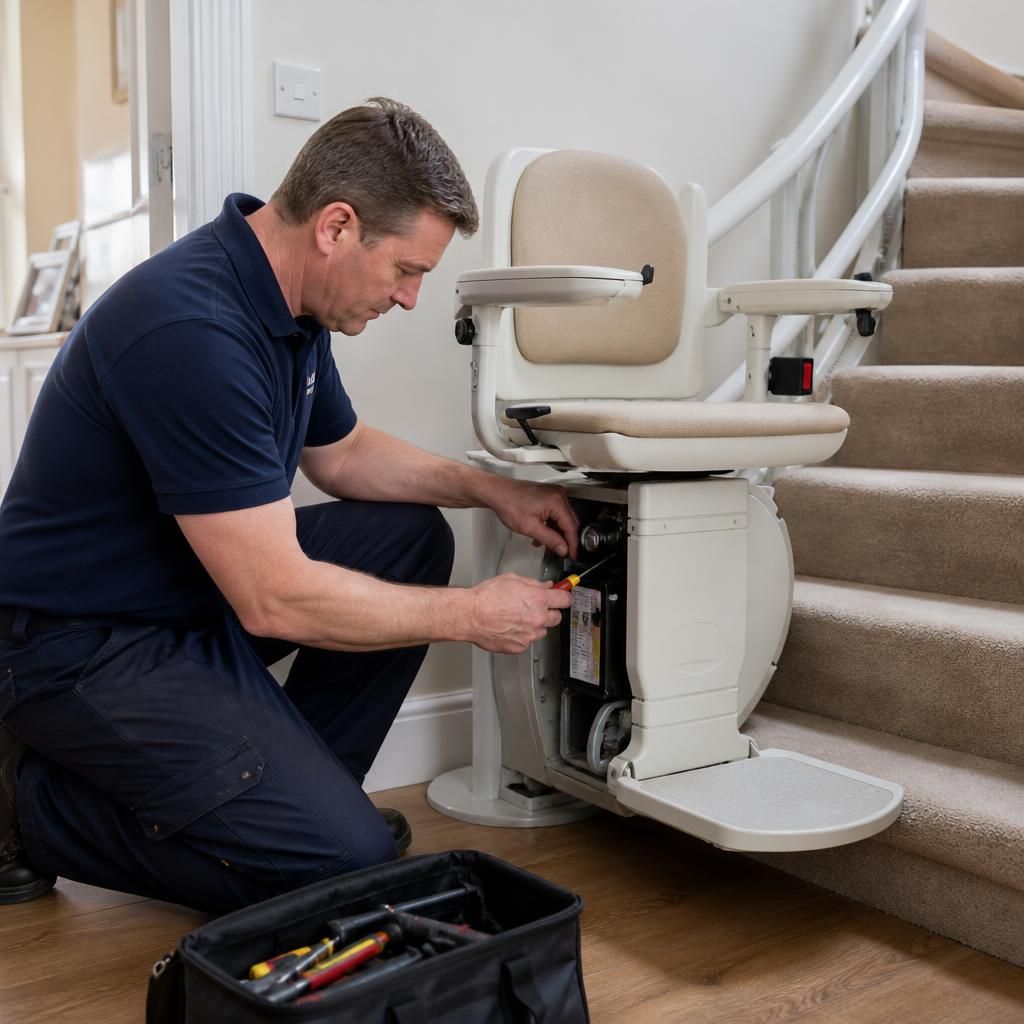
Arrange a Professional Used Stairlift Assessment
Arrange a professional used stairlift assessment with Independent Stairlifts to check the lift’s condition, safety features and compatibility with your staircase before purchase or installation. Our qualified engineers can also advise on servicing, replacement parts and ongoing support.