
How does the refurbishment process ensure the reliability and safety of reconditioned stairlifts in Birmingham?
Reconditioned stairlifts are made reliable and safe through a structured refurbishment process that includes thorough inspection, functional testing, replacement of worn or unsuitable components, and safety checks before installation. A qualified technician then verifies that the stairlift is correctly fitted and operating safely on your Birmingham staircase.
The refurbishment process makes a reconditioned stairlift reliable and safe by combining a detailed inspection, replacement of unsuitable parts, controlled functional testing and a professional installation check. The lift is assessed as an individual unit rather than simply cleaned and resold, and its suitability for the customer’s staircase and intended use in Birmingham is confirmed before it is installed.
Initial assessment and identification of the stairlift
When a used stairlift is received, the technician records its model, configuration and general condition. This helps establish which components are suitable for further use and which may need replacing. A stairlift removed from a straight staircase, for example, will not automatically be suitable for another straight staircase: the rail length, landing arrangement, seat position and user requirements must all match. Curved stairlifts require particularly careful assessment because their rail is made for a specific staircase.
The inspection also considers how the stairlift was previously used and stored. Evidence of impact, excessive wear, moisture exposure, corrosion, electrical damage or unauthorised modification can affect whether a unit is suitable for refurbishment. Parts that do not meet the required condition are not retained merely because they are still operational.
Cleaning, strip-down and component inspection
The stairlift is cleaned so that dirt and debris do not conceal faults or interfere with moving parts. Depending on the model and its condition, the technician may remove covers and inspect the drive system, charging points, wiring, switches, sensors, seat mechanism, armrests, footrest and rail components. Mechanical parts are checked for wear, looseness and damage, while electrical connections are examined for signs of overheating, deterioration or poor contact.
This stage is important because a lift can appear to work during a brief demonstration while still having worn components that could affect its long-term performance. Inspection allows those issues to be addressed before the unit is offered for installation.
Replacement of worn or unsuitable parts
Components are replaced where they are worn, damaged, unreliable or inappropriate for the intended installation. This can include batteries, switches, sensors, rollers, belts, covers, charging contacts, wiring or other model-specific parts. Batteries receive particular attention because they are essential to dependable operation, including when the stairlift needs to operate away from a charging point or during a temporary power interruption.
Replacement parts must be compatible with the stairlift model and installed correctly. A reconditioned unit should not be judged only by its appearance; the condition of its safety-related and working components is more important than cosmetic marks that do not affect operation.
Functional and safety testing
After refurbishment, the stairlift is operated repeatedly to confirm that it starts, stops, travels smoothly and responds correctly to its controls. The technician checks the charging system, battery performance, drive movement and operation at the relevant points on the rail. Safety features are tested to ensure that the lift stops or behaves as intended when a sensor, control or obstruction response is activated.
Typical checks include the seat swivel and locking mechanism, armrests, footrest, seat belt, remote controls, direction controls and obstruction sensors. The technician also checks that the stairlift does not travel when a required safety condition has not been met, such as the seat or swivel mechanism not being correctly positioned. The exact checks vary by model, but the principle is the same: controls must be predictable, and safety systems must function consistently.
Electrical and charging checks are also carried out in line with the equipment’s design and the manufacturer’s requirements. Any unusual noise, hesitation, inconsistent stopping, error indication or failure to charge is investigated rather than overlooked.
Checking compatibility with the Birmingham staircase
Reliability depends on the installation as well as the stairlift itself. Before fitting, the staircase is assessed for its shape, width, length, bends, landings, available parking positions and access to electrical power. The technician also considers doorways, hallway space and whether the lift will leave sufficient room for other people to use the stairs safely.
For a curved staircase, the rail must follow the specific bends, angles and levels of that staircase. A suitable reconditioned curved stairlift may therefore require a compatible existing rail, a correctly matched rail section or a reconditioned rail prepared for the property. For a straight staircase, the rail length and position still need to be correct. Outdoor installations require additional consideration of weather exposure, drainage, charging arrangements and the condition of external surfaces.
Professional installation and commissioning
During installation, the rail is secured to the staircase or supporting structure using the appropriate fixing method. The stairlift is then fitted, connected and adjusted so that it travels safely without striking walls, doors, newel posts or other obstructions. The technician checks clearances at the top and bottom of the stairs and confirms that the lift parks in a suitable position.
Commissioning involves operating the installed stairlift through its full route, checking charging at its parking points and verifying that the controls and safety features work in the actual home. The installer also confirms that the user can get on and off safely, use the controls and understand essential operating precautions. If an adjustment is needed after fitting, it should be completed before the installation is treated as finished.
Final checks and customer guidance
A final inspection confirms that fixings are secure, cables are safely routed, the rail and seat are stable, and the stairlift responds correctly throughout its travel. The customer should receive instructions on everyday operation, charging, remote controls, seat-belt use, safe positioning and what to do if the stairlift shows a fault. It is also useful to explain simple user checks, such as keeping the rail and sensors clear and ensuring the lift is left at a charging point when required.
Records of the work carried out, parts replaced and tests completed provide a useful reference for future servicing. They can also help a technician diagnose issues more efficiently if the stairlift later requires adjustment or repair.
Why refurbishment does not mean compromising on safety
A reconditioned stairlift is not safe simply because it has been used before, and it should not be selected on price alone. Its reliability depends on the quality of the original unit, the refurbishment decisions made, the compatibility of the equipment with the staircase and the standard of installation. A responsible process will identify units or components that are unsuitable rather than returning every used lift to service.
For your Birmingham installation, ask what inspection and refurbishment work has been completed, which parts have been replaced, how the stairlift has been tested and what support is available after fitting. You can also discuss the staircase layout, the user’s mobility and any requirements such as powered controls, a swivel seat or an outdoor installation. These details help ensure that the reconditioned stairlift is not only operational, but appropriate for the home and safe for the person using it.
Refurbishment ensures a reconditioned stairlift is reliable by identifying and correcting faults before installation, rather than simply cleaning a previously used unit. Each stairlift is inspected for wear, damage, electrical issues and unsuitable modifications, with components replaced where they could affect safe operation or dependable performance.
After refurbishment, the technician tests the drive system, controls, charging points, batteries and safety features. This includes checking that the stairlift:
- travels smoothly and stops correctly;
- responds consistently to the handset and remote controls;
- detects obstructions and stops as intended;
- operates only when the seat, swivel and other required safety conditions are correctly positioned; and
- charges properly at its parking points.
The final installation check is equally important. The stairlift must be compatible with the Birmingham staircase, securely fitted and tested through its complete route, with clearances and user access confirmed before it is handed over.
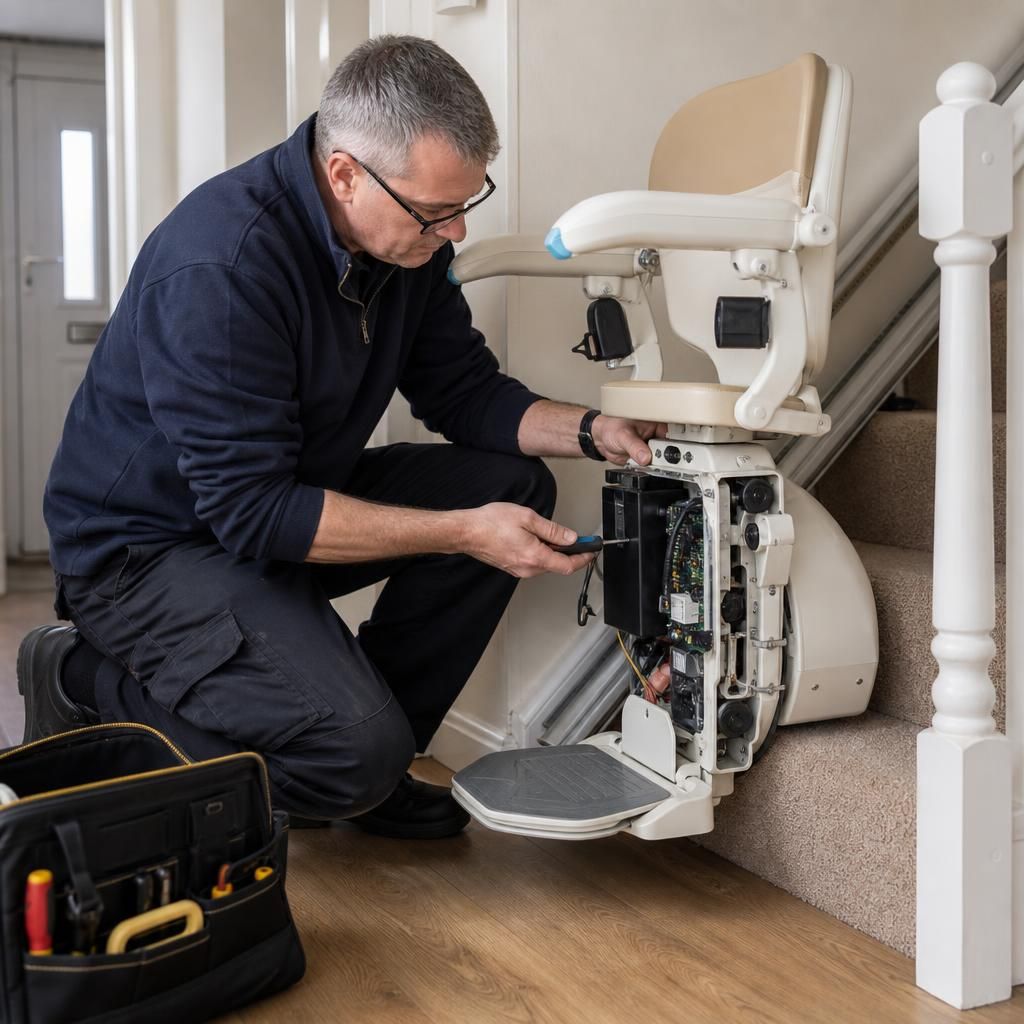
Discuss your reconditioned stairlift requirements in Birmingham
Discuss your Birmingham staircase, user requirements and preferred reconditioned stairlift options with our team. We can arrange an assessment and explain the refurbishment, installation and aftercare included.