
Are there warranties available for reconditioned stairlifts, and what do they cover?
Yes, reconditioned stairlifts are often supplied with a warranty covering specified parts, labour and repairs for an agreed period. The exact protection varies, so check whether it includes call-outs, battery replacement and faults caused by normal wear, misuse or unsuitable conditions before purchase.
Yes. Reconditioned stairlifts are commonly supplied with a written warranty for an agreed period, although the protection can differ between models and suppliers. A warranty will usually cover defects in the stairlift and, where stated, the cost of replacement parts, labour and engineer call-outs. It does not normally cover every repair, so check the terms carefully before purchase and keep the warranty documentation after installation.
What a reconditioned stairlift warranty may cover
- Faults in the motor, drive system, controls or charging equipment caused by defective components.
- Replacement or repair of covered mechanical and electrical parts.
- Engineer labour needed to diagnose and rectify an eligible fault.
- Call-out charges, if the warranty specifically includes them and the visit is for a covered problem.
- Installation-related issues where the stairlift has been fitted by the supplying company and the fault results from the installation.
- Replacement batteries where the batteries fail within the warranty period and are not considered to have reached the end of their normal service life through use.
The exact scope depends on the written warranty. Some agreements cover parts and labour but exclude call-out charges, while others provide more comprehensive cover. Ask for confirmation of what is included rather than relying on a general statement that the stairlift is “guaranteed”.
Common exclusions and limitations
Warranties generally exclude damage caused by misuse, accidental impact, unauthorised alterations, neglect or failure to follow the operating instructions. They may also exclude faults resulting from water ingress, unsuitable storage, power surges, vermin or environmental conditions beyond the stairlift’s intended specification. For an outdoor stairlift, confirm whether the warranty applies to exposure to rain, frost, dust and temperature changes.
Items subject to normal wear may have limited cover or no cover. Depending on the terms, this can include batteries, remote controls, upholstery, armrests, footplates, covers and other consumable or cosmetic components. A battery that gradually loses capacity through normal use may be treated differently from a battery that fails prematurely because of a fault.
A warranty may also require the stairlift to be serviced or repaired only by the supplying company or an approved engineer. Using an unauthorised repairer, fitting non-approved parts or attempting repairs yourself could invalidate some or all of the cover. If the stairlift is moved to another property, check whether the warranty remains valid and whether reinstallation must be completed by the original provider.
What to check before accepting a reconditioned stairlift
- The start date and end date of the warranty.
- Whether the cover applies to the complete stairlift or only named parts.
- Whether labour, diagnosis, travel and call-out charges are included.
- How batteries and other wear-related items are treated.
- Whether the cover includes the installation and any adjustments required after fitting.
- Any maintenance, servicing or usage conditions that must be followed.
- Whether the warranty can be transferred if the stairlift is moved or the property changes hands.
- How to report a fault, including the contact details and expected response process.
It is also useful to ask what happens if a covered part cannot be repaired. The warranty may provide for a replacement part, an equivalent component or, in some circumstances, a replacement stairlift. This should be clear in the terms rather than assumed.
How to make a warranty claim
Contact the supplier as soon as a fault appears and describe the symptoms accurately. Explain whether the stairlift will not move, stops part-way, fails to charge, makes an unusual noise or displays a warning. Do not continue using it if doing so could create a safety risk. Keep the purchase paperwork, installation record and warranty terms available, and note any fault codes or indicators shown by the stairlift.
An engineer may first carry out checks to establish whether the issue is covered. If the fault is excluded, the supplier should explain the likely cause and any charge before proceeding with chargeable work. A clear warranty process helps distinguish a covered component failure from routine maintenance or damage outside the agreement.
Your legal rights are separate from the warranty
A warranty is an additional contractual promise and does not replace your statutory rights when buying from a business. In the UK, goods supplied by a trader should be of satisfactory quality, fit for purpose and as described. A reconditioned stairlift can be judged in light of its age, condition and description, but it should still be safe and suitable for the purpose agreed. If you bought from a private seller, your legal protection is different, which makes a written condition report and independent checks particularly important.
Before installation, Independent Stairlifts can explain the warranty offered with the particular reconditioned stairlift, including its exclusions and the procedure for reporting a fault. If you are comparing options, assess the warranty alongside the stairlift’s condition, battery health, service history, installation requirements and availability of replacement parts. The cheapest unit may not provide the most practical protection if important labour, call-outs or batteries are excluded.
A warranty for a reconditioned stairlift should clearly state which parts and services are covered, and for how long. Depending on the agreement, this may include defective mechanical or electrical components, replacement parts, engineer labour and call-out charges. Battery cover is often subject to separate conditions because gradual loss of capacity can be treated as normal wear rather than a fault.
Before installation, check the written terms for exclusions such as misuse, accidental damage, unauthorised repairs and unsuitable outdoor conditions. Keep the warranty and installation records, and contact the supplying company promptly if the stairlift develops a fault. This helps establish whether the repair is covered and prevents avoidable charges.
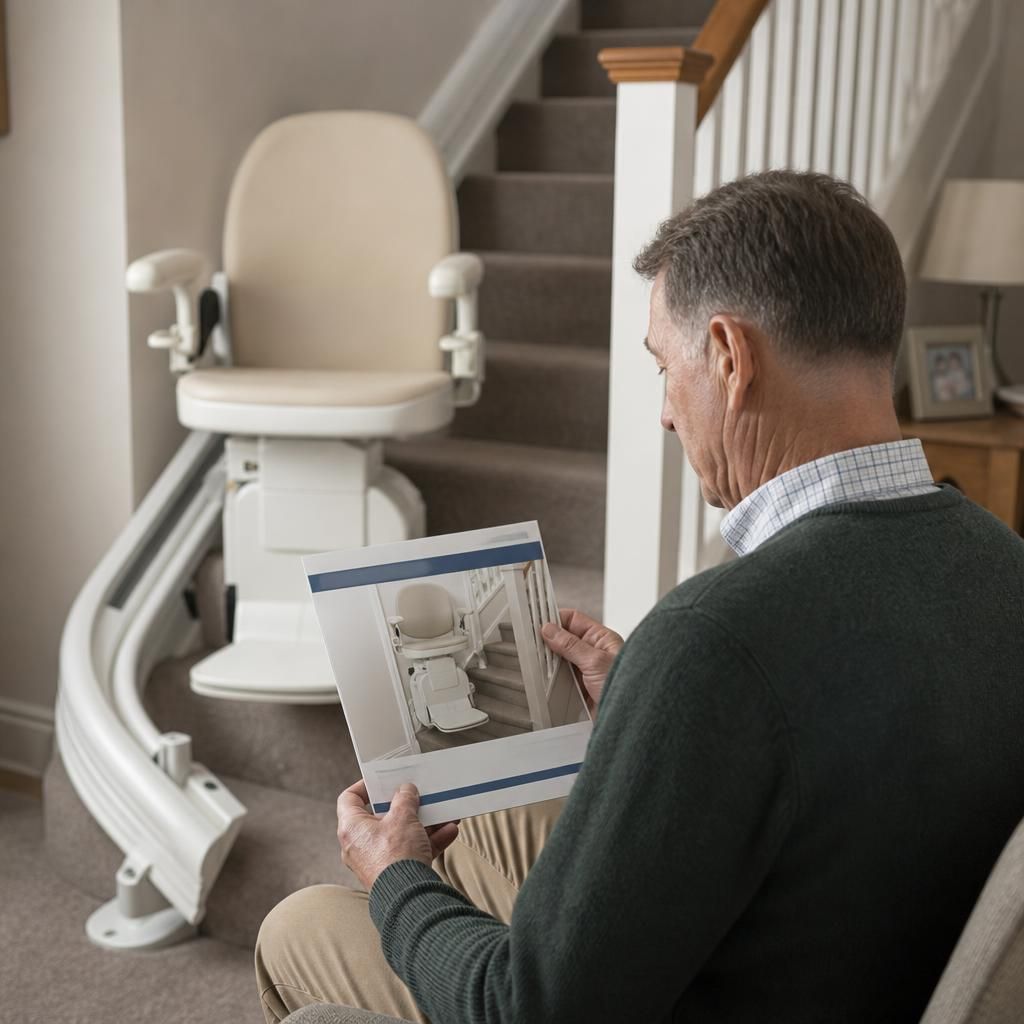
Ask About Your Reconditioned Stairlift Warranty
Ask Independent Stairlifts to confirm the warranty terms for your reconditioned stairlift, including cover for parts, labour, call-outs and batteries. We can also explain the exclusions and how to report a fault before installation.