
What maintenance is required for reconditioned Acorn stairlifts to ensure optimal performance? Regular servicing, battery checks, rail and seat cleaning, and prompt attention to unusual noises or movement help keep a reconditioned Acorn stairlift safe, reliable and operating efficiently.
Reconditioned Acorn stairlifts require regular servicing, battery checks, and cleaning of the seat, rail and sensors to maintain safe, reliable operation. Report unusual noises, jerky movement, charging problems or fault messages promptly so a qualified engineer can inspect the stairlift before performance deteriorates.
Maintaining a reconditioned Acorn stairlift involves regular professional servicing, keeping the rail and seat clean, checking that the batteries charge correctly, and reporting changes in operation without delay. These checks help preserve safe movement, reliable starting and stopping, and dependable operation on every journey. The exact service interval should follow the maintenance plan supplied with your stairlift and the recommendations of the qualified engineer who installed it.
Arrange regular professional servicing
A reconditioned stairlift should be inspected and serviced by a suitably qualified stairlift engineer at the recommended intervals. A service normally includes checks of the drive system, rail, seat, armrests, footrest, safety sensors, controls, charging points, batteries and protective covers. The engineer can also test the stairlift under operating conditions and identify wear that may not be obvious during everyday use.
Keep the service record, installation documents and any warranty information in a safe place. If the stairlift is still covered by a guarantee, use the servicing and repair arrangements specified in those documents. Unauthorised repairs or alterations may affect cover and could compromise the stairlift’s safety systems.
Keep the batteries charged
Acorn stairlifts use rechargeable batteries, including when the lift is operated infrequently. Leave the stairlift at its designated charging point when it is not in use, usually at the top or bottom of the rail as instructed during installation. Avoid switching off the power supply unless an engineer has advised you to do so, because the batteries may gradually discharge when the stairlift is left unused.
Signs of a battery or charging problem can include a warning tone, a fault message, reduced travel distance, slower operation, failure to start, or the stairlift stopping away from a charging point. Check that the mains supply is switched on and that the stairlift is positioned correctly on its charger. If the warning continues, arrange an inspection rather than repeatedly attempting to operate the lift. Batteries are service items and may eventually need replacement; an engineer should confirm the cause before fitting new ones.
Clean the rail, seat and controls carefully
Dust, pet hair and household debris can collect around the rail, carriage and footrest. Wipe accessible surfaces with a soft, slightly damp cloth and a mild household cleaner, then dry them thoroughly. Clean the seat, armrests, joystick or control switches and footrest regularly, paying particular attention to areas touched frequently.
Do not pour or spray liquid onto the stairlift, motor, controls, charging contacts or electrical covers. Avoid abrasive cleaners, solvents and excessive moisture. Do not grease the rail or apply lubricant unless the manufacturer or a qualified engineer specifically instructs you to do so, as the wrong product can attract debris or interfere with the drive mechanism.
Keep the stairway and safety sensors clear
Before using the stairlift, make sure the steps, landing areas and travel path are free from shoes, toys, bags, trailing cables and other obstructions. Check that the seat is locked in its travelling position, the armrests and footrest are secure, and the seat belt is available and undamaged.
Safety edges and sensors should remain clean and unobstructed. Never tape down, disconnect or bypass a safety switch, sensor or seat-belt mechanism. These components are designed to stop the stairlift if it detects an obstruction or an unsafe operating condition. If the lift stops unexpectedly, remove only an obvious obstruction that can be reached safely and contact an engineer if the problem remains.
Respond promptly to changes in performance
Contact Independent Stairlifts or the nominated service provider if you notice jerky movement, unusual noise, vibration, hesitation, repeated stopping, difficulty charging, a burning smell, a fault indication or movement that differs from normal operation. Do not continue using the stairlift if it appears unsafe, makes a severe grinding noise, has damaged wiring, or stops in a position that prevents safe access. Keep the user away from the stairlift until it has been assessed.
Do not attempt to dismantle the carriage, adjust the rail, replace electrical components or investigate internal faults yourself. A reconditioned stairlift has been inspected and refurbished, but its mechanical and electrical parts still require appropriate care and can wear through normal use. Prompt attention can prevent a minor adjustment or worn component from developing into a more disruptive fault.
Use the stairlift as intended
Follow the operating instructions provided at installation, including the stated user and load limits. The stairlift should carry one seated person and should not be used to transport bulky items that could catch on the rail or obstruct the stairs. Keep liquids away from indoor equipment and protect an outdoor model from conditions it is not designed to withstand. If the stairlift is unused for an extended period, ask for advice about battery care before putting it back into regular service.
Routine cleaning and charging can be completed by the user, but servicing, fault diagnosis, battery replacement and safety adjustments should be carried out by a qualified engineer. If you are unsure whether a noise, warning or charging behaviour is normal, report it promptly with the stairlift model, the symptoms and when they occur. This gives the engineer useful information and helps keep the reconditioned Acorn stairlift safe, efficient and dependable.
Keeping the batteries charged is essential to maintaining a reconditioned Acorn stairlift’s reliable performance. Leave the stairlift on its designated charging point when it is not in use, as instructed during installation, and check that the mains supply is switched on.
Warning tones, fault messages, reduced travel, slower movement or failure to start can indicate a charging or battery problem. Check that the stairlift is positioned correctly on the charger, but do not repeatedly operate it if the warning continues. Arrange an inspection with a qualified engineer, who can confirm whether the batteries, charging points or another component require attention.
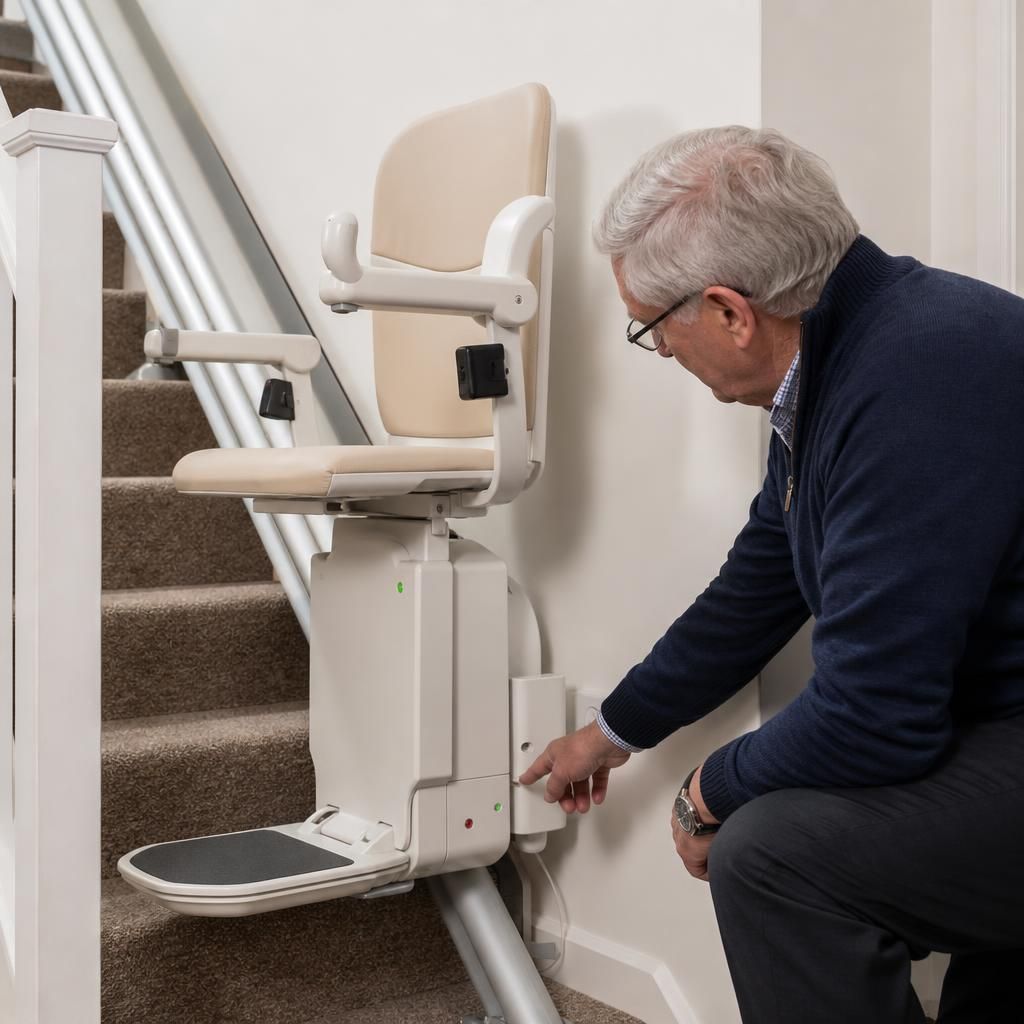
Book a maintenance check for your reconditioned Acorn stairlift
Book a maintenance check for your reconditioned Acorn stairlift with Independent Stairlifts to identify wear, confirm safe operation and address any charging or performance concerns. Contact our team to arrange a suitable appointment.