
What steps can I take to ensure my stairlift remains reliable and safe over time?
Keep your stairlift reliable and safe by charging it correctly, keeping the track and seat area clear, carrying out simple visual checks, and arranging professional servicing at the recommended intervals. Do not ignore unusual noises, jolting, reduced battery performance or recurring faults; stop using the lift if it appears unsafe and contact Independent Stairlifts for advice.
Keeping a stairlift safe and reliable over time requires a combination of correct everyday use, simple visual checks, good battery care and professional servicing at the intervals recommended for your model. Keep the stairway and charging points clear, follow the instructions in your user manual, and report unusual noises, movement or repeated faults rather than continuing to use the lift.
Use the stairlift as intended
- Use the seat belt or safety harness on every journey, where fitted, and make sure it is fastened securely before moving.
- Keep hands, feet, clothing and other objects away from the carriage, track, steps and moving parts.
- Do not allow more than the permitted passenger load, and do not carry bulky items that could catch on the stairs or prevent you from sitting safely.
- Keep children and pets away from the stairlift while it is moving. Take particular care when the lift is parked at the top or bottom of the stairs.
- Use the controls gently and do not force the seat, armrests, footrest or swivel mechanism.
Keep the batteries charged
Most domestic stairlifts use rechargeable batteries so that the lift can operate when it is away from its charging point and, depending on the model, during a power cut. Park the stairlift fully on its designated charging point whenever it is not in use. If your model has charging indicators, check that they show the expected charging status.
If the stairlift is left unused for a period, continue to follow the manufacturer’s charging instructions. Avoid switching off the mains supply to the charging equipment unless this is necessary for a specific reason. A lift that is regularly left away from its charger can develop a flat or weakened battery, which may lead to warning tones, slower operation or failure to move.
Rechargeable batteries are consumable parts and will eventually need replacing. Reduced travel between charges, repeated low-battery warnings or a lift that works only after prolonged charging should be investigated by a qualified engineer. Do not attempt to replace batteries or alter the charger unless this is specifically permitted in the instructions and you are competent to do so.
Carry out simple visual checks
Before using the stairlift, look for anything that could affect safe operation. In particular:
- Check that the track is clear of clothing, toys, furniture, cleaning equipment and other obstructions.
- Look for visible damage, loose covers, exposed wiring or anything that appears out of position.
- Make sure the seat, armrests, footrest and safety belt appear secure.
- Check that the swivel seat locks in the correct position before travelling or transferring at the landing.
- Confirm that the footrest and sensors are free from dirt or objects that could trigger a safety stop.
- Notice whether the lift starts, stops and travels smoothly without unusual vibration or jolting.
These checks are not a substitute for a service. They are intended to identify obvious problems early and help you decide when the stairlift should be taken out of use.
Keep the track and surrounding area clean
Dust and everyday debris can collect around the track, carriage and footrest. Clean accessible surfaces with a soft, dry or slightly damp cloth, following the care instructions for your model. Keep liquids away from the motor, controls, batteries and electrical connections. Do not spray cleaning products directly onto the stairlift, and do not apply oil or grease to the track unless the manufacturer specifically instructs you to do so. Incorrect lubrication can attract dirt or affect the carriage and safety systems.
The stairs, landings and charging areas should also remain uncluttered. If the stairlift is installed outdoors or in an area exposed to damp, arrange suitable weather protection and use only cleaning methods approved for that installation.
Arrange professional servicing
Have the stairlift serviced in line with the manufacturer’s guidance, the terms of your service agreement and the conditions in which it is used. A service normally includes inspection of the drive system, track, batteries, charging equipment, controls, safety sensors, seat mechanisms and fixings. The engineer can also test the lift under operating conditions, identify wear and advise whether parts need adjustment or replacement.
Servicing may need to be considered sooner where the lift is used frequently, supports a heavier workload, is installed outdoors, has been exposed to damp or dust, or has developed a recurring fault. Keep records of service visits, repairs and battery replacement. This makes it easier to identify repeated issues and ensures that important information is available to the next engineer.
Respond promptly to warning signs
Stop using the stairlift and contact us or a suitably qualified service engineer if you notice:
- Jolting, slipping, unexpected stops or changes in speed.
- Grinding, clicking, squeaking or other noises that were not present previously.
- A burning smell, smoke, excessive heat or signs of electrical damage.
- Repeated fault codes, warning tones or a safety sensor that repeatedly stops the lift without an obvious obstruction.
- Loose or damaged seat components, armrests, footrest, belt, track covers or wiring.
- Difficulty starting, parking, swivelling or locking the seat correctly.
- Battery warnings, poor charging performance or a noticeable reduction in travel between charges.
Do not bypass a safety switch, continue travelling past a fault or try to force the lift to move. If it stops between floors, remain seated with the belt fastened if it is safe to do so, follow the emergency procedure in your user manual and use the agreed contact number for assistance. Do not attempt to climb out onto the stairs unless there is an immediate danger and you have no safer option.
Use repairs and replacement parts appropriate to the lift
Stairlift parts are model-specific, and components such as batteries, chargers, remotes, belts and safety sensors must be compatible with the installation. Repairs should be completed by an engineer with the appropriate knowledge of the stairlift. Keep remote controls dry, replace their batteries when required and report a remote that operates intermittently rather than relying on it as the only control.
In short, park the lift on charge, keep the track and stairs clear, inspect the accessible parts regularly, use all safety features correctly and arrange servicing as recommended. Early advice is preferable to waiting for a complete breakdown, particularly when the stairlift is the main means of accessing another level of the home.
Correct battery care is essential to keeping a stairlift reliable, particularly when it is used every day or left unused for periods. Park the lift fully on its designated charging point after each journey and check that the charging indicator shows the expected status.
Do not routinely switch off the power to the charger, unless instructed to do so for your model. Warning tones, repeated low-battery messages, slower operation or noticeably shorter travel between charges can indicate weakened batteries or a charging fault. Contact a qualified engineer rather than attempting to alter the charger or replace batteries yourself.
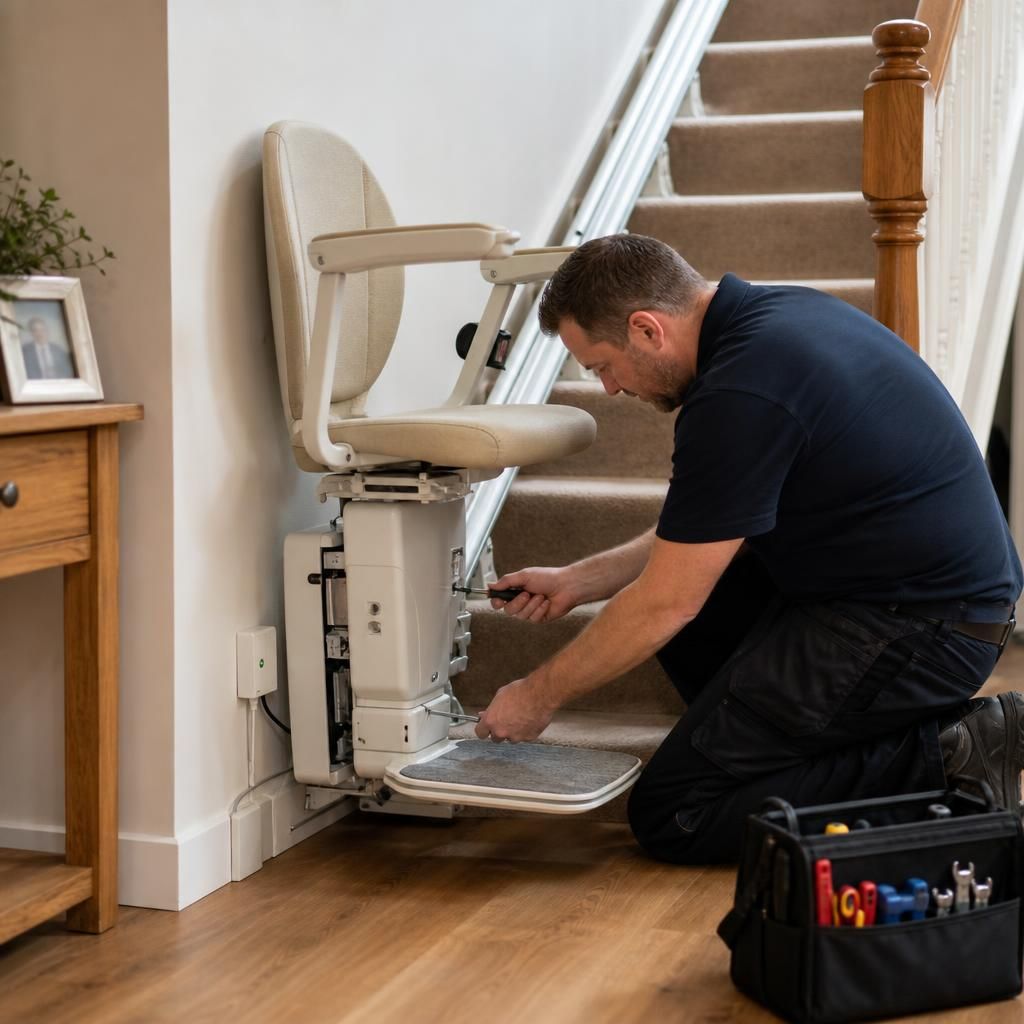
Arrange a Stairlift Service or Maintenance Check
Arrange a professional stairlift service or maintenance check with Independent Stairlifts to confirm that your lift, batteries, safety features and charging equipment are operating correctly. Contact us if you have noticed unusual noises, reduced battery performance or any other change in operation.