
What signs indicate that my stairlift may need immediate maintenance?
Your stairlift may need immediate maintenance if it stops unexpectedly, moves unevenly, makes unusual noises, shows warning lights, fails to charge, or has loose or damaged parts. Stop using it if it appears unsafe, switch it off if appropriate, and contact a qualified stairlift engineer for advice and inspection.
Your stairlift may need immediate maintenance if it stops unexpectedly, moves unevenly, makes a new or worsening noise, displays a warning light or error code, fails to charge, or has loose, damaged or obstructed components. If you notice any sign that could affect safe movement, stop using the stairlift, keep other people away from it and contact a qualified stairlift engineer for advice.
Stop using the stairlift immediately if:
- It starts or stops abruptly, travels without responding correctly to the controls, or stops between floors.
- The seat, armrests, footrest or safety belt feels loose, unstable or damaged.
- The stairlift rocks, tilts, judders or moves unevenly while travelling.
- You smell burning, see smoke, notice overheating or hear an electrical buzzing sound.
- The carriage, rail, seat or footrest is visibly bent, cracked or obstructed.
- The stairlift moves when the controls are not being operated or does not stop when expected.
- A safety sensor, swivel mechanism, locking arm or seat belt does not work properly.
Do not attempt to force the stairlift to move, bypass a safety feature or dismantle electrical covers. If there is smoke, a burning smell or another electrical concern, switch the stairlift off at its isolation point if this can be done safely, and seek urgent professional advice. Do not use the lift again until it has been inspected.
Changes in movement can indicate a developing fault. Arrange maintenance promptly if the stairlift becomes slower than usual, hesitates, vibrates, judders or struggles on a section of the rail. These symptoms can relate to the drive system, batteries, charging contacts, rail condition or another component that requires an engineer’s assessment. A small change that is repeated or becoming more noticeable should not be ignored, even if the stairlift still completes the journey.
Unusual noises also need attention. A new grinding, clicking, squealing, knocking or scraping noise may indicate wear, an obstruction or a problem with the drive mechanism. Some operating sounds are normal, but a change in sound, particularly when accompanied by uneven movement or a warning light, should be reported. Avoid applying oil, grease or household cleaning products unless the manufacturer’s instructions specifically permit this, as unsuitable products can affect the rail or drive components.
Warning lights, alarms and error messages should be checked. Consult the operating guide for the meaning of the displayed code or indicator, and check that the stairlift is correctly parked on its charging point if the instructions allow this. A warning light that remains on, repeats after a reset or appears alongside a loss of performance requires professional attention. Do not repeatedly reset the stairlift in an attempt to clear a fault.
Charging problems are an important maintenance warning. Arrange a service if the stairlift repeatedly reports a low battery, fails to charge when parked, loses power during a journey or only works intermittently. Check that the charging point is switched on and that the stairlift is positioned correctly, provided this can be done without using a stairlift that is behaving unsafely. Keep the charging contacts and surrounding area clear, but do not interfere with the battery or electrical connections yourself.
A stairlift that loses power may stop away from a charging point, so report the problem even if it operates again after being recharged. Batteries naturally require replacement over time, but poor charging can also result from dirty contacts, a faulty charger, wiring problems or another issue that needs testing by an engineer.
Inspect accessible, non-electrical parts without taking anything apart. Look for objects on or beside the rail, damage to the footrest, loose covers, worn upholstery that affects safe seating, or a seat that does not swivel or lock as expected. Keep the stairs and landing clear, but do not reach into the mechanism or try to remove an obstruction while the stairlift is powered. Report any visible damage rather than continuing to use the equipment.
Some issues are not an immediate emergency but still justify a service appointment. These include occasional beeping, a remote control that works inconsistently, a seat belt that is difficult to secure, a footrest that does not fold correctly, a swivel seat that feels stiff, or a stairlift that only operates from one control. Intermittent faults can become more difficult to diagnose if the stairlift is used until it fails completely.
Before contacting the service team, record useful details if it is safe to do so:
- What happened and whether the fault occurs when travelling up, travelling down, starting or stopping.
- Any warning light, alarm pattern or error message shown.
- Whether the stairlift was on its charging point and whether the power supply appeared to be available.
- Any unusual noise, smell, vibration or visible damage.
- Whether the problem occurs from one control, one end of the stairs or every operating position.
Do not ask the stairlift user to repeat a journey simply to reproduce the fault. A clear description, and a photograph of a display or visible damage where appropriate, can help the engineer prepare, but it does not replace a safety inspection.
Until advice is provided, keep the stairlift parked safely, remove the key or switch it off if the instructions allow and the lift is not required for an emergency evacuation. Never leave it blocking a landing or staircase if it can be moved safely by an authorised user; if it cannot be moved, keep the area clear and inform the service team. If the user cannot safely manage the stairs and the stairlift has failed, arrange suitable assistance rather than attempting a risky repair or manual movement.
An engineer can assess the controls, drive system, batteries, charging equipment, rail, safety sensors, seat, belt and other relevant components. They can then identify whether adjustment, cleaning, replacement parts or a more detailed repair is required. Regular professional servicing helps identify wear before it develops into a breakdown, but it does not remove the need to report sudden changes or safety-related faults between appointments.
When in doubt, treat a new or worsening symptom as a reason to stop and ask for professional advice. Prompt maintenance is particularly important where the stairlift is the user’s main means of accessing essential areas of the home.
A stairlift needs immediate maintenance when it shows a safety-related fault, such as stopping unexpectedly, moving unevenly, failing to stop correctly, or having a loose seat belt, armrest or footrest. Stop using it, keep the staircase clear and contact a qualified stairlift engineer for advice. Do not bypass safety features, force the lift to move or remove electrical covers.
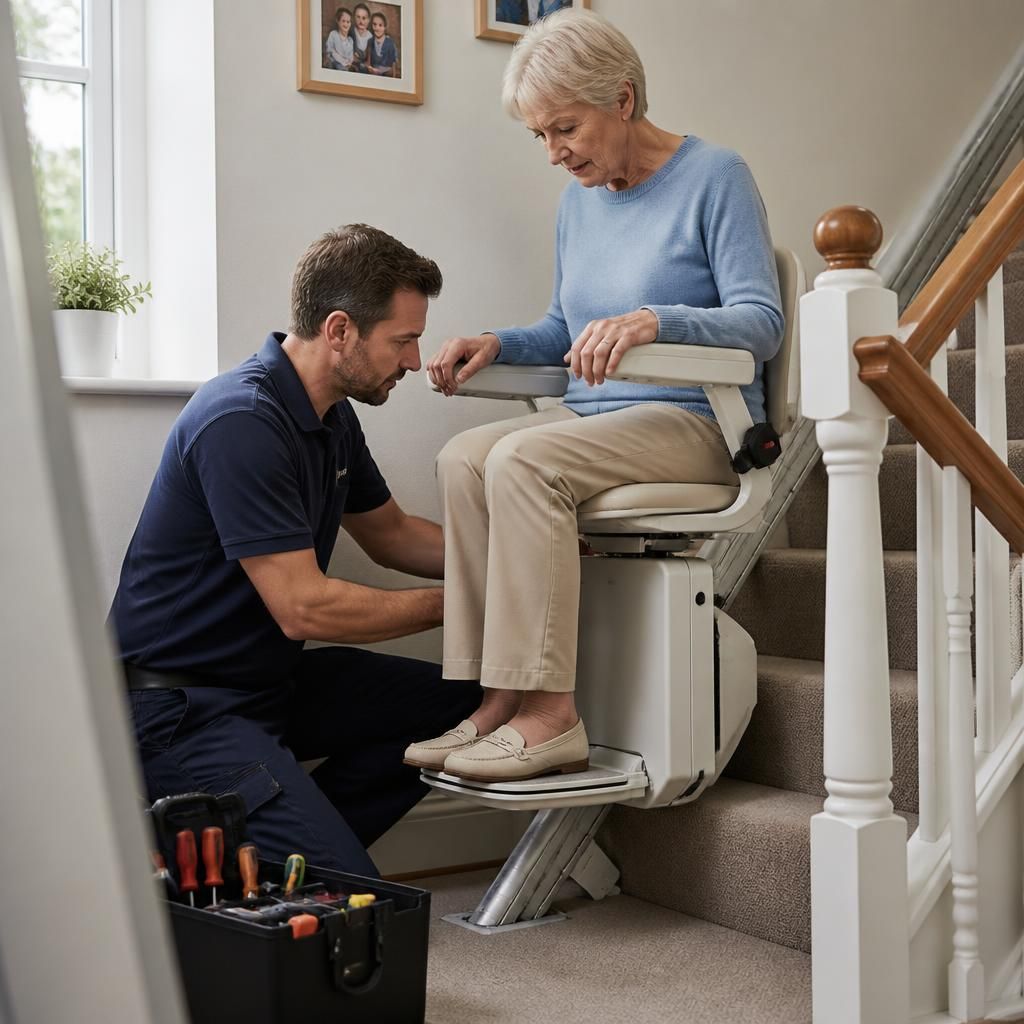
Arrange Expert Maintenance for Your Stairlift
If your stairlift is showing any safety-related fault or change in performance, stop using it and contact our service team to arrange an expert inspection. We can assess the stairlift and advise whether it needs adjustment, replacement parts or further repair.