
What should I do if my stairlift stops working unexpectedly?
If your stairlift stops working unexpectedly, park it safely, check that the key is switched on and the seat, armrests and footrest are correctly positioned, then try the control again. If it still does not move, do not force it or attempt electrical repairs—contact Independent Stairlifts or a qualified engineer for advice and repair.
If your stairlift stops working unexpectedly, remain calm, stop using the controls and make sure you are in a safe position. Check the simple user-serviceable causes, such as the key, power supply, charging position and seat safety sensors. If the lift still does not move, do not force it or remove any covers; contact Independent Stairlifts or a qualified stairlift engineer for advice and repair.
If you are on the stairs, keep your seat belt fastened and remain seated until it is safe to move. Do not try to climb past the stairlift or lift yourself out on the staircase. If you are injured, unwell, trapped in an unsafe position or unable to contact someone for assistance, call the appropriate emergency service.
Carry out these basic checks:
- Check that the key is inserted and switched on, if your stairlift has a key switch.
- Make sure the armrests are fully lowered and the seat is correctly positioned. Some models will not move if the seat is swivelled away from the stairs.
- Check that the footrest is in its normal position and that nothing is pressing against the safety edges or sensors.
- Release the control and try it again gently. If you use a remote control, check whether the control on the armrest operates the lift instead. A remote may have a flat battery or may not be paired with the stairlift.
- Look for an obvious obstruction on the stairs, around the carriage or near the footrest. Do not reach underneath the lift or attempt to move an obstruction while the stairlift is powered.
- Check that the mains switch or dedicated stairlift power switch is on and that the charger is plugged in. If there has been a power cut, the lift may not operate until the power is restored, although a properly charged stairlift may still have limited battery operation.
- If the stairlift is at the top or bottom of the stairs, check that it is positioned correctly on its charging point. Some lifts will not run if they have not made proper contact with the charger.
Only follow a reset procedure if it is clearly described in your user instructions. A simple switch-off and restart may resolve a temporary control fault, but repeated resets can conceal a developing problem. Never bypass a safety switch, disconnect a sensor, bridge an electrical connection or attempt to repair the motor, batteries, wiring or control board yourself.
Stop troubleshooting and arrange professional help if the stairlift makes an unusual noise, smells of burning, shows signs of overheating, has damaged wiring, repeatedly stops, moves unevenly, runs without the control being operated or displays a fault warning. Switch it off if this can be done safely, keep people away from it and tell the engineer exactly what happened. Do not continue using a lift that has a safety-related fault, even if it starts working again.
If the stairlift has stopped between floors, avoid repeatedly pressing the control. Check whether the handset or display shows a fault code, then contact the service team. If you have another safe way to leave the property, use it only if you can do so without risking a fall. Do not attempt to push or pull the stairlift manually.
When contacting Independent Stairlifts, provide the stairlift make and model if known, the position of the lift, whether anyone is on the stairs, what happened immediately before it stopped, any warning lights or fault codes, and the checks you have already completed. This helps the engineer assess the likely cause and bring suitable spares. Have your service agreement or installation details available if applicable.
Common causes include a depleted battery, interrupted mains power, a poor connection with the charging point, an obstruction, a seat or armrest safety switch, a remote-control fault or a problem with the drive system. Batteries and other components can also deteriorate over time, so a stairlift that stops unexpectedly or needs frequent resets should be inspected rather than simply restarted.
After the repair, ask the engineer to explain the cause, confirm that the safety functions have been tested and advise whether the batteries or any other parts need attention. Regular servicing, keeping the stairlift’s track and charging points clear, and reporting unusual noises or changes in performance promptly can help reduce the risk of an unexpected breakdown.
If your stairlift stops unexpectedly, first check the simple user-serviceable causes without leaving a safe position or forcing the controls. Confirm that the key and mains power are on, the seat and armrests are correctly positioned, the footrest is clear, and the lift is properly aligned with its charging point.
Try the armrest control gently once more, and check the remote only if it is safe to do so. Do not remove covers, bypass safety switches, move the lift manually or attempt electrical repairs. If it still does not operate, or if you notice unusual noises, burning smells, damaged wiring or repeated stopping, stop using it and contact Independent Stairlifts or a qualified engineer.
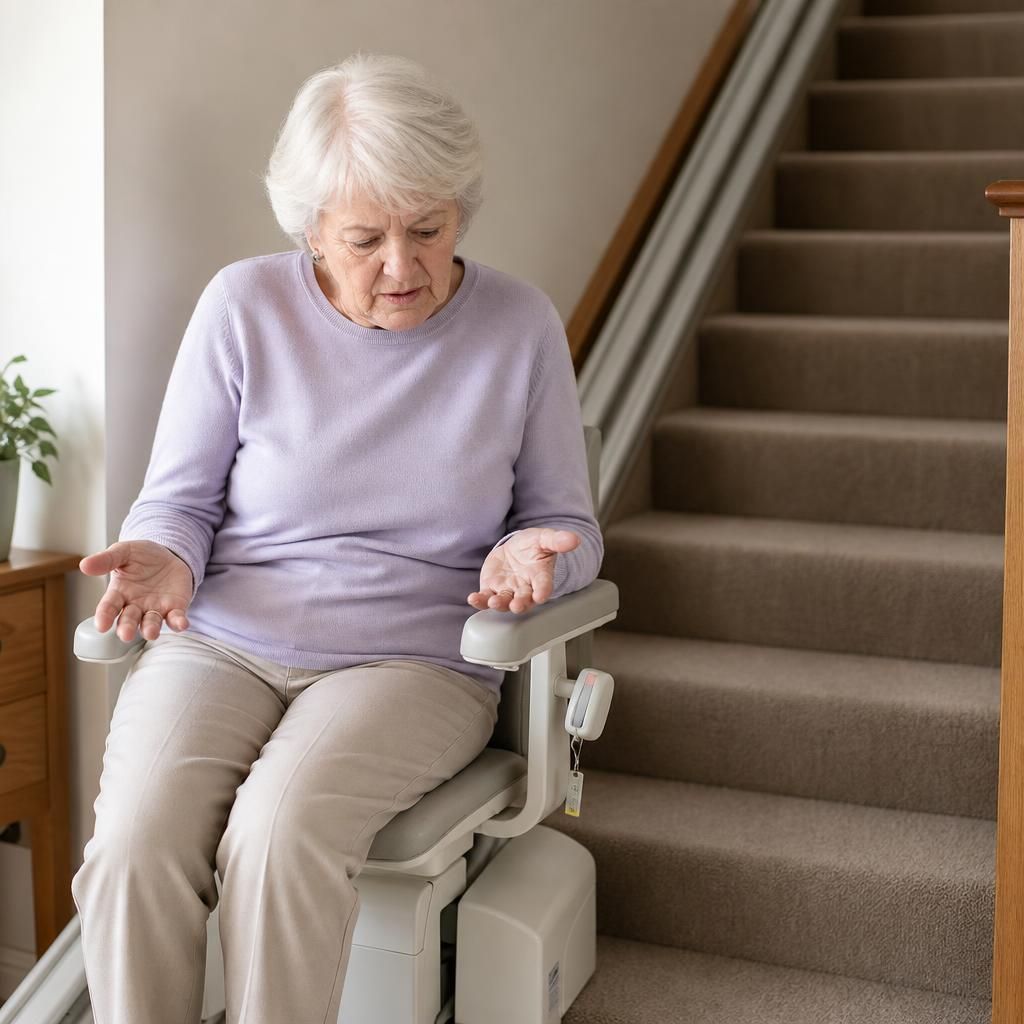
Need help with a stairlift that has stopped working?
If your stairlift has stopped working, contact Independent Stairlifts for practical advice or to arrange an engineer visit. Tell us where the lift has stopped, what happened and any warning lights or fault codes displayed.