
What regular maintenance steps should I take to ensure my stairlift functions properly?
Keep your stairlift reliable by charging it as instructed, keeping the track and seat area clear, wiping away dirt, and checking the seat belt, controls and safety sensors before use. Arrange professional servicing at the manufacturer’s recommended intervals, and stop using the lift and request advice if you notice unusual noise, movement, warning lights or repeated faults.
Regular stairlift maintenance consists of simple user checks, careful cleaning, correct charging and scheduled professional servicing. Keeping the lift’s track, seat and controls in good condition helps it operate safely and reliably, while early attention to warning signs can prevent a minor issue from becoming a breakdown.
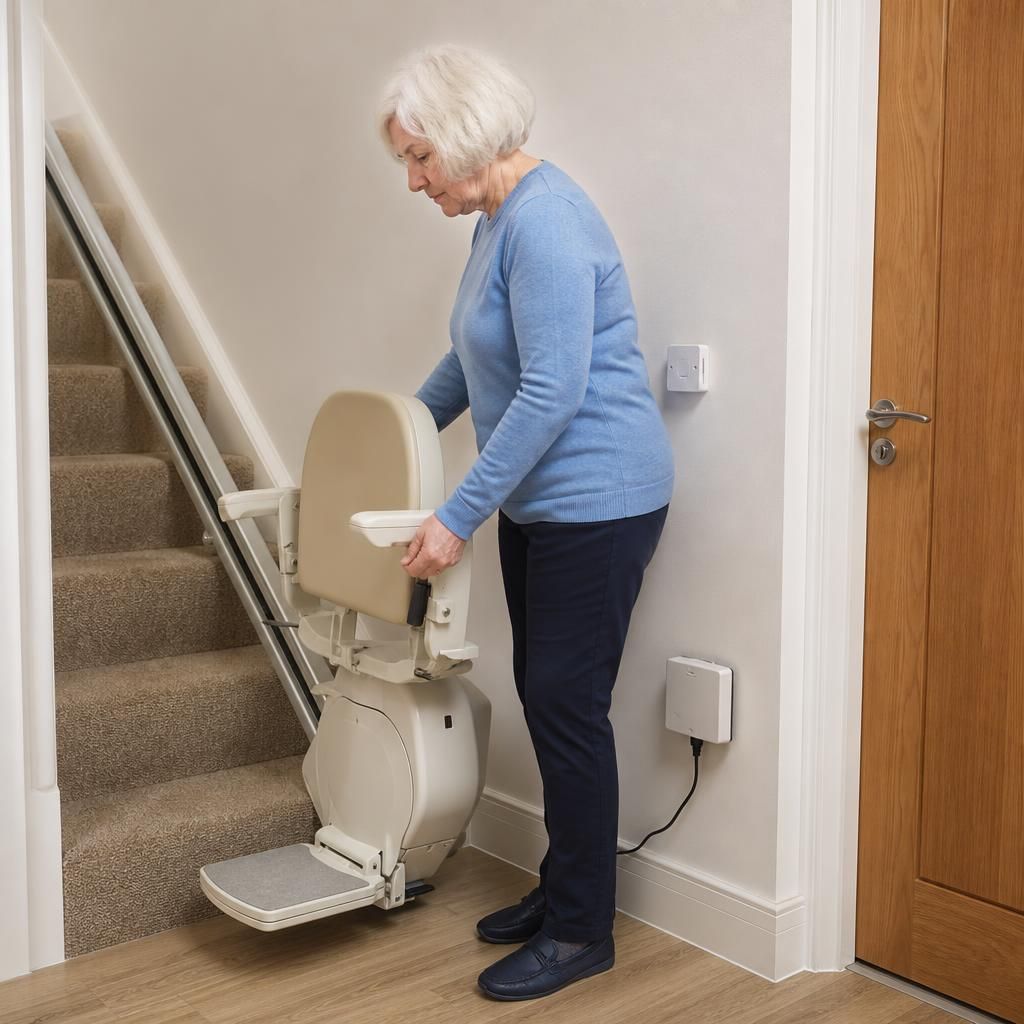
Carry out basic checks before use. Look over the stairlift before sitting down and confirm that:
- The seat is securely positioned and, where applicable, swivelled and locked for travel.
- The footrest, armrests and seat belt are intact and free from damage.
- The track is clear of objects, clothing, pet toys and other obstructions.
- The lift’s power switch is on and there are no unexpected warning lights or audible alerts.
- The controls respond normally and the stairlift starts and stops smoothly.
Do not use the stairlift if the seat belt will not secure, a safety edge appears damaged, the lift moves unexpectedly or an obstruction cannot be removed safely. Contact Independent Stairlifts or your service provider for advice instead.
Keep the batteries charged. Most stairlifts use rechargeable batteries, including when they are not being used frequently. Park the lift at its designated charging point, usually at the top or bottom of the track, as described in the user instructions. If the stairlift is left away from its charger for extended periods, the batteries may lose charge and the lift may eventually stop operating.
Check that the charging point is not blocked and that the charger appears connected correctly. If the stairlift repeatedly reports a low battery, does not charge when parked, or only travels a short distance before stopping, arrange a service. Avoid repeatedly running the lift until the batteries are completely flat, as this can leave the user without access and may indicate a charging or battery fault.
Clean the track and surrounding areas carefully. Dust and household debris can collect around the rail, carriage and footrest. Wipe accessible surfaces with a soft, slightly damp cloth and use a suitable non-abrasive cleaner where the manufacturer permits it. Keep liquids away from the motor, battery compartments, switches, charging contacts and other electrical components. Do not spray cleaner directly onto the stairlift.
Do not place oil, grease or general-purpose lubricant on the track unless the manufacturer or a qualified engineer specifically instructs you to do so. Some stairlifts use track materials and drive systems that do not require user lubrication, and unsuitable products can attract dirt or affect the mechanism.
Keep the stairway clear. A stairlift needs a clear route to travel safely. Remove anything stored on the stairs or near the rail, and make sure curtains, cables and loose rugs cannot catch on the seat or carriage. If other people or pets are in the area, ensure they are clear of the moving stairlift before operating it.
Inspect the seat, belt and controls. Check the seat belt for fraying, damaged fittings or a buckle that does not latch and release correctly. Test the armrest control, remote controls and any key switch in accordance with the instructions. Controls should not be sticky, loose or difficult to operate. Keep remote controls dry and replace their batteries if they become unreliable, following the manufacturer’s instructions.
Do not bypass a key switch, safety sensor, swivel-seat lock or other safety feature. These components are designed to prevent travel in an unsafe position or to stop the lift when it detects an obstruction. If a safety feature prevents normal operation, the cause should be investigated by a qualified stairlift engineer rather than overridden.
Pay attention to changes in operation. Arrange professional advice if you notice:
- Grinding, scraping, clicking or unusual motor noises.
- Jerky movement, unexpected stops, reduced speed or difficulty starting.
- Repeated warning lights, error messages or audible alerts.
- A seat, armrest, footrest or swivel mechanism that feels loose.
- Damage to the rail, wiring, charger, belt or casing.
- A burning smell, smoke, overheating or signs of a damaged battery.
- Repeated loss of power or a battery that fails to hold its charge.
Stop using the lift if there is smoke, a burning smell, exposed wiring, liquid contamination, serious mechanical damage or unsafe movement. Switch it off if this can be done safely, keep people away from it and contact Independent Stairlifts or the appropriate service provider. Do not attempt to dismantle the carriage, repair wiring, replace internal parts or retrieve components from inside the mechanism yourself.
Arrange professional servicing at the recommended interval. User checks cannot replace an engineer’s inspection. A trained technician can examine the drive system, batteries, charging equipment, rail fixings, safety sensors, limit switches, seat mechanisms, controls and electrical connections. The correct servicing interval depends on the model, age, usage and manufacturer’s guidance, so follow the service schedule supplied with your stairlift or ask for advice if you are unsure.
Professional servicing is particularly important if the stairlift is used heavily, has been unused for a prolonged period, has been moved to a different property, or has developed a fault. Keep records of servicing and repairs, and report previous problems to the engineer. This helps identify recurring faults and ensures that replacement parts and adjustments are suitable for the specific model.
Use the stairlift as intended. Follow the instructions for the permitted user weight, seating position, footrest, seat belt and remote controls. Do not carry loads that obstruct the controls or track, allow children to operate the lift unsupervised, or travel with items that could fall onto the stairs. If the stairlift is outdoors or exposed to damp conditions, use the protective measures recommended for that model and report water ingress or corrosion promptly.
A consistent routine is the most effective approach: keep the route clear, park the lift on charge, clean it without wetting electrical parts, check the safety features and report changes early. If a fault remains after checking the power supply and ensuring the track is unobstructed, stop troubleshooting and request professional assistance rather than repeatedly resetting or forcing the stairlift to move.
Keeping the stairlift parked on its designated charging point is one of the most important routine maintenance steps. Rechargeable batteries can lose charge even when the lift is used infrequently, so follow the manufacturer’s instructions for parking and charging after each journey. Keep the charging point clear and check that the charger is connected correctly.
If the lift repeatedly shows a low-battery warning, fails to charge, travels only a short distance or stops unexpectedly, stop relying on it and arrange professional advice. These symptoms may indicate worn batteries, a charging fault or another issue that requires an engineer’s inspection. Do not repeatedly run the batteries completely flat or attempt to replace internal components yourself.
Arrange Your Stairlift Maintenance Check
If your stairlift is due for a service or you have noticed changes in its operation, arrange a maintenance check with Independent Stairlifts. A qualified engineer can inspect the lift, identify developing faults and confirm that it is safe to use.