
What is covered under a typical stairlift maintenance contract?
A typical stairlift maintenance contract covers scheduled servicing, safety and performance checks, adjustments, fault diagnosis and support if the lift stops working. Depending on the agreement, it may also include call-outs, labour and replacement parts, although batteries, misuse-related damage and some components may be excluded or subject to separate charges.
A typical stairlift maintenance contract covers scheduled servicing, safety and performance checks, adjustments, fault diagnosis and support if the lift stops working. Depending on the agreement, it may also include engineer call-outs, labour and replacement parts. Batteries, accidental or misuse-related damage, and some components are often excluded or charged separately, so the precise terms of your contract should be checked before work is authorised.
The purpose of a maintenance contract is to keep the stairlift safe, reliable and suitable for regular use, while identifying faults before they cause a breakdown. A professional service normally includes the following checks and work:
- Safety inspection: the engineer checks safety edges, sensors, the seat, armrests, footrest, swivel or folding mechanisms, seat belt and controls. Any feature designed to stop the lift or protect the user is checked for correct operation.
- Track and drive-system inspection: the rail, drive mechanism, gears, rollers and fixing points are examined for wear, damage, looseness or obstruction. The engineer may clean and lubricate components where appropriate.
- Electrical and battery checks: charging points, wiring, connections, charging indicators and batteries are tested. The stairlift is checked to ensure it charges correctly when parked and that the batteries are performing as expected.
- Operational testing: the lift is run along the full length of the track, where safe to do so. Starting, stopping, speed control, turning points and parking positions are assessed, including any powered swivel, folding rail or hinged track.
- Adjustments and minor remedial work: an engineer may tighten fixings, adjust settings, realign parts, clear minor obstructions or replace small serviceable items included in the agreement.
- Fault diagnosis: if you have reported unusual noises, intermittent stopping, charging problems or other faults, these are investigated. The engineer should explain the cause and advise whether further repair or parts are required.
- Service report: the visit should be recorded, normally with details of checks completed, faults found, work carried out and any recommendations for follow-up.
Many contracts also provide telephone support and access to an engineer if the stairlift develops a fault between planned services. The level of breakdown cover varies. Some agreements include call-out charges and labour during specified hours, while others apply an excess, limit the hours of cover or charge separately for attendance outside the standard service area.
Parts cover is one of the most important differences between maintenance agreements. A comprehensive contract may include replacement of covered mechanical and electrical parts when failure is due to normal wear and tear. A lower-cost agreement may cover inspection and labour but exclude parts, batteries or larger repairs. Some contracts also exclude older or discontinued components where suitable replacements are no longer readily available.
Items commonly excluded or treated separately include:
- batteries, particularly where they have reached the end of their normal service life;
- damage caused by impact, water, pets, incorrect use, unauthorised alterations or poor storage;
- repairs required because the stairlift has not been used, charged or maintained in line with the instructions;
- replacement of upholstery, covers, cosmetic trim and other appearance-related items;
- building work, electrical work or alterations to the staircase needed to accommodate the stairlift;
- removal, relocation or reinstallation of the stairlift;
- parts or labour made necessary by a pre-existing fault not declared when the contract began; and
- attendance where no fault is found, if the agreement applies a diagnostic or call-out charge.
Coverage can also be limited by the contract’s age, start date and cancellation terms. A provider may inspect the stairlift before accepting it for cover, and an existing fault may need to be repaired first. There may be an initial waiting period, restrictions on repeated call-outs, or different rates for visits outside normal working hours. These conditions should be set out in the written agreement rather than assumed from the phrase “full maintenance”.
Before renewing or taking out cover, check whether the contract states:
- how often planned servicing takes place and what each service includes;
- whether call-outs, diagnosis and engineer labour are included;
- which parts are covered and whether batteries are included;
- whether there is an excess, attendance fee or separate charge for emergency visits;
- the hours and geographical area of breakdown support;
- how faults should be reported and the expected response arrangements;
- whether cover applies to the particular stairlift model and its accessories; and
- what happens if the lift cannot be repaired or a replacement part is unavailable.
A maintenance contract does not remove the need for sensible day-to-day care. Keep the track and charging points clear, park the lift correctly, follow the user instructions and report changes such as grinding noises, jerky movement, repeated stopping, poor charging or warning lights. Do not attempt electrical or mechanical repairs yourself. If the stairlift stops working, leave it in a safe position where possible, check the obvious power and charging points, and contact the service provider using the agreed support number.
In short, the standard core of a maintenance contract is scheduled servicing, safety testing, adjustment and fault diagnosis. Breakdown attendance, labour and parts may be included, but their availability and limits depend on the specific policy. If you are unsure what your Independent Stairlifts agreement covers, refer to its terms or contact the service team before arranging chargeable work; they can confirm whether a reported fault is covered and explain any likely costs.
A stairlift maintenance contract usually covers planned servicing, safety checks, fault diagnosis and adjustments, but breakdown attendance, labour and replacement parts depend on the terms of your agreement.
Check specifically whether your cover includes:
- engineer call-outs and diagnostic visits;
- labour for repairs between scheduled services;
- mechanical and electrical parts;
- batteries, which are often excluded or charged separately; and
- support outside normal working hours or beyond the standard service area.
Damage caused by misuse, impact, water or unauthorised alterations is also commonly excluded. If your stairlift develops a fault, contact the service team before approving chargeable work so they can confirm what your agreement covers and explain any likely costs.
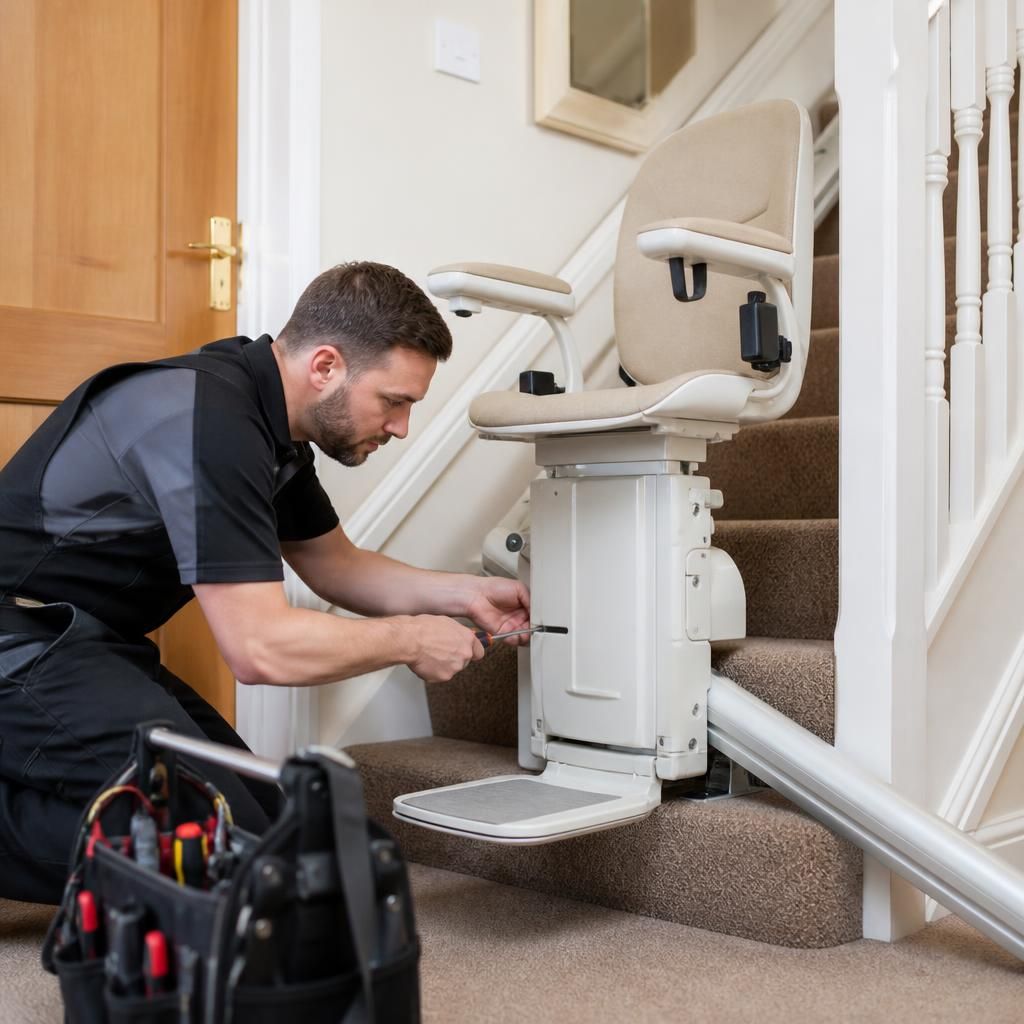
Check What Your Stairlift Maintenance Contract Covers
If you are unsure what your stairlift maintenance contract covers, contact our service team before approving chargeable work. We can confirm whether your reported fault, call-out, labour or replacement parts are included and explain any likely costs.