
What are the costs associated with stairlift maintenance and servicing?
Stairlift maintenance and servicing costs vary according to the lift type, its age and condition, whether you have a service plan, and whether parts or repairs are needed. A routine service usually covers safety checks, cleaning, adjustments and testing, while replacement parts, additional labour or an emergency call-out may be charged separately.
Stairlift maintenance and servicing costs depend on the type of stairlift, its age, condition and location, and whether the visit is covered by a maintenance agreement. A routine service generally costs less than a repair because it involves inspection, cleaning, adjustment and testing rather than replacing faulty components. Additional charges may apply for parts, extended labour, emergency attendance, travel or work that falls outside the agreed service.
What is usually included in a routine service?
A professional service is intended to identify developing faults before they affect safe operation. The engineer will normally inspect the stairlift and its main safety systems, clean accessible components, check the track and carriage, test the controls and safety sensors, and make any necessary adjustments. They may also check the seat, armrests, footrest, swivel mechanism, charging points and battery performance.
The exact checks vary between models. Curved stairlifts have more complex tracks and may require additional attention to travel, alignment and moving joints. Outdoor stairlifts need checks for weather-related deterioration, moisture ingress and corrosion. A service should include a functional test on the stairs and confirmation that the lift stops correctly at its charging points and at the top and bottom of the track.
Charges for parts and repairs
A standard service does not necessarily include replacement parts or corrective repairs. Batteries, chargers, remote controls, drive components, rollers, belts, sensors and upholstery may be charged separately if they are worn or faulty. Some issues can be resolved during the planned visit, while more involved work may require a further appointment or an agreed quotation before the repair proceeds.
Part costs can vary considerably according to the stairlift model and whether the component is readily available. Older or unusual lifts may need more time to diagnose, and replacement parts may be more difficult to source. If a lift has been unused for a long period, has suffered water damage or has not received regular attention, the engineer may recommend remedial work before it can be considered reliable for continued use.
One-off servicing compared with a maintenance agreement
A one-off service is suitable when you need a lift checked at a particular time, such as after buying a used stairlift, before regular use resumes or when you want an independent assessment of its condition. The cost is usually based on the inspection and labour required, with parts and further repairs dealt with separately.
A maintenance agreement normally involves a recurring charge in return for agreed servicing and support. Depending on the contract, it may include planned servicing, engineer labour, priority assistance or some repairs. It may not include batteries, consumable items, accidental damage, misuse, vandalism, damage caused by water or power issues, or every type of replacement part. Always check the terms rather than assuming that a contract covers every future cost.
Some agreements include call-outs and labour but charge for parts. Others may include specified parts up to a stated limit or provide different levels of cover. The agreement should explain the service frequency, response arrangements, exclusions, cancellation terms and what happens if the stairlift is found to be beyond economical repair.
Factors that affect the overall cost
- Stairlift design: curved and outdoor systems generally require more specialist work than straightforward indoor systems.
- Age and condition: an older lift may need more adjustment or replacement components, particularly if its batteries or drive parts are nearing the end of their service life.
- Fault symptoms: a planned service is usually more predictable in cost than an emergency visit for a lift that has stopped working.
- Access and location: travel time, parking or a difficult installation environment can affect labour or call-out charges, particularly where additional visits are needed.
- Warranty or existing cover: some work may be included under an installation warranty, parts warranty or maintenance agreement, subject to its terms.
- VAT: ask whether any quoted price includes VAT and whether any special circumstances affect the amount payable.
How to obtain a clear price
When requesting a service, provide the stairlift make and model if known, whether it is straight, curved or outdoor, the symptoms of any fault and when the issue began. It is also useful to explain whether the lift is currently usable, whether it is making unusual noises and whether there are warning lights or error messages. This helps determine whether a routine service or an urgent repair visit is more appropriate.
Before work starts, ask for confirmation of what the call-out or service fee includes, whether diagnosis is chargeable, how labour is billed, whether parts are extra and whether a further quotation will be provided before repair work. A written estimate should distinguish between essential safety work, recommended preventative work and optional improvements. If the engineer identifies a serious fault, do not continue using the lift until it has been assessed and declared safe.
Keeping servicing costs manageable
Regular professional servicing can help identify worn components early, although it cannot prevent every failure. Keep the track clear, use the controls as instructed, keep charging points unobstructed and report changes such as slower travel, unusual sounds, repeated stopping or reduced battery performance. Do not attempt electrical repairs or bypass a safety switch yourself.
The most suitable option depends on the lift and how heavily it is used. A routine service may be sufficient for a newer, well-maintained stairlift, while an older or heavily used lift may benefit from a maintenance agreement if predictable support is important. Independent Stairlifts can assess the equipment, explain what is included and identify any likely additional costs before work is undertaken.
Stairlift maintenance and servicing costs usually cover an engineer’s inspection, safety checks, cleaning, adjustments and functional testing. Parts, repairs, extra labour and emergency call-outs are often charged separately, unless they are specifically included in your maintenance agreement.
Before approving any work, ask for a clear breakdown of:
- the service or call-out charge;
- whether diagnosis and labour are included;
- which replacement parts are covered;
- whether VAT, travel or additional visits apply; and
- whether you will receive a quotation before chargeable repairs begin.
This makes it easier to distinguish essential safety work from recommended preventative repairs and helps avoid unexpected costs.
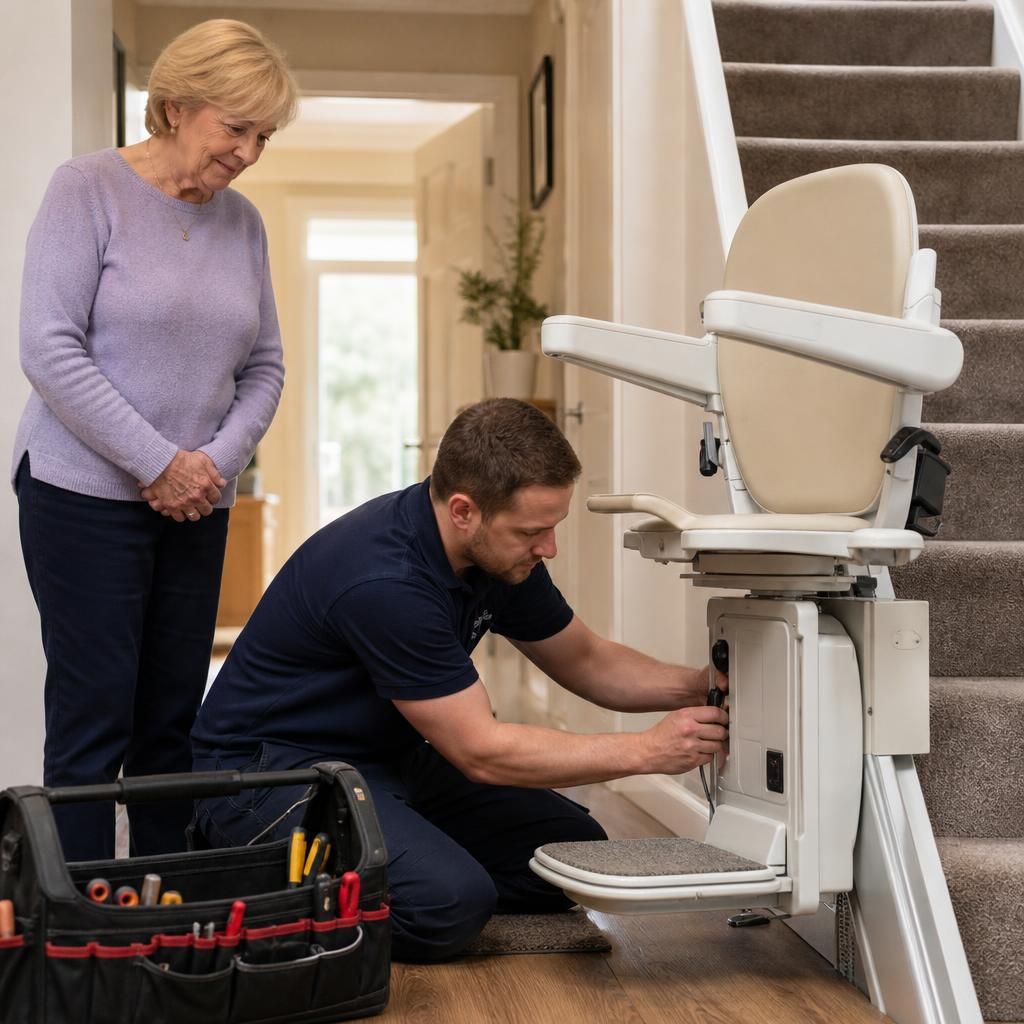
Request a clear stairlift maintenance and servicing quotation
Contact Independent Stairlifts for a clear stairlift maintenance and servicing quotation based on your lift’s type, condition and requirements. We can explain what is included and identify any potential additional charges before work begins.